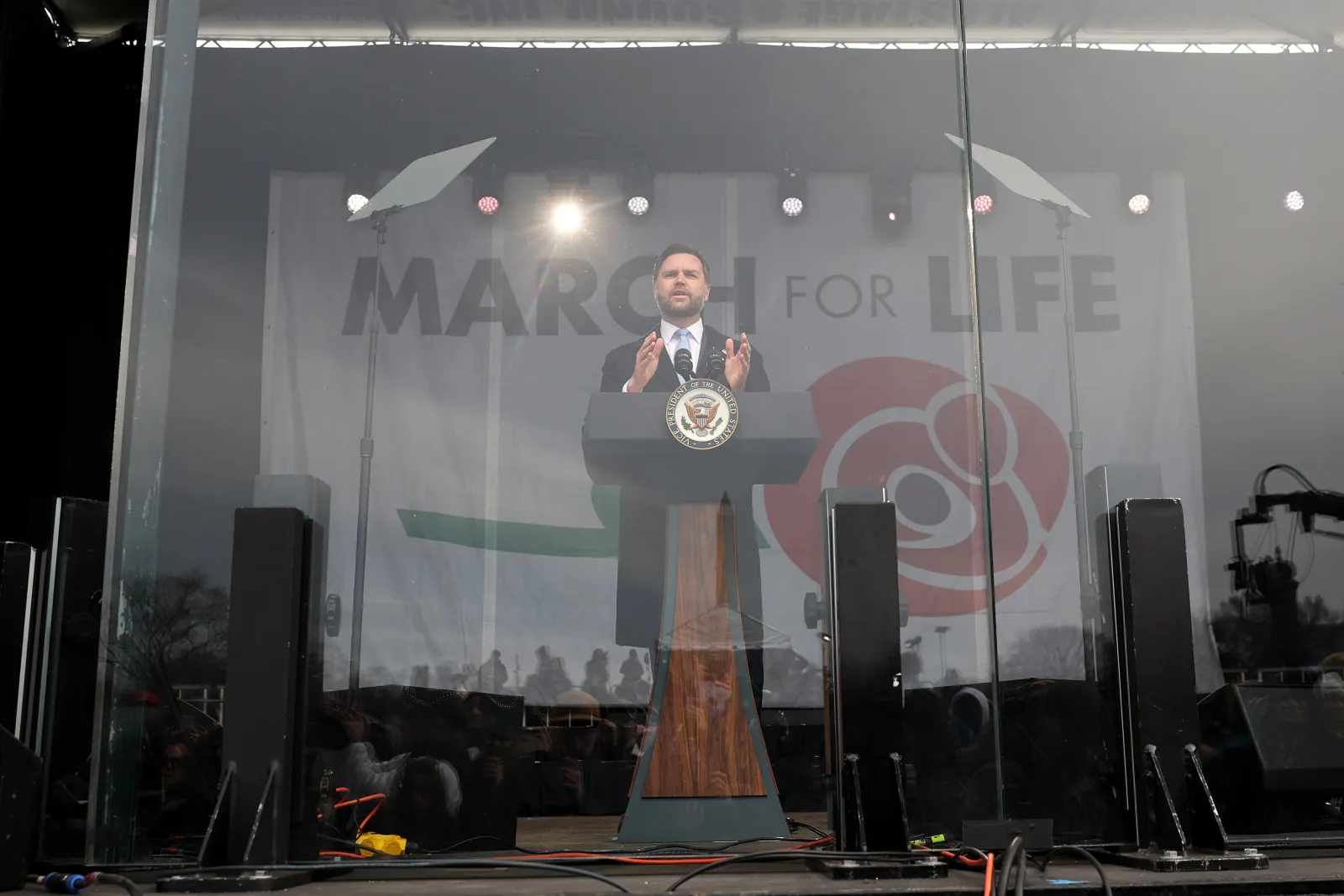

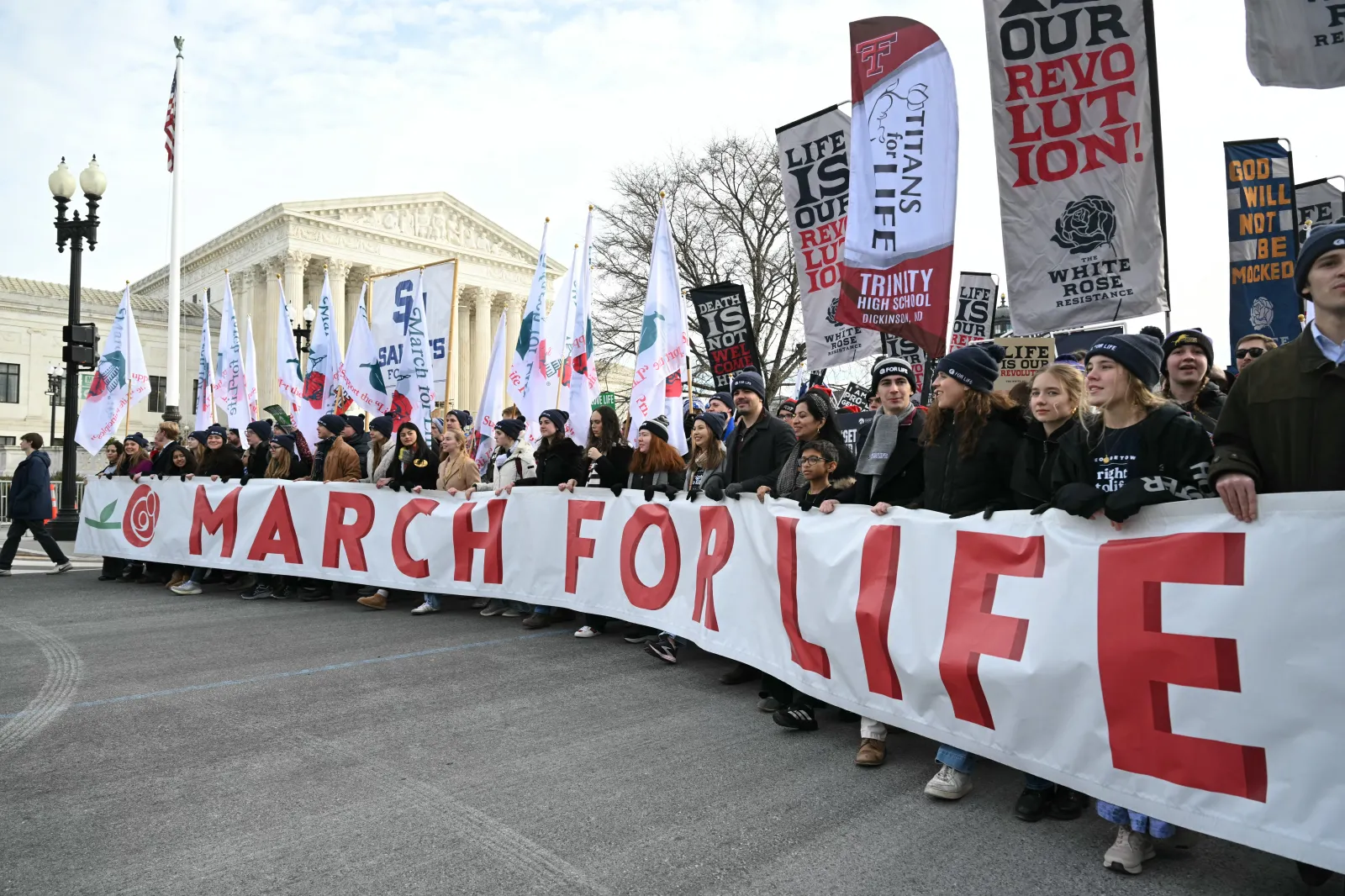
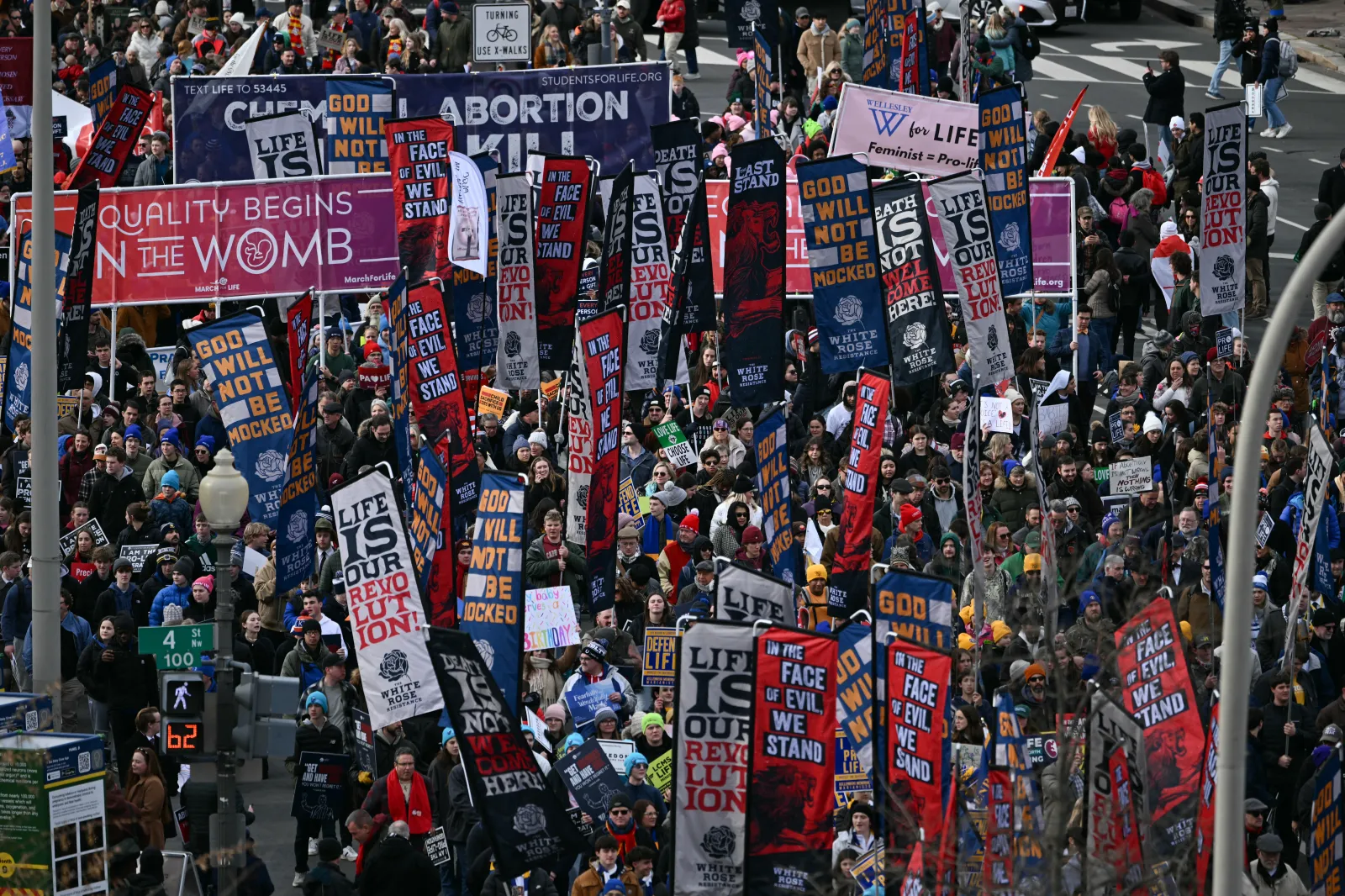
As tens of thousands filled the National Mall for the annual March for Life, support for President Donald Trump was unmistakable — but so was a growing undercurrent of frustration over what, exactly, his second term should deliver on abortion.
This year’s rally was the first held a full year into Trump’s second term, and many activists say the mood is shifting from celebration to expectation. The Supreme Court’s post-Dobbs landscape, they argue, has created a new test: now that abortion policy largely sits with the states, how aggressively is the White House willing to intervene using federal power?
From the stage, Vice President JD Vance urged attendees to “take heart in how far we’ve come,” pointing to the Supreme Court’s reversal of Roe v. Wade, the administration’s expansion of restrictions on U.S. foreign aid tied to abortion, and what he called a renewed commitment to “families and human flourishing.”
Trump, speaking to the crowd by video, highlighted his judicial appointments and cast his record as an “unprecedented” defense of the pro-life movement.
Yet for many marchers, gratitude came paired with impatience.
Francis Guidarelli, who traveled from Richmond, Virginia, credited Trump for reshaping the courts — but said that’s not enough. “We’re glad he appointed the good pro-life justices to the Supreme Court,” he said. “But we don’t want the abortion bill. That needs to be banned.”
Guidarelli also dismissed assisted reproductive technologies outright, adding, “We don’t need IVF.”
IVF Tensions Rise Inside the Movement
Concerns about IVF have grown louder inside segments of the pro-life movement in recent years, particularly as Republican leaders attempt to balance opposition from social conservatives with broad public support for fertility treatments.
Joe, an attendee from Arlington, Virginia, said the administration hasn’t confronted what he views as the ethical core of the issue. “There needs to be more of a conversation on the ethics of IVF,” he said. “If you’re creating human life just to have it sit in freezers for generations, what are the ethics of that?”
After Dobbs, the Next Fight Is Federal Power
While some marchers sounded satisfied, others said 2026 still feels unfinished — especially after what they see as a more cautious, politically calibrated approach from the administration.
They pointed to the One Big Beautiful Bill Act (OBBBA) as an example: it blocked Medicaid funding to Planned Parenthood, but only as a temporary, one-year measure — far short of the permanent federal debarment many activists want.
Some also criticized the administration for declining to enforce the Comstock Act to block the nationwide mailing of abortion pills. With abortion pills now accounting for more than 60 percent of abortions in the U.S., these activists argue that federal inaction is effectively weakening or “nullifying” bans in conservative states.
For Morgan Reece of Michigan, appreciation and pressure exist side by side. She praised Trump for pardoning anti-abortion activists and appointing conservative judges — but said the job isn’t finished.
“We definitely want him to do more,” she said. Her top demand was direct: “We want him to completely defund Planned Parenthood permanently and also debar them.”
“Recognize the Progress” vs. “Push for More”
Not everyone at the march shared the same urgency.
Everett Barnes of Virginia said the administration has already delivered major wins and the movement should acknowledge that. “He’s made a great contribution, and his administration has supported us well,” Barnes said, describing Vance’s appearance as a clear sign the White House still views the movement as an ally.
“Overall, I see his attitude toward respect for life as commendable,” Barnes added.
Others framed the issue as bigger than party politics. Elizabeth, who traveled from Omaha, Nebraska, said she hopes the movement can eventually break out of hardened partisan lines. “I would love for it to become a bipartisan issue,” she said. “But first we have to find the common ground.”
Some activists also conceded the political constraints Trump faces, even as they asked for a stronger stance. Denise, from Arizona, said she wished the administration would take a firmer position. “I would love him to be stronger in pro-life values,” she said. “But I understand the pressure he’s under.” When asked what she wanted next, she misspoke — saying she would like him to “legalize the abortion” — before moving on.
Trump, for his part, has repeatedly signaled he does not plan to pursue a national abortion ban, arguing that decisions should remain with the states.
Meanwhile, abortion-rights advocates warn that even incremental moves — including agency rulemaking and funding decisions — could have sweeping consequences nationwide, including in states where abortion protections have been codified. They argue executive action can reshape access dramatically without Congress passing new legislation.