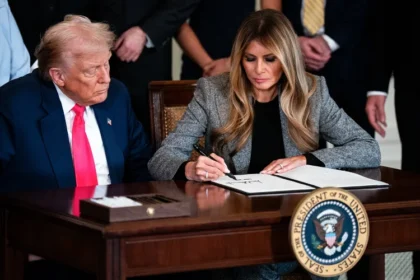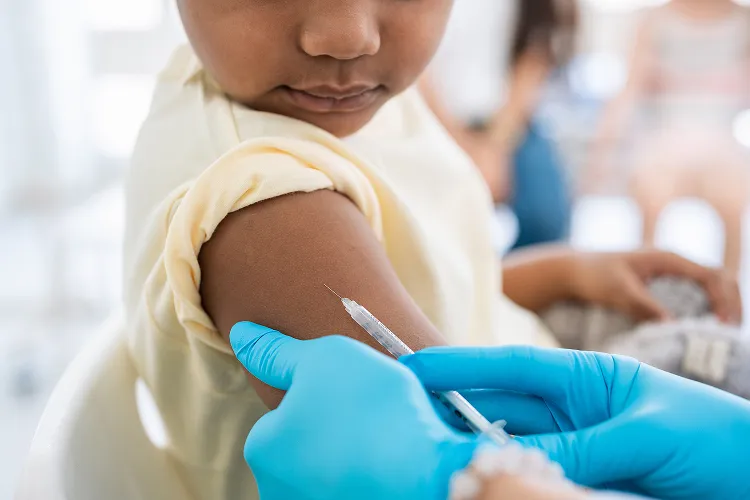

As measles cases climb across 14 states, the head of a key U.S. vaccine advisory group has suggested that immunizations protecting against diseases like measles and polio should be optional.
“If there is no choice, then informed consent is an illusion,” Dr. Kirk Milhoan, a pediatric cardiologist who leads the Advisory Committee on Immunization Practices, said, per The New York Times. “Without consent it is medical battery.”
Pressed on the possibility that children could die from polio or measles, Milhoan said he had “concerns,” but added, “I also am saddened when people die of alcoholic diseases.” He pointed to what he described as “freedom of choice and bad health outcomes,” and suggested additional vaccines could potentially be framed as optional in the future.
The remarks come as measles infections rise in the United States. According to the most recent data from the U.S. Centers for Disease Control, there have been 416 confirmed measles cases so far this year, and 94% of those sickened have not been vaccinated.
The increase follows a broader resurgence of the highly contagious virus. Last year’s outbreak—largely centered in Texas and the Southeast—was fatal for three people amid 2,255 confirmed cases. For all of 2024, there were 285 cases.
Measles is widely associated with its signature rash, but it can also trigger fever and a dry cough. Per the Mayo Clinic, it can lead to severe complications, including encephalitis (swelling of the brain) and pneumonia. A rare neurological condition called subacute sclerosing panencephalitis can also develop years after the initial infection.
:max_bytes(150000):strip_icc():focal(731x362:733x364):format(webp)/Measles-Vaccines-031325-03-4564a0a870384d57b3a7c51241af1c9a.jpg)
This year, South Carolina has been described as the epicenter of the outbreak, with cases increasing sharply and hundreds placed in quarantine. CDC data also shows infections reported in Arizona, California, Florida, Georgia, Idaho, Kentucky, Minnesota, North Carolina, Ohio, Oregon, Utah, Virginia, and Washington.
Milhoan’s comments sparked strong pushback from medical experts. “He has no idea what he’s talking about,” Dr. Sean O’Leary, chair of the infectious disease committee at the American Academy of Pediatrics, told The New York Times. “These vaccines protect children and save lives … It’s very frustrating for those of us who spend our careers trying to do what we can to improve the health of children to see harm coming to children because of an ideological agenda not grounded in science.”
The surge also raises concerns about the U.S. potentially losing its measles elimination status—though CDC Principal Deputy Director Dr. Ralph Abraham suggested that is “not really” a CDC focus, per CNN. “We have these communities that choose to be unvaccinated,” he said. “That’s their personal freedom.”
:max_bytes(150000):strip_icc():focal(999x0:1001x2):format(webp)/measles-testing-testing-032125-5c52179ed9254b35a71ff4ac6a9b559b.jpg)
Polio, while often viewed as a disease of the past, once caused widespread disability in children before the vaccine’s introduction in 1955, according to the Mayo Clinic. Several epidemics struck between 1948 and 1955, prompting many people to avoid crowds and public gatherings for fear of infection.
The World Health Organization reports that by 1957, annual cases dropped from 58,000 to 5,600, and by 1961, only 161 cases were documented. Polio can cause severe complications—including meningitis, spinal paralysis, and respiratory paralysis—which can be fatal, the CDC says, because the muscles needed for breathing may also be affected.