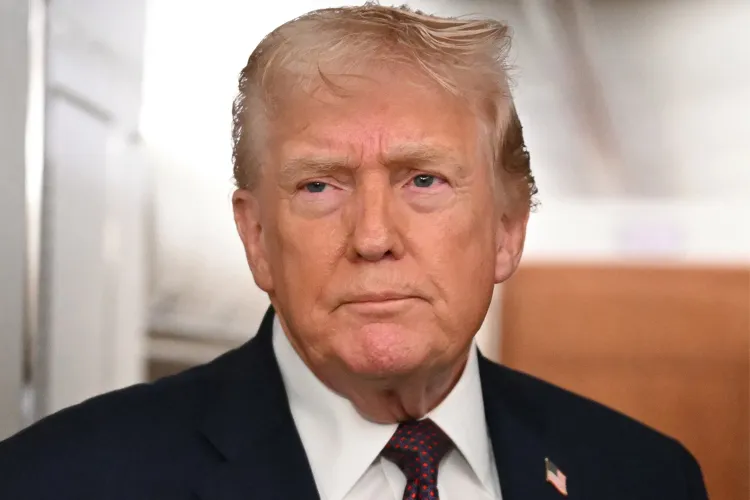

At a late-January cabinet meeting, Donald Trump delivered a message that cut against the basic promise of “affordability” many voters associate with a housing plan: he said he doesn’t want home prices to fall.
“I don’t want to drive housing prices down. I want to drive housing prices up for people that own their homes,” Trump said, arguing that policies aimed at making housing cheaper could erode existing homeowners’ wealth and sense of financial security. (PBS)
The remarks immediately sparked backlash online — including critics calling it “political suicide” — because they appear to prioritize protecting current owners’ home equity over lowering purchase prices for first-time buyers. (PBS)
What Trump said — and the logic he laid out
In the comments, Trump framed rising home values as a form of household wealth creation. In his view, pushing prices down to help buyers risks penalizing those who already own homes — many of whom have seen their net worth rise alongside real estate values. (PBS)
At the same time, Trump indicated he still wants to make homeownership “easier,” but through financing costs rather than lower sticker prices — i.e., cheaper borrowing instead of cheaper homes. (Investopedia)
That distinction matters: lower mortgage rates can reduce monthly payments, but if demand rises faster than supply, prices can keep climbing — potentially cancelling out much of the payment relief. (Investopedia)
Why this lands as a political flashpoint
Housing affordability has been one of the sharpest cost-of-living pressure points for renters and younger households. A president openly saying he wants prices to rise can sound like: “Great for owners, bad for everyone trying to buy.”
But it also speaks to a real political tradeoff: a large share of Americans are homeowners, and many treat their home value as their main store of wealth. A policy that drives prices down quickly could trigger voter anxiety (or worse, negative equity for recent buyers).
Trump’s approach effectively picks a side in that tension — or at least signals a preference for protecting values while trying to “square the circle” with lower interest rates. (Investopedia)
The policy path he’s pointing to: mortgage rates, not prices
Trump has repeatedly emphasized lowering mortgage rates as the primary lever for “affordability,” rather than pursuing policies designed to reduce home prices directly. (Investopedia)
Earlier in January, Donald Trump said he ordered representatives to pursue the purchase of $200 billion in mortgage-backed securities to push borrowing costs lower — a move that echoes how large-scale bond buying can influence rates, though analysts cautioned the effect might be limited. (Reuters)
And within the housing industry, Trump’s comments were read as an explicit warning against making buying “too easy and too cheap,” because that could pressure values. (HousingWire)
What economists say could happen next
The biggest constraint in U.S. housing remains supply in many metro areas — not just financing costs. If rates fall meaningfully, more buyers can qualify, demand can jump, and prices can rise unless supply expands in parallel. (Investopedia)
That’s why critics argue the “lower rates + higher prices” combination could leave first-time buyers stuck: monthly payments might not fall enough, while down payments become harder as prices climb. (Investopedia)
Meanwhile, the Associated Press fact-check reporting noted that keeping prices high can also discourage construction levels needed to ease shortages — another factor that could prolong affordability pain. (AP News)
The reaction: homeowners vs. would-be buyers
Trump’s statement effectively turns housing into a direct distributional debate:
- Current homeowners may welcome a president explicitly committed to protecting (and increasing) property values — especially if lower rates also boost refinancing options or improve affordability for move-up purchases.
- Renters and first-time buyers are likely to hear the same statement as a refusal to address the core problem: purchase prices have outpaced incomes in many markets, and higher values raise the bar for entry.
It’s that second group — younger voters, renters, and households shut out of ownership — where the “political suicide” framing has gained traction online, because it sounds like a promise to keep the ladder pulled up. (PBS)
What to watch
The key question is whether the administration pairs its rate-focused strategy with meaningful supply-side actions — zoning, permitting acceleration, incentives for building starter homes, and broader construction capacity. Without that, lower rates can be gasoline on a fire: more demand chasing too few homes. (Investopedia)
For now, Trump has put a bright spotlight on an uncomfortable reality of housing politics: “affordability” can mean lower monthly payments, lower purchase prices, or both — and those goals don’t always move together. (Investopedia)