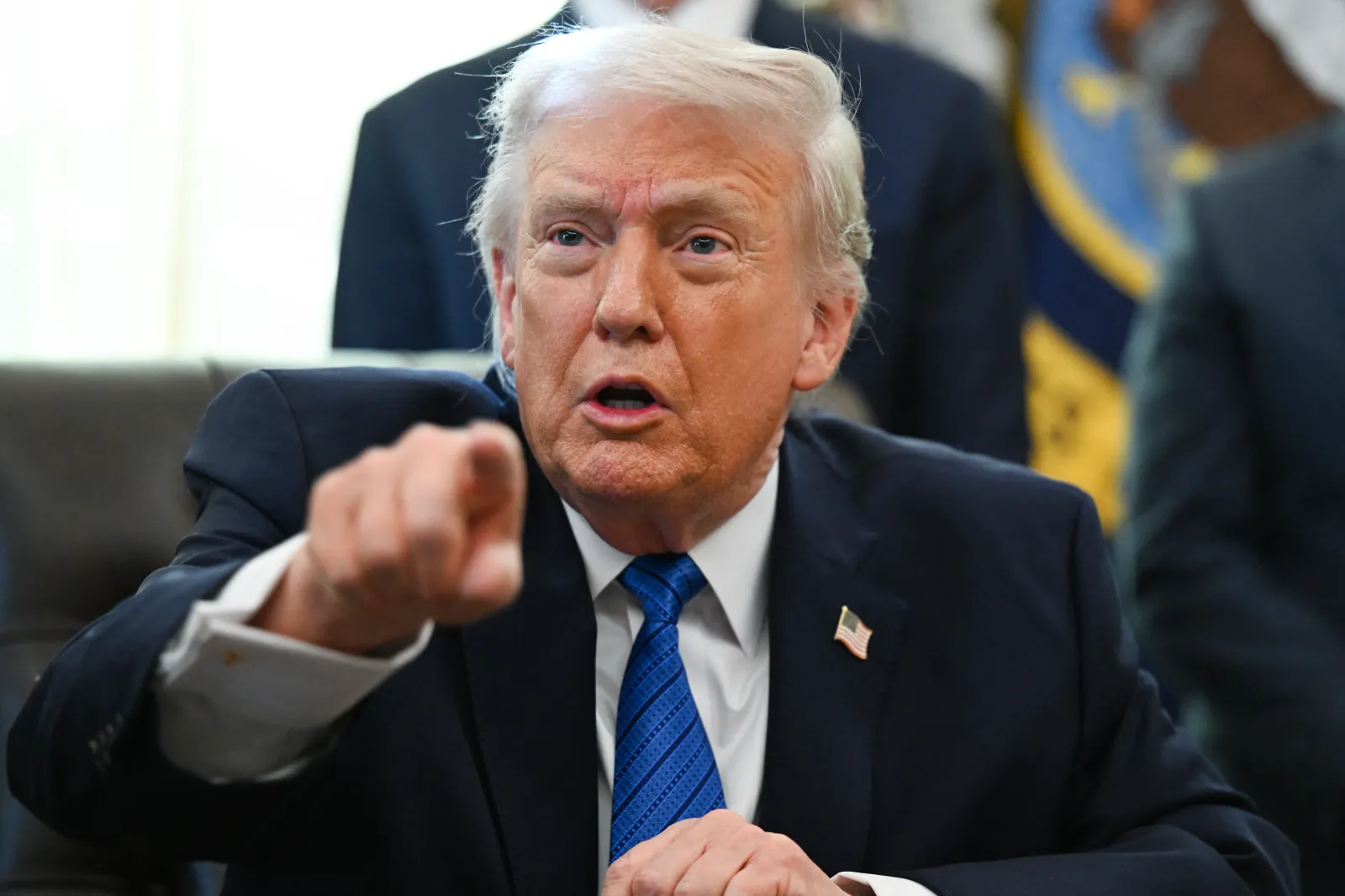

President Donald Trump is heading into a potentially risky stretch politically, with multiple new polls showing voters growing more uneasy about the economy, rising health care costs, and what they see as an administration focus that is drifting away from kitchen-table issues.
White House spokesperson Kush Desai told Newsweek via email: “President Trump campaigned on fixing Joe Biden’s economic disaster and border crisis. By every metric, he is delivering—inflation has cooled, GDP growth is accelerating, and the border is sealed.”
Why It Matters
Several independent surveys suggest slipping confidence in Trump’s handling of key domestic concerns and a preference that he concentrate more on the economy than foreign policy. Historically, that mix—soft approval and persistent cost anxiety—can create difficult conditions for the president’s party heading into midterm elections.
What to Know
A run of national surveys conducted in January found voters souring on the economy, expressing heightened worry about health care affordability, and signaling frustration that Trump is spending too much time on foreign policy. The polls also show Trump’s approval dipping to what some trackers describe as a second-term low.
1. Fox News Poll: Majority Say the Country Is Worse Off
A Fox News national survey conducted January 23–26 reported that 54 percent of registered voters believe the country is worse off than before, while Trump’s approval rating stood at 44 percent.
The poll also found that roughly 7 in 10 respondents said the economy is in bad shape—unchanged from last January—underscoring how durable cost-of-living perceptions can be once they take hold.
Fox said the survey was based on a random sample of 1,005 registered voters reached via live landline and cellphone interviews, plus online responses through text invitation, and carried a margin of sampling error of plus or minus 3 percentage points.
2. Pew Survey: Trump Approval Drops to a New Low
A separate Pew Research Center survey of 8,512 U.S. adults, fielded January 20–26, recorded Trump’s approval at 37 percent, down from 40 percent in the fall. Pew reported a margin of error of plus or minus 1.4 percentage points.
The same survey pointed to notable movement inside Trump’s own coalition. A year earlier, 67 percent of Republicans and GOP-leaning independents said they backed all or most of Trump’s policies and plans. That share has fallen to 56 percent, suggesting a growing pocket of reluctance within the party—on top of the broader national dip.
3. Health Care Costs Keep Rising as a Political Pressure Point
A KFF Health Tracking Poll, conducted January 13–20 among 1,426 U.S. adults, found 66 percent worried about being able to afford health care for themselves or their families.
KFF said the poll used a mix of online and telephone interviews from the SSRS Opinion Panel and a prepaid cellphone random-digit-dial sample designed to reach underrepresented groups. After weighting, the survey reported a margin of sampling error of plus or minus 3 percentage points.
An Angus Reid Institute online poll of 1,838 U.S. adults, fielded January 16–20, found a sharper divide within the Republican coalition: respondents aligned with the MAGA movement remained strongly supportive of Trump across many issues, but reactions were more mixed when asked about household health care costs. Non-MAGA Republicans, by contrast, expressed far more negative views about affordability.
Angus Reid said its poll was weighted by region, gender, age, income, and education using Census benchmarks, and noted that a probability sample of that size would have an estimated margin of error of about plus or minus 2 percentage points.
4. Foreign Policy Draws Skepticism in AP-NORC Polling
Pollsters at the AP-NORC Center for Public Affairs Research surveyed 1,203 adults from January 8 to 11 using its probability-based AmeriSpeak Panel. With a reported margin of error of plus or minus 3.9 percentage points, the poll found 56 percent of Americans believed Trump had “gone too far” in deploying U.S. forces abroad.
The fieldwork occurred shortly after the U.S. capture of Venezuelan President Nicolás Maduro, and the poll found 57 percent disapproved of Trump’s handling of Venezuela. Opinion split sharply by party: most Democrats and independents expressed concern, while 71 percent of Republicans said Trump’s response was “about right.”
5. ICE: Falling Confidence and Rising Support for Major Cuts
An Economist/YouGov poll conducted online January 23–26 among 1,684 U.S. adults (including 1,520 registered voters) found public confidence in ICE weakening. The survey reported that 55 percent said they had very little confidence in the agency—up 10 points since mid-December—and 51 percent supported cutting its funding. YouGov reported a margin of error of plus or minus 3.3 percentage points.
Separately, Civiqs data suggests support for abolishing ICE has climbed sharply—from 19 percent in late 2024 to 44 percent this month—with 75 percent of Democrats backing the idea.
White House Pushback
The polling trendlines contrast with more favorable assessments promoted by Trump allies.
In a recent Newsmax TV appearance, Republican pollster Patrick Allocco argued that Trump’s support remains firm among Republicans and GOP-leaning voters who embraced his agenda in both campaigns. “Poll after poll is showing us that between 88 percent and 96 percent of Republicans who voted for him in 2024 are still supportive of him today,” Allocco said.
The White House has also pointed to a Harvard CAPS–Harris Poll conducted online December 2–4, 2025, among 2,204 registered voters, with a margin of error of plus or minus 1.99 percentage points. That poll found 39 percent said the country was on the right track (up from 35 percent), and 36 percent believed the economy was improving (up from 33 percent).
What People Are Saying
White House spokesperson Kush Desai told Newsweek via email: “President Trump campaigned on fixing Joe Biden’s economic disaster and border crisis. By every metric, he is delivering—inflation has cooled, GDP growth is accelerating, and the border is sealed.
“Instead of covering how far America has come in just one year, the media has fixated on one contrived scandal after another. President Trump is most in his element when he’s with the everyday Americans who propelled him to office, and the President will continue delivering results and cutting out the Fake News middleman to tout what he has and continues to do for the American people.”
Daron Shaw, the Republican pollster who conducts the Fox News Poll with Democrat Chris Anderson, said: “The president faces two difficult obstacles—the virtually unanimous and intractable opposition of Democrats and the stubbornness of high prices.”
Taylor Orth, Director of Survey Data Journalism at YouGov, wrote: “Americans would generally prefer for Donald Trump to spend less time on foreign policy and instead focus more on domestic issues and the economy.”
Trump posted on Truth Social this week: “My polling is highest ever. Thank you!”
He added in a separate post: “Fake and Fraudulent Polling should be, virtually, a criminal offense… I am going to do everything possible to keep this Polling SCAM from moving forward!”
Allocco also told Newsmax that Trump “continues to draw support beyond the Republican base,” citing “30 percent of independents” and “4 percent of Democrats,” and said “59 percent of blue-collar workers are still with him,” while adding that Trump’s team is struggling to connect with women ages 21 to 44.
He added: “If you were against his economic policies, if you’re against his foreign policies, if you’re against his immigration policies, chances are you didn’t vote for President Trump in 2024. What we’re seeing right now is … this uprising of anger that’s bubbling up to the surface.”
What Happens Next
Polling firms are expected to keep releasing weekly and monthly readings on presidential approval, economic sentiment, and issue priorities as campaigns ramp up ahead of the 2026 midterms.
Shaw said Republican officeholders believe the economic benefits of the “One Big Beautiful Bill” will become clearer later this year—an outcome he suggested could be pivotal for GOP prospects in the midterm elections.