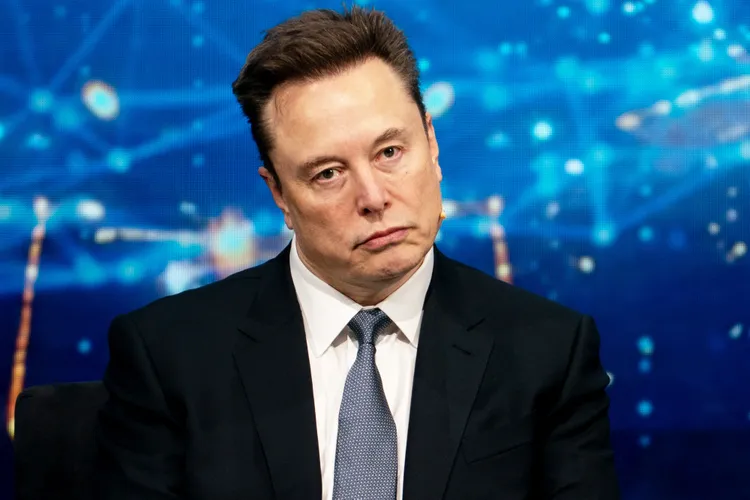

Elon Musk’s net worth surged to $852 billion this week—an all-time high fueled by the merger of two of his companies, SpaceX and xAI, ahead of a closely watched IPO expected later this year. Yet even with a fortune unlike anything modern history has seen, Musk signaled that wealth still hasn’t delivered what many assume it does: contentment.
“Whoever said, ‘Money can’t buy happiness’ really knew what they were talking about,” Musk wrote this week on X, a post that’s reportedly drawn more than 96 million views.
The comment set off a wave of responses from other billionaires and high-profile figures—many of whom have wrestled publicly with the same question: if money removes so many problems, why doesn’t it guarantee happiness?
Billionaire reactions: perspective, relationships, and reality
Hedge fund billionaire Bill Ackman replied with direct advice, suggesting Musk might find more fulfillment by focusing on perspective and giving back.
“A lot of happiness comes from helping others. You have helped millions, and someday it will likely be billions. You just need to appreciate what you have accomplished for so many,” he wrote.
Ackman also added that long-term companionship can matter as much as success. Musk has 14 children with four different women, and Ackman suggested that stability and personal connection may be what’s missing.
“Happiness can also be found in a long-term relationship with someone really special. It is time for you to find that someone for the long term. Just my two cents.”
Billionaire investor Mark Cuban pushed the conversation in a different direction. He argued that wealth doesn’t create happiness from scratch—it intensifies whatever emotional baseline already exists.
“If you were happy when you were poor, you will be insanely happy if you get rich,” Cuban wrote on X. “If you were miserable, you will stay miserable, just with a lot less financial stress.”
What research suggests about money and happiness
Scientists have been trying to map the relationship between income and happiness for decades, and the findings are more layered than a simple yes-or-no.
A widely cited 2010 Princeton University study concluded that emotional well-being rises with income—but only up to a point—flattening out around $75,000. More recent work from the University of Pennsylvania’s Wharton School complicates that picture, suggesting happiness can keep increasing with income, though the effect may taper off for those who already feel unhappy. In that research, happiness gains for unhappy people appeared to level off once income reached about $100,000.
“In the simplest terms, this suggests that for most people larger incomes are associated with greater happiness,” said Matthew Killingsworth, a Wharton senior fellow and the study’s lead author.
“The exception is people who are financially well-off but unhappy. For instance, if you’re rich and miserable, more money won’t help. For everyone else, more money was associated with higher happiness to somewhat varying degrees.”
In other words, money can reduce stress and expand options—but it may not repair strained relationships, resolve internal dissatisfaction, or provide meaning on its own. It can amplify comfort, but not automatically create peace.
Musk on philanthropy: “It’s very hard” to do it well
Even though much of Musk’s wealth is tied up in company valuations rather than cash, the scale of his fortune still gives him extraordinary leverage—enough to fund massive social programs, large-scale scientific projects, or global charitable initiatives.
But Musk has repeatedly said giving money away effectively is harder than people assume.
“I agree with love of humanity, and I think we should try to do things that help our fellow human beings,” Musk said on the WTF podcast late last year. “But it’s very hard.
“The biggest challenge I find with my foundation is trying to give money away in a way that is truly beneficial to people,” he added. “It’s very easy to give money away to get the appearance of goodness. It is very difficult to give money away for the reality of goodness. Very difficult.”
That tension isn’t unique to Musk. Many tech leaders—including Mark Zuckerberg, Larry Ellison, and Musk himself—have signed the Giving Pledge, an initiative launched by Bill Gates, Melinda French Gates, and Warren Buffett encouraging signatories to donate most of their wealth. Critics, however, have noted that some pledgers have moved slowly in turning that promise into action. Billionaire investor Peter Thiel has reportedly urged Musk to abandon the pledge, arguing the money could otherwise be steered toward “left-wing nonprofits.”
Gates, meanwhile, has been blunt about what extreme wealth can realistically offer. In a 2019 Reddit Q&A, he said being a billionaire did make him happier compared with being middle-class—largely because it removes certain fears that dominate everyday life.
“I don’t have to think about health costs or college costs,” Gates said. “Being free from worry about financial things is a real blessing.”
But he added an important qualifier: “Of course, you don’t need a billion to get to that point. We do need to reduce the cost growth in these areas.”
Musk’s post landed because it voiced something many people intuitively understand but rarely see confirmed by someone at the very top: money can solve problems, but it doesn’t automatically deliver meaning, connection, or inner stability. It can lower stress and increase freedom, yet still leave the central human questions untouched—what makes life feel worth living, and who you’re living it with.