
In a move that sounds like science fiction, the U.S. government is preparing to release billions of sterilized flies over Mexico and southern Texas — all to stop a deadly flesh-eating maggot that threatens livestock, wildlife, and even pets.
The plan, led by the U.S. Department of Agriculture (USDA), involves breeding massive numbers of male New World screwworm flies, sterilizing them with radiation, and dropping them from airplanes. The goal: overwhelm wild females with infertile mates so their eggs don’t hatch, ultimately collapsing the population.
“It’s an exceptionally effective and environmentally friendly strategy,” said Edwin Burgess, a University of Florida expert in animal parasites. “This is one of the great success stories in applied science.”
What Is the Screwworm Fly?
Unlike most fly larvae that feed on dead tissue, the screwworm targets living flesh. Female flies lay eggs in wounds or mucous membranes of warm-blooded animals. The resulting larvae burrow into the tissue, causing extreme pain and infection. In cattle, a screwworm infestation can prove fatal within two weeks.
“It smelled like rotting meat,” recalled retired Kansas rancher Don Hineman, describing infested animals from his youth. “It was nasty.”
Veterinarians can treat infestations, but they’re painful and can cripple animals.
A Proven Strategy, Rebooted
The USDA first eradicated screwworms in the U.S. in the 1960s and ’70s using the same sterile-insect technique. From 1962 to 1975, the U.S. and Mexico released over 94 billion sterilized flies, eventually eliminating the pest north of Panama.
But the screwworm reappeared in southern Mexico last year, prompting fears it could spread into the U.S. again. In May, the U.S. temporarily banned imports of live cattle, bison, and horses from parts of Mexico — a restriction that may last through mid-September.
The USDA plans to open a fly distribution center in southern Texas by year’s end and build a new screwworm fly factory in southern Mexico by July 2026. That facility will convert an existing fruit fly facility and is expected to cost $21 million. Another $8.5 million will go toward upgrading the Texas site.
Currently, a Panama-based factory — the only one still in operation — produces 117 million sterile flies a week. The USDA wants to scale up to 400 million weekly to meet the new threat.
Raising Flies by the Billion
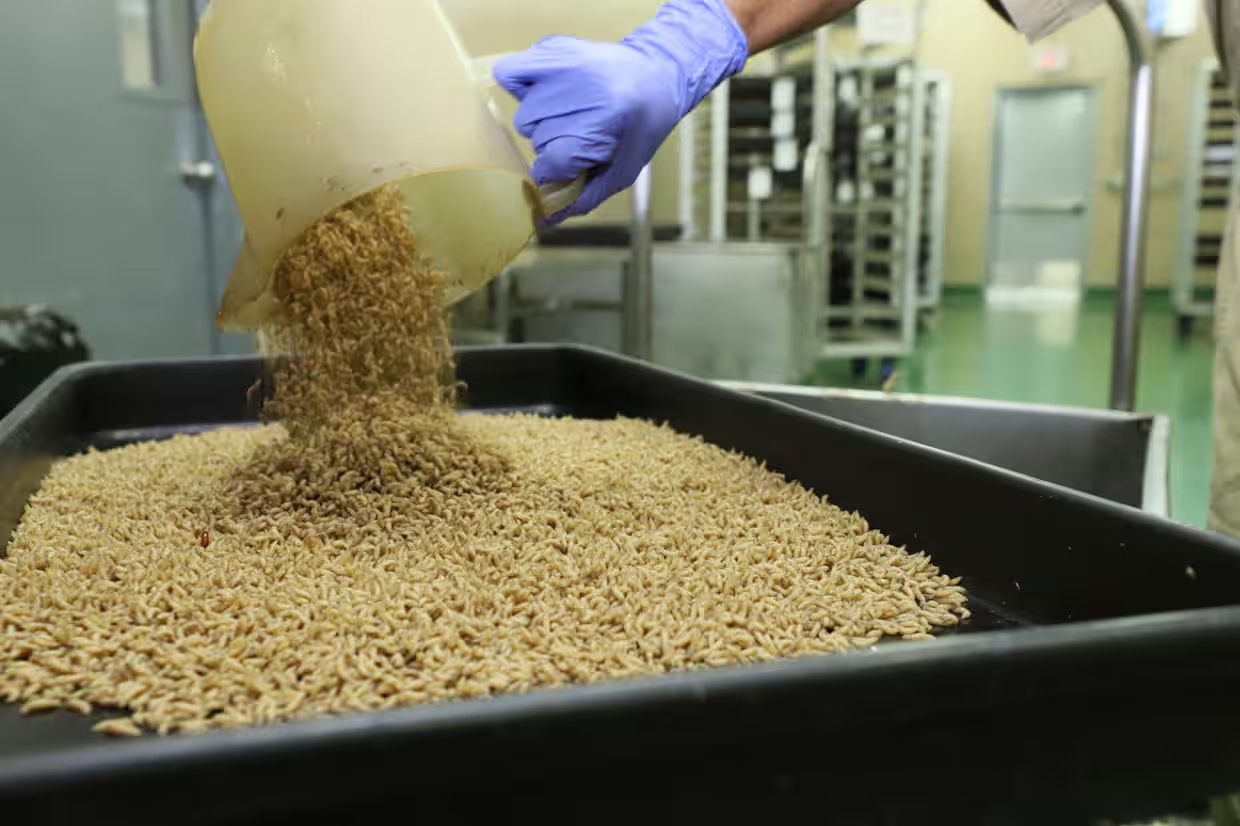
Breeding flies at this scale is surprisingly straightforward but requires careful control. Females must receive the right cues to lay eggs, and larvae must be fed a nutrient-rich diet. Fly factories have used everything from horse meat and honey to egg powder and cattle blood plasma.
In the wild, screwworm larvae fall to the ground when ready to pupate, forming a hard shell resembling a dark brown Tic Tac. In the lab, workers place them in sawdust trays to complete the process.
Not Without Risks
Security is critical. Any fertile flies escaping could restart an outbreak. Last month, a plane releasing sterile flies crashed near the Mexico-Guatemala border, killing three crew members.
Dropping flies from the air hasn’t changed much since the 1950s, when scientists used paper cups and special chutes. Today, light aircraft still deploy crates of sterilized flies, using updated “whiz packers” to aid the process.
Despite its challenges, experts call the sterile fly program one of the USDA’s most successful pest-control achievements. Some warn against closing new fly factories too quickly after success.
“We’ve seen it before — something we think we’ve conquered comes back,” Burgess said. “We need to be ready.”