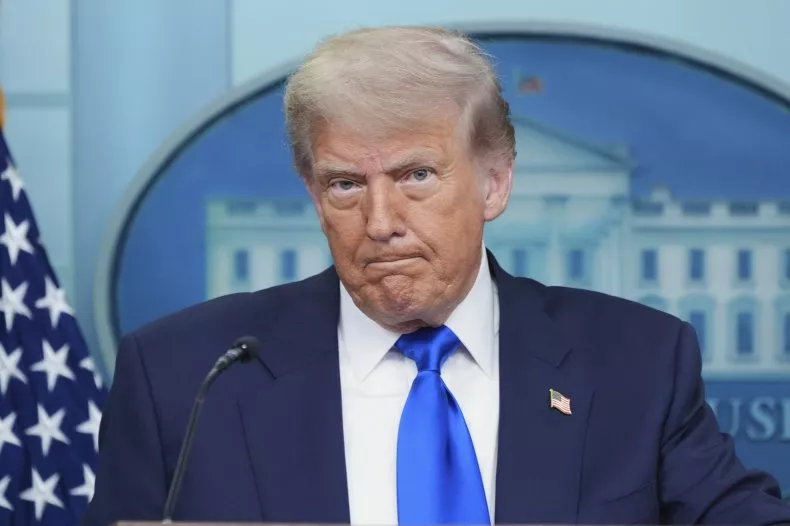

With just days remaining before President Donald Trump’s 90-day pause on his sweeping “Liberation Day” tariffs expires, the administration is struggling to deliver on its bold promise of securing “90 deals in 90 days.” So far, only one finalized agreement and a single preliminary framework have been announced—falling far short of expectations.
UK the Lone Success as Deadline Nears
Back in April, Trump rattled global markets by unveiling a slate of targeted “reciprocal” tariffs on countries he accused of exploiting the U.S. economy. Just a week later, the White House hit pause on implementation, offering trade partners the opportunity to negotiate new terms and avoid the looming duties.
While Treasury Secretary Scott Bessent initially claimed over 75 countries had entered talks—with a focus on 18 key trading partners—the United Kingdom remains the only nation to formally strike a deal. That agreement, hailed as “historic,” allows 100,000 British-made cars to be imported annually at a 10% tariff—down from Trump’s proposed 25% rate.
The U.S. has also reached preliminary terms with China, centered around rare earth minerals and critical components, though few details have been made public.
India Talks Progressing, Japan Talks Falling Apart
Negotiations with India are reportedly close to completion. Both sides are optimistic about a deal that would reduce the 26% tariffs imposed in April. Trump said aboard Air Force One that an agreement hinges on India opening more of its market to American companies.
But prospects with Japan are unraveling. After Tokyo pushed back against U.S. rice exports, Trump threatened new tariffs as high as 35%, calling Japan “very tough” and “very spoiled.”
“I’m not sure we’re going to make a deal. I doubt it,” Trump admitted on Tuesday.
Mixed Messages, Missed Targets
Trump and his aides have sent conflicting signals about the July 9 deadline. The president previously boasted to Time magazine about having “made 200 deals,” though he later acknowledged the challenge of finalizing any substantial trade agreement in such a short time.
“We can’t do that,” Trump said last week. “So we’re going to start sending letters. We’ve talked to many countries, and we’re just going to tell them what they have to pay.”
At a recent press conference, he simplified it further:
“Dear Mr. Japan, here’s the story: You’re going to pay a 25 percent tariff on your cars.”
White House Press Secretary Karoline Leavitt has tried to downplay the urgency, calling the July 9 deadline “not critical.” She said Trump could unilaterally assign tariff rates if countries fail to present acceptable offers.
Will the Deadline Be Extended?
Bessent has wavered as well. In May, he warned countries that failing to make a deal would mean a return to full Liberation Day tariffs. But earlier this month, he told Congress that those negotiating in “good faith” could continue talks past the deadline without penalties.
In an interview with Fox News, Bessent said most major trade agreements would likely be finalized by Labor Day, September 1.
Economist Ryan Young of the Competitive Enterprise Institute believes that’s a more realistic timeline.
“Trade policy is complicated—you can’t just bulldoze your way through,” Young told Newsweek. “A lot of countries may just be waiting Trump out, hoping for a more stable administration in the future.”
He added that financial markets could “revolt” if Trump fully implements the Liberation Day tariffs.
What’s Next?
Despite Trump’s rhetoric, most experts believe the July 9 deadline will be pushed back for the majority of trade partners. Those that do finalize deals—now or later—will likely receive terms similar to the U.K.’s: a reduced but still elevated tariff structure, rather than full exemptions.
“The bottom line is that tariffs will likely end up higher than when Trump took office,” Young said.
Whether the president sticks to his original timeline or delays enforcement, the administration’s failure to secure dozens of trade deals raises doubts about Trump’s ability to deliver the sweeping economic reset he promised.