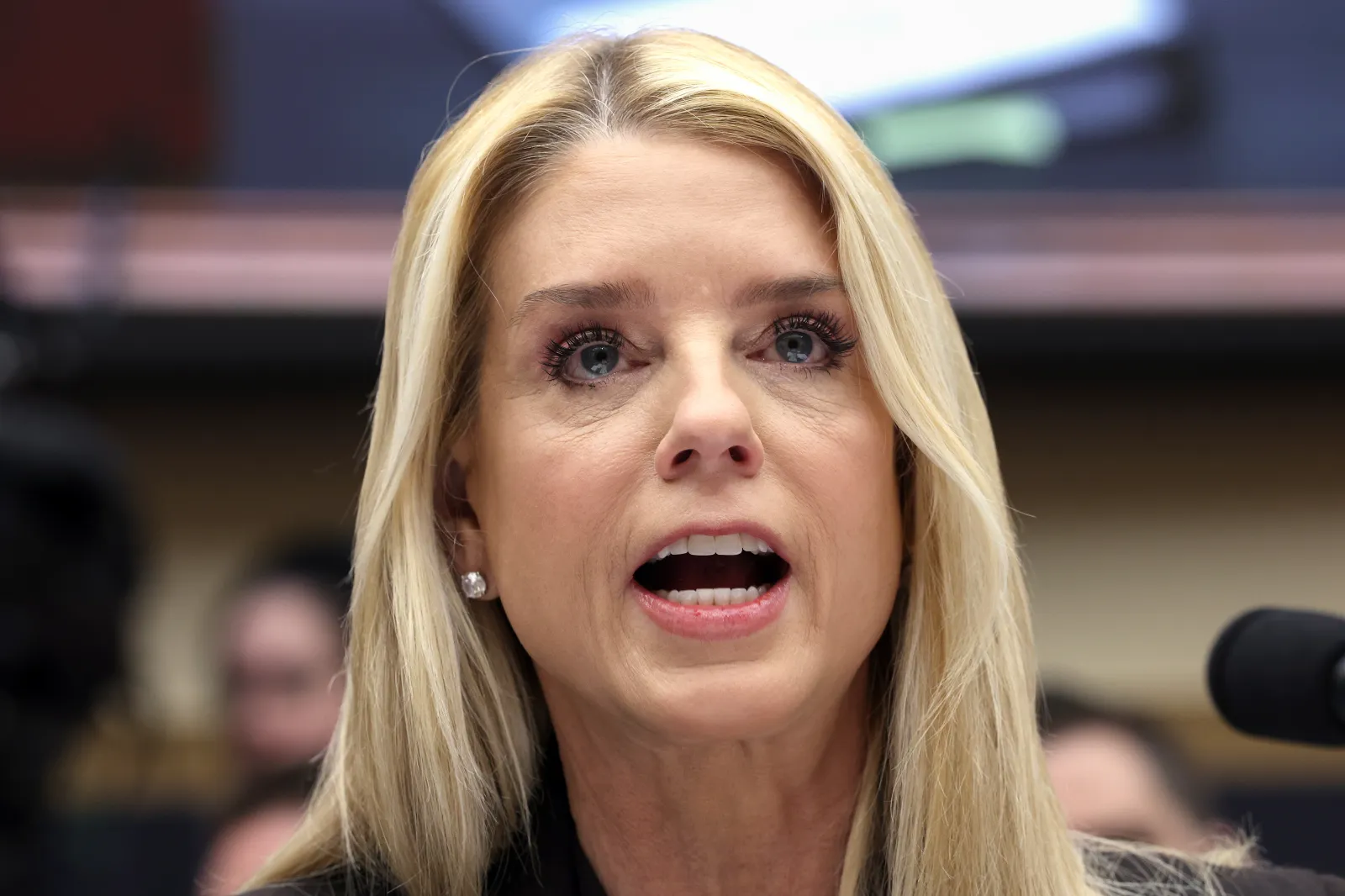

Attorney General Pam Bondi arrived before the House Judiciary Committee on Wednesday in a combative posture, aiming to shift attention away from the Epstein controversy and demonstrate loyalty to President Donald Trump.
Her four-hour appearance, however, was marked less by explanation than by confrontation, with repeated evasions, sharp retorts, and moments that drew immediate backlash.
Bondi was called to defend the Justice Department’s handling of the Jeffrey Epstein file releases. Instead of offering clear answers, she leaned into a familiar political playbook: sidestepping direct questions, deriding Democratic lawmakers, declining to offer a direct apology to victims affected by the disclosures, and framing the scrutiny as part of a partisan campaign against the president. She repeatedly praised Trump—at one point calling him “the greatest president in American history”—and echoed his claim that he is the target of a Democratic smear effort.
Bondi declines to apologize to victims
In her opening statement, Bondi said she was “deeply sorry” for what survivors endured and encouraged anyone with information about abuse to contact law enforcement.
“I am deeply sorry for what any victim, any victim, has been through, especially as a result of that monster,” she said.
But the tone shifted sharply during questioning from Rep. Pramila Jayapal, D-Wash., who pressed Bondi to turn toward victims seated in the audience and apologize for what she described as additional harm caused by the recent mass release of files—some of which reportedly identified victims without their consent.
Bondi refused. She accused Jayapal of “theatrics” and said the congresswoman was dragging the hearing “into the gutter,” a response critics characterized as dismissive and out of step with the gravity of victims’ concerns.
A confrontational, political defense
Throughout the hearing, Bondi adopted an aggressive style that closely mirrored Trump’s own rhetoric. Rather than maintaining the restrained posture typically expected of an attorney general, she repeatedly interrupted Democratic members and rejected their questioning as politically motivated.
She cast the hearing as an effort to undermine the president and portrayed oversight of the Justice Department as another front in a broader campaign against Trump. Several times, she pivoted away from policy details to full-throated defenses of the White House.
One of the most heated exchanges came when Rep. Jamie Raskin, D-Md., accused Bondi of refusing to answer his questions. Bondi responded with a personal insult, calling him a “washed-up loser lawyer—not even a lawyer.”
At multiple points, Bondi framed her posture as protective of the president rather than responsive to congressional oversight.
“You sit here and you attack the president and I’m not going to have it,” she said. “I am not going to put up with it.”
Claims of a “massive Epstein cover-up”
Democrats argued that the department’s approach to the file releases raised serious questions—both about transparency and about the consequences for survivors. Raskin accused the Justice Department of enabling perpetrators while failing victims, calling the handling of the matter a “massive Epstein cover-up.”
“You’re siding with the perpetrators and you’re ignoring the victims,” he said. “That will be your legacy unless you act quickly to change the course.”
Bondi also faced criticism from Rep. Thomas Massie, R-Ky., who has broken with his party on the issue and supported efforts to force disclosure. Massie sharply condemned the release of victims’ personal information, telling Bondi the department had inflicted additional trauma. “Literally the worst thing you could do to survivors, you did,” he said.
Bondi responded by accusing Massie of selective outrage and suggested he was focused on the files only because Trump appears in them. She called him a “hypocrite” and dismissed his concerns as “Trump derangement syndrome.”
Rising pressure and talk of an exit
In the aftermath of the hearing, speculation about Bondi’s political standing intensified. Trading markets tracked by Kalshi showed her odds rising to become the leading pick to be the first cabinet member forced out of office, overtaking Homeland Security Secretary Kristi Noem.
The shift was swift: her chances reportedly climbed from 12% on February 11 to 22% on February 12.
Bondi’s approach—doubling down on loyalty to Trump while meeting criticism with insults and stonewalling—left the impression of a high-risk performance under mounting pressure. In trying to protect her position, she may have deepened the controversy surrounding her instead.