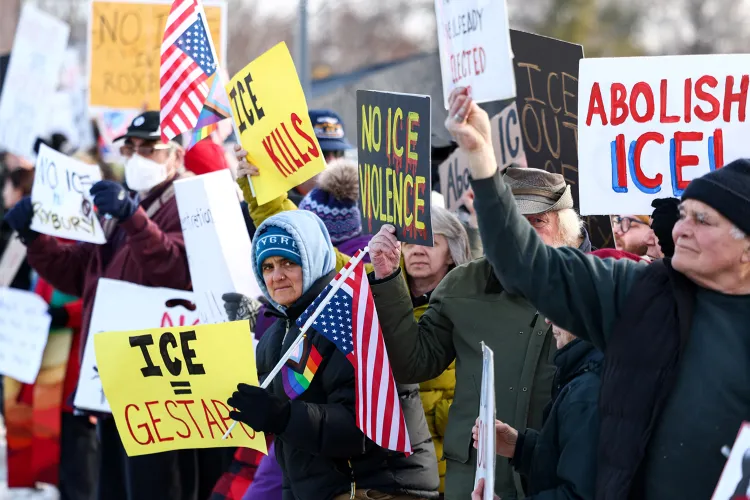

Lawmakers in New Jersey have introduced new legislation designed to strengthen protections for immigrant communities, drawing attention for both its policy goals and its phrasing.
The proposed measure, Act A4446, is described as an effort to “fight unlawful conduct and keep individuals and communities empowered.” Online sleuths quickly realized that taking the first letter of each word of that pledge spells out the acronym “F–-K ICE.”
The proposal follows recent enforcement activity in the state. Less than two weeks earlier, ICE agents detained ten individuals near a light rail station along the border of Hoboken and Jersey City.
Assembly members Ravi Bhalla and Katie Brennan, alongside Assemblywomen Annette Quijano and Alixon Collazos-Gill, introduced the bills aimed at limiting what they characterize as disruptive federal enforcement actions.
Bhalla emphasized the intent behind the legislation, stating that ICE operations create fear within local communities. He referenced Hoboken’s sanctuary city ordinance, noting that the new proposals would provide additional tools for state and local authorities to safeguard residents while allowing law enforcement to focus on their primary responsibilities.
Brennan echoed those concerns, citing a widely circulated video involving ICE agents and Jake Ephros. She argued that the incident underscored the need for stronger oversight and accountability, alleging that certain enforcement practices raise constitutional questions.
Similar legislative efforts have emerged in other Democratic-led states, according to Stateline. Some proposals seek to restrict immigration arrests in or near sensitive locations such as schools, churches, hospitals, and courthouses.
In New Mexico, lawmakers recently advanced legislation that would prohibit state officials from entering into federal contracts to detain individuals accused of immigration violations.
Meanwhile, legislators in Maryland have considered multiple measures, including proposals that would prevent local law enforcement agencies from participating in federal immigration enforcement agreements and terminate existing arrangements.