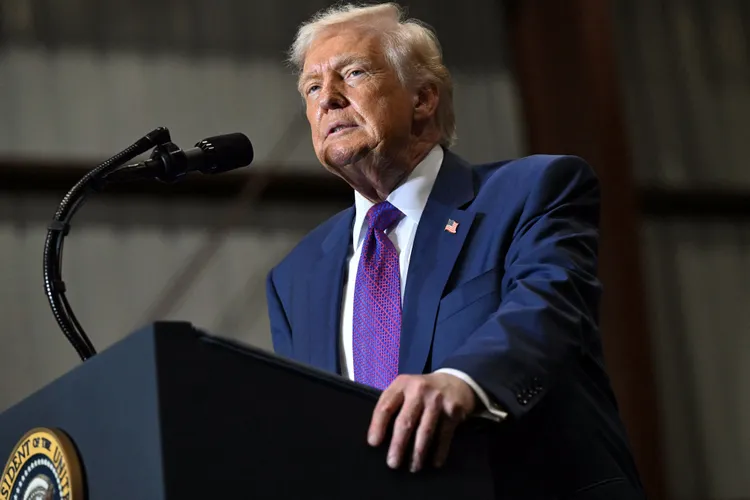

One year into President Donald Trump’s second term, a sharp divide has emerged between the administration’s “pro-growth” reports and the daily financial reality for American families. While the White House touts a robust January jobs report and cooling inflation, Congressional Democrats are sounding the alarm on a “cost-of-living crisis” they say is fueled by the President’s aggressive tariff policies.
The conflict comes as the Bureau of Labor Statistics (BLS) released data showing the U.S. economy added 130,000 jobs in January 2026, nearly doubling the 70,000 projected by analysts. Simultaneously, annual inflation slowed to 2.4%, its lowest level since May 2025. However, beneath these headline numbers, structural weaknesses and surging “pocketbook” costs are providing Democrats with potent political ammunition.
The “Trump Economy”: Record Jobs or Revisions?
President Trump has celebrated the latest employment figures as a validation of his “America First” agenda. The January surge was led by healthcare (+82,000) and construction (+33,000), sectors the administration claims are benefiting from deregulation.
However, Rep. Richard Neal (D-MA) and other top Democrats were quick to point out the “fine print.” Massive downward revisions to 2025 data revealed that the economy added an average of only 15,000 jobs per month during Trump’s first year back in office—a stark contrast to the robust growth seen in the previous administration.
“Beating expectations once doesn’t absolve the pain of the meager monthly average of 15,000 jobs created last year,” Neal said in a statement.
The True Cost of Tariffs
The central flashpoint is the administration’s “reciprocal tariffs.” In early 2025, the U.S. average effective tariff rate skyrocketed from 2.5% to an estimated 27% following the “Liberation Day” executive orders. While the Supreme Court recently struck down certain tariffs imposed under the International Emergency Economic Powers Act (IEEPA) in February 2026, the remaining trade barriers have already left a mark on consumer prices.
Democrats argue these “Trump Taxes” are the primary driver of high prices for essentials:
- Grocery Costs: While overall inflation is at 2.4%, food-away-from-home (restaurants) rose 4.0% over the last year.
- Utilities: Natural gas prices surged 9.8%, and electricity rose 6.3% in the 12 months ending January 2026.
- Housing: The shelter index remains a “sticky” contributor to inflation, up 3.0% year-over-year.
House Minority Leader Hakeem Jeffries (D-NY) hammered the administration on these specifics, stating, “Housing costs are out of control. Grocery costs are out of control… and childcare costs are out of control.”
Blue-Collar Disconnect
Despite the President’s rhetoric aimed at the working class, a report from the Economic Policy Institute suggests that blue-collar industries have borne the brunt of the trade wars. Since February 2025, industries such as manufacturing and transportation have seen a cumulative loss of nearly 166,000 jobs, largely due to increased costs for raw materials like steel and aluminum, which saw tariffs hike to 50% in mid-2025.
| Economic Indicator (Jan 2026) | Data Point |
| Headline Inflation (YoY) | 2.4% |
| Electricity Price Increase (YoY) | 6.3% |
| Blue-Collar Job Loss (since Feb 2025) | ~166,000 |
| Federal Jobs Lost (since Oct 2024) | 327,000 |
Looking Ahead
The administration faces a dual challenge in the coming months: managing the fallout of the Supreme Court’s ruling—which may require the government to refund roughly $142 billion in “illegal” tariff revenue—and addressing a cooling labor market for workers without college degrees.
As the 2026 midterm elections approach, the debate over whether the “Trump Economy” is a success or a “tax on the middle class” will likely intensify, with both sides weaponizing the same BLS datasets to tell two very different stories of American life.