
TEHRAN/WASHINGTON — Global energy markets are reeling following a massive, coordinated military assault by the United States and Israel against Iran on February 28, 2026. The joint operation, codenamed Operation Epic Fury by the U.S. Department of Defense and Operation Genesis by Israel, has neutralized key Iranian leadership and triggered retaliatory strikes across the Middle East, sparking immediate fears of a global oil supply shock.
The conflict has already sent Brent crude prices surging by as much as 12% in Monday morning trading, reaching a peak of $82 per barrel before settling near $79. Analysts warn that if the disruption to the Strait of Hormuz—the world’s most vital oil chokepoint—persists, American drivers could see a sharp reversal of the multi-year trend of declining gas prices.
Escalation at the ‘Chokepoint of the World’
The most significant threat to global energy stability is the reported closure of the Strait of Hormuz. Following the strikes, which reportedly killed Iranian Supreme Leader Ayatollah Ali Khamenei, Iran’s Revolutionary Guard warned that no tankers would be allowed to pass through the 21-mile-wide waterway.
- Global Impact: Approximately 15 to 20 million barrels of oil pass through the Strait daily—roughly 20% of the world’s total consumption.
- Shipping Paralysis: As of Monday morning, at least 150 tankers have dropped anchor in the Gulf, refusing to enter the volatile passage after reports of a drone strike on a Palau-flagged tanker.
- The Price of Risk: Energy analysts at Barclays and Eurasia Group suggest that a prolonged blockade could push crude prices past $100 a barrel, a level not seen in years.
Impact on U.S. Gas Stations: What to Expect
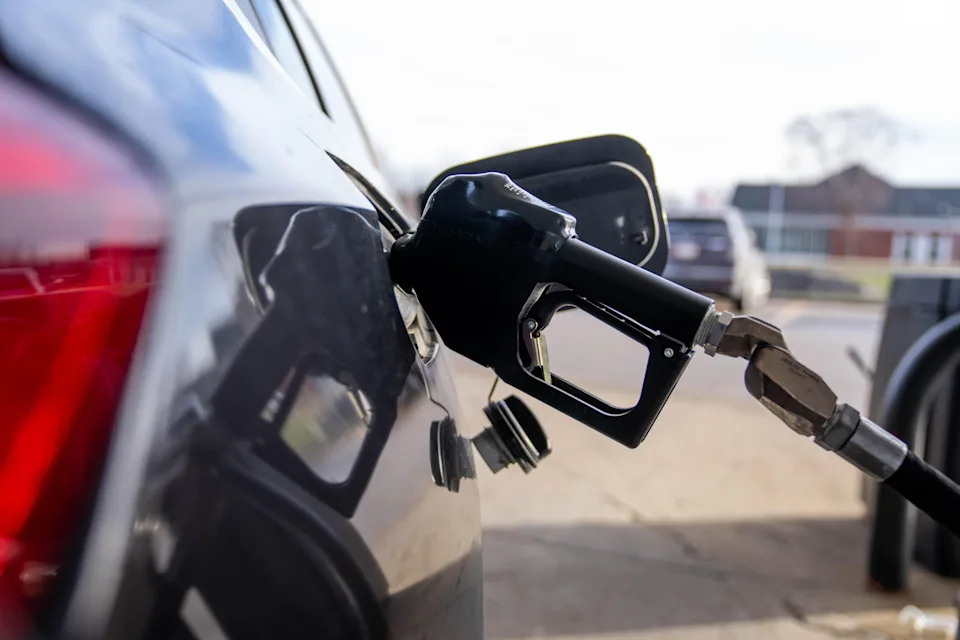
For American consumers, the “war premium” is expected to hit the pump gradually but noticeably. Patrick De Haan, head of petroleum analysis at GasBuddy, predicts the national average will likely surpass $3 per gallon as early as today, March 2.
“Oil moves first; gasoline follows,” De Haan noted, suggesting that while prices won’t skyrocket overnight, the conflict will accelerate the seasonal climb typically seen in the spring. Current projections expect the national average to reach $3.10 to $3.15 per gallon within the next two weeks.
| Metric | Pre-Strike (Feb 2026) | Projected (Mid-March 2026) |
|---|---|---|
| National Gas Average | $2.85 – $2.98 | $3.10 – $3.15 |
| Brent Crude Oil | $73.00 | $85.00+ |
| Household Fuel Spend | $2,083 (Est. Annual) | Volatile |
The Global Response and Market Stability
In an effort to calm the markets, eight OPEC+ nations announced on Sunday an unexpected production increase of 206,000 barrels per day starting in April. However, experts like Jorge León of Rystad Energy warn that “additional production provides limited relief if the oil cannot physically move through the Gulf.”
The U.S. and Israel maintain that the strikes were a “pre-emptive” necessity to eliminate Iran’s nuclear and missile programs. President Donald Trump, in a televised address, stated the operation aims for “regime change,” calling on the Iranian people to reclaim their country.
Looking Ahead
The duration of the price spike depends entirely on the “depth and duration” of the military engagement. If the U.S. Navy successfully reopens the Strait of Hormuz to commercial traffic, the price surge may be short-lived. However, if Iran continues retaliatory strikes on regional energy infrastructure in Saudi Arabia or the UAE, the $100-per-barrel “worst-case scenario” remains a distinct possibility.