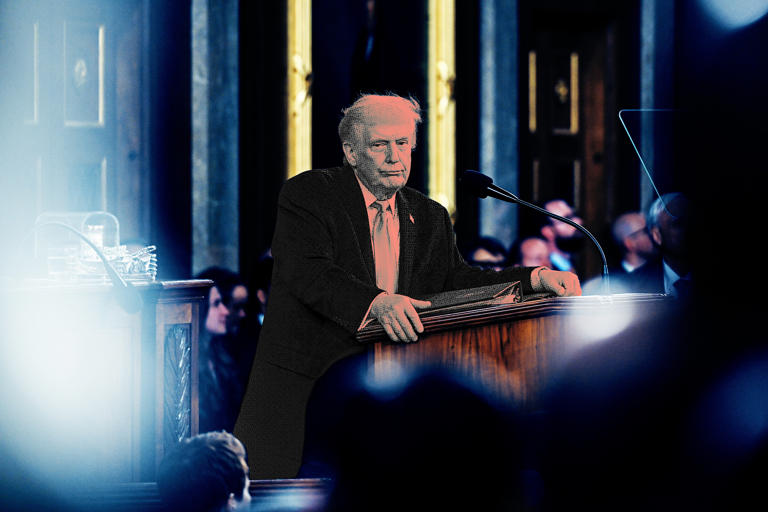

TEHRAN / WASHINGTON D.C. — The Middle East stands on the precipice of a full-scale regional war as the joint U.S.-Israeli military campaign against Iran enters its fourth day. With the reported death of Supreme Leader Ayatollah Ali Khamenei confirmed and the civilian death toll climbing past 500, global markets are reeling under the weight of a de facto closure of the Strait of Hormuz.
Despite the intensity of the “Operation Epic Fury” strikes, President Donald Trump has offered a series of shifting objectives, oscillating between a swift “four-to-five week” surgical operation and a protracted engagement with no fixed timeline.
Civilian Casualties Spike Amid Decapitation Strikes
Humanitarian organizations, including the Iranian Red Crescent, reported Tuesday that at least 555 people have been killed since the strikes began on February 28. While the majority of casualties are military personnel, verified reports indicate over 200 civilian deaths, including a catastrophic strike on a girls’ elementary school that killed at least 168 people.
U.S. Secretary of State Marco Rubio defended the operations, insisting there was an “imminent threat” from Iran but emphasized that the mission to dismantle Iran’s ballistic missile and nuclear infrastructure remains the priority.
Conflict Zones: Air and missile strikes have been documented in 150 cities across 22 Iranian provinces.
Retaliation: Iran has responded by targeting U.S. military facilities in Bahrain, Kuwait, Qatar, and the UAE, while also striking civilian infrastructure like Dubai International Airport.
Markets Rattle as “Chokepoint” Tightens
The global economy is beginning to feel the tremors of the conflict. Oil prices surged as the Strait of Hormuz, which handles roughly 20% of the world’s oil and LNG supply, became effectively impassable for commercial tankers.
Energy Impact: Brent Crude jumped more than 9% on Monday, reaching nearly $80 per barrel as insurers withdrew coverage for Gulf transit and ship traffic came to a virtual standstill.
Safe Havens: Investors have fled to gold and the U.S. dollar, with bullion prices reaching record highs as the “fog of war” obscures the long-term economic outlook.
Financial analysts warn that a prolonged closure of the Strait—lasting more than two weeks—could push Brent toward $120 per barrel, triggering a global inflationary spike.
The “Trump Doctrine” in Flux
The White House has struggled to present a singular vision for the conflict’s endgame. On Sunday, President Trump called for the Iranian people to “take back their country,” hinting at a regime-change objective. However, by Tuesday, the administration’s messaging became increasingly opaque.
“Whatever the time is, it’s okay—whatever it takes,” Trump told reporters, refusing to rule out the deployment of ground troops despite Defense Secretary Pete Hegseth’s earlier rejection of “endless wars.”
| Official | Stated Goal | Timeline |
|---|---|---|
| Donald Trump | Regime change / “Greatest chance for patriots” | No fixed timeline; “whatever it takes” |
| Marco Rubio | Destroying missile program & navy | Focused on immediate “pre-emptive” defense |
| Pete Hegseth | Regional stability / Counter-terrorism | Rejects “endless war” narrative |
A Look Ahead: Diplomatic Off-Ramps or Total War?
While the U.S. military claims it has successfully degraded the Islamic Revolutionary Guard Corps (IRGC) command structures, the lack of a clear exit strategy has unnerved allies. Regional powers like Qatar and the UAE are reportedly lobbying the Trump administration for a diplomatic “off-ramp” to prevent a total collapse of regional energy security.
As Israeli jets continue a “new wave” of strikes on Tehran targeting the Ministry of Intelligence, the international community watches the U.N. Human Rights Council in Geneva, where calls for an immediate ceasefire have so far fallen on deaf ears.