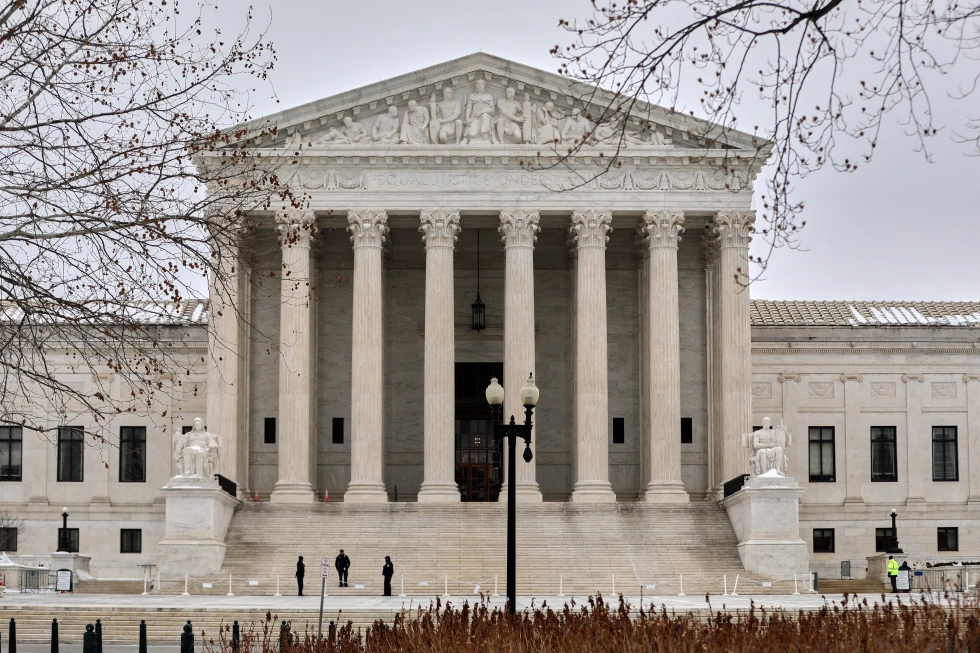

WASHINGTON — The Supreme Court on Monday issued an emergency order blocking a California law that prohibited school districts from notifying parents when their children identify as transgender. The decision marks a significant victory for parental rights advocates and a major setback for California officials who argued the law was essential to protecting student privacy.
The high court’s intervention effectively halts AB 1955, a first-of-its-kind state law signed by Governor Gavin Newsom in 2024. The law had prevented school staff from “outing” transgender or nonbinary students to their families without the student’s explicit consent. By granting the emergency appeal, the justices have reinstated a lower-court injunction, allowing school notification policies to resume while legal challenges proceed through the appellate system.
A Landmark Clash Over Parental Rights and Religious Liberty
The case was brought by the Thomas More Society on behalf of Catholic parents who argued that the state’s “secrecy” policies infringed upon their 14th Amendment rights to direct the upbringing of their children and their First Amendment right to the free exercise of religion.
“The parents who assert a free exercise claim have sincere religious beliefs about sex and gender,” the Court’s majority stated in an unsigned order. “California’s policies violate those beliefs.”
The Thomas More Society hailed the ruling as “the most significant parental rights ruling in a generation,” suggesting it sets a powerful precedent for how schools must interact with families regarding a minor’s social
Shutterstock
Federal Funding and the Trump Administration’s Influence
The ruling arrives amid an intensifying confrontation between Sacramento and the Trump administration. Since taking office in January 2025, President Donald Trump has aggressively moved to dismantle gender-identity protections via executive order, asserting a federal policy that recognizes only two biological genders.
The Department of Education, led by Secretary Linda McMahon, recently concluded a federal investigation alleging that California “egregiously abused” its authority. The administration has threatened to withhold approximately $8 billion in annual federal education funding if the state does not comply with federal interpretations of the Family Educational Rights and Privacy Act (FERPA).
“Children do not belong to the State—they belong to families,” McMahon stated following the investigation’s findings.
Dissent and the Defense of Student Privacy
The Court’s decision was not unanimous. Justice Elena Kagan issued a sharp dissent, criticizing the majority for using the “shadow docket”—emergency orders issued without full briefing or oral argument—to upend state law.
“This Court owes it to a sovereign State to avoid throwing over its policies in a slapdash way,” Kagan wrote.
California officials, including State Senator Scott Wiener, have vowed to continue fighting for the protections. Proponents of AB 1955 argue that many transgender youth face the risk of domestic abuse or homelessness if “outed” to unsupportive households before they are ready to disclose their identity.
Comparison of Key Legal Arguments
| Stakeholder | Primary Argument | Legal Basis |
| Parents/Plaintiffs | Schools cannot hide significant mental or social changes in a child from their legal guardians. | 1st & 14th Amendments |
| State of California | Students have a right to privacy and safety, particularly if disclosure risks family rejection. | State Privacy Law (AB 1955) |
| Dept. of Education | Federal law requires transparency with parents; state laws cannot bypass parental consent. | FERPA / Executive Order |
What’s Next for Gender Policy Litigation?
The Supreme Court’s action is temporary but signals a clear leaning toward the conservative wing’s interpretation of parental rights. The case now returns to the lower courts for a full trial on the merits.
Legal experts are also watching for the Court’s potential involvement in similar cases out of Massachusetts and Florida. With the Trump administration actively suing California over transgender participation in girls’ sports and gender-affirming healthcare bans already upheld in several states, this ruling underscores a broader judicial shift toward prioritizing religious liberty and parental authority over state-level civil rights protections for LGBTQ+ minors.