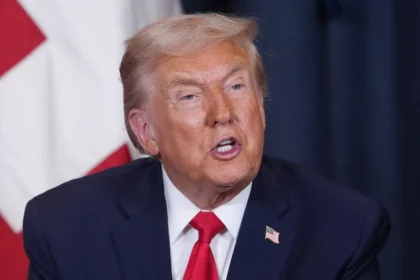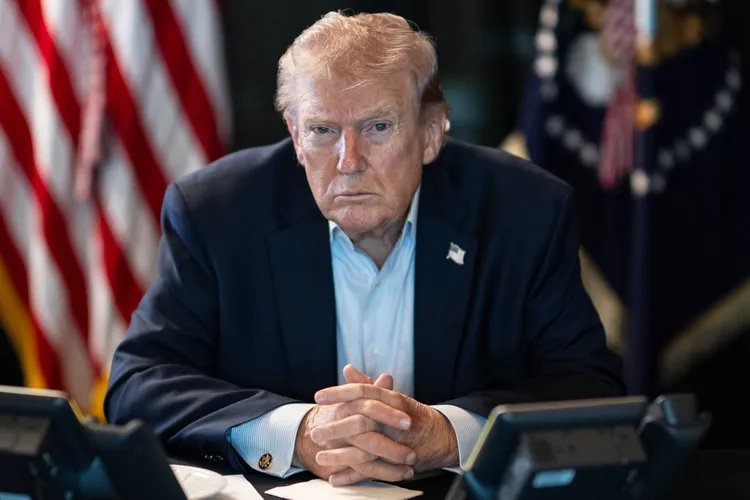

WASHINGTON — President Donald Trump signaled a grim acceptance of potential retaliatory attacks on U.S. soil as the military confrontation with Iran enters a volatile new phase. In a wide-ranging interview with TIME magazine published Thursday, the President addressed the growing domestic security concerns following a joint U.S.-Israeli offensive that has decapitated the Iranian leadership.
Asked by correspondent Eric Cortellessa if Americans should fear strikes within the United States, Trump responded, “I guess.”
“But I think they’re worried about that all the time. We think about it all the time. We plan for it,” Trump said during the interview titled “Trump’s War.” He added a stark assessment of the human cost of the burgeoning conflict: “Like I said, some people will die. When you go to war, some people will die.”
The President’s comments come as the FBI investigates a deadly mass shooting in Austin, Texas, for a potential “nexus to terrorism.” On March 1, a gunman identified as 53-year-old Ndiaga Diagne opened fire at a local bar while wearing apparel featuring the Iranian flag and the phrase “Property of Allah.” The attack left three civilians dead and 14 others wounded.
Heavy Toll: U.S. Service Members Identified
The domestic unease coincides with the homecoming of six U.S. service members killed in a retaliatory Iranian drone strike at the Port of Shuaiba, Kuwait. The Pentagon has released the identities of the fallen, many of whom were reservists assigned to the 103rd Sustainment Command:
- Maj. Jeffrey R. O’Brien, 45, Indianola, Iowa
- Capt. Cody A. Khork, 35, Winter Haven, Fla.
- CW3 Robert M. Marzan, 54, Sacramento, Calif.
- Sgt. 1st Class Noah L. Tietjens, 42, Bellevue, Neb.
- Sgt. 1st Class Nicole M. Amor, 39, White Bear Lake, Minn.
- Sgt. Declan J. Coady, 20, West Des Moines, Iowa
The strike in Kuwait was part of a broader Iranian counter-offensive following “Operation Epic Fury,” a massive U.S.-Israeli air campaign launched on February 28. That operation successfully targeted a high-level meeting in Tehran, killing Supreme Leader Ali Khamenei and several top military commanders.
Regional Devastation and the Path Forward
The conflict has rapidly expanded beyond the borders of Iran, impacting several neighboring nations and resulting in a death toll estimated to exceed 1,000 people. The Iranian Red Crescent Society reported that emergency response teams have been deployed across 153 counties to manage the mounting humanitarian crisis.
Despite the casualties and the risk of domestic “lone wolf” attacks, President Trump indicated he intends to remain deeply involved in Iran’s future. He told TIME he expects the U.S. to play a central role in selecting the country’s next leadership to ensure a “sane and rational” government replaces the fallen theocracy.
“I’m not going through this to end up with another Khamenei,” Trump said.
As the FBI continues its forensic sweep of the Austin shooter’s digital footprint and the Pentagon prepares for further retaliatory cycles, the administration faces growing pressure to define the ultimate scope of the war. For now, the President’s “I guess” serves as a sobering reminder that the front lines of this conflict may no longer be confined to the Middle East.