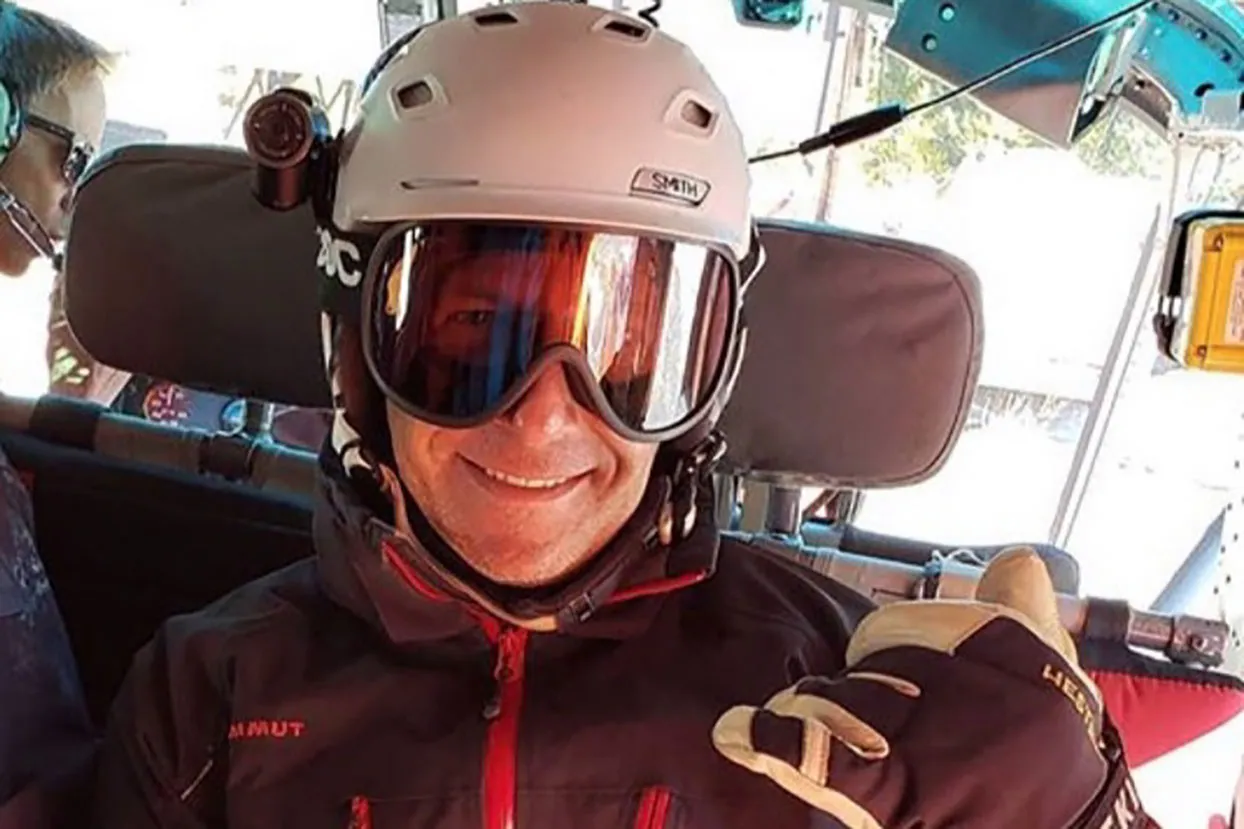

BURBANK, CA — On the morning of March 5, 2020, Gregg Garfield was wheeled into Providence Saint Joseph Medical Center in a scene that would soon become a global archetype: paramedics in hazmat suits, a patient gasping for oxygen, and a medical community facing an invisible, lethal foe. Today, exactly six years after his harrowing admission, the 59-year-old businessman is boarding a flight back to Val Gardena, Italy—the very site where he became one of California’s first documented cases of COVID-19.
Garfield’s journey from a ventilated hospital bed to the jagged peaks of the Dolomites marks a definitive milestone in the narrative of pandemic recovery. Once given a 1% chance of survival, his return to the Italian slopes serves as a profound investigation into human resilience and the long-term medical aftermath of the SARS-CoV-2 virus.
The 64-Day Battle for Survival
Garfield’s initial prognosis was among the most severe recorded in Los Angeles County during the pandemic’s first wave. After contracting the virus on a gondola with 12 companions in February 2020, his condition plummeted within five days of returning to the U.S.
His clinical course was a “perfect storm” of systemic failure:
- Multi-organ failure: The virus attacked his kidneys and liver.
- Sepsis and Staph: Secondary infections ravaged his immune system.
- Pulmonary Collapse: His lungs collapsed four separate times while he was intubated.
- Amputations: Severe lack of blood flow necessitated the amputation of portions of eight fingers and three toes.
:max_bytes(150000):strip_icc():focal(749x0:751x2):format(webp)/gregg-garfield-covid-patient-1-2000-eac9de34a0a746b6b6f09c2a670de3ea.jpg)
“His doctors thought he might have just a 1% chance of survival,” his fiancée, A.J. Johnson, recalled. Against these odds, Garfield spent 31 days on a ventilator, losing 50 pounds before he was finally discharged in May 2020 to the cheers of hundreds of medical staff.
Defying Medical Expectations
The investigative interest in Garfield’s case lies in his near-total physical recovery despite the severity of his trauma. While millions suffer from “Long COVID”—characterized by persistent fatigue and respiratory issues—Garfield reports zero scarring on his lungs and no long-haul symptoms.
By December 2020, just seven months after leaving the hospital, Garfield defied his physical therapists’ “realistic expectations” by returning to the slopes at Mammoth Mountain. He has since maintained a rigorous schedule, logging nearly 100 days of skiing annually.
“I still have no idea why I recovered,” Garfield says. “It almost feels like it’s somebody else’s story—except when I look down at my hands.”
:max_bytes(150000):strip_icc():focal(999x0:1001x2):format(webp)/gregg-garfield-covid-april-2020-2000-7f41c14515a84e279c270834d4b20873.jpg)
A Grim Legacy and a New Perspective
Garfield’s survival is contrasted by the tragedy of his original travel group. Of his 12 ski buddies, five were hospitalized, and one eventually succumbed to the virus after 90 days on a ventilator. Globally, the disease has claimed more than 7 million lives.
Now a motivational speaker, Garfield views his survival not as a stroke of luck, but as a mandate for perspective. He recalls 25 families who reached out to him during the height of the pandemic seeking hope for their hospitalized loved ones; all 25 eventually passed away.
:max_bytes(150000):strip_icc():focal(331x281:333x283):format(webp)/Gregg-Garfield-skiing-030226-b18c0d1a8f7b46e9944bb58bdc2f463b.jpg)
Looking Ahead
As Garfield returns to Val Gardena with his fiancée and her children, the trip is more than a vacation—it is a reclamation of the life he nearly lost. His story remains a critical case study for medical professionals monitoring the long-term outcomes of early “Patient Zero” survivors.
For the medical community, the focus remains on why certain individuals, like Garfield, escaped the permanent pulmonary fibrosis typical of such severe infections. For Garfield, the focus is simpler: “You don’t have to die to understand what’s important in life.”