
WAINFLEET, Ontario — A Canadian couple’s dream retirement project has transformed into a high-stakes legal and financial crisis after the discovery of ancestral Indigenous remains on their property triggered a provincial mandate that could cost them upwards of $234,000.
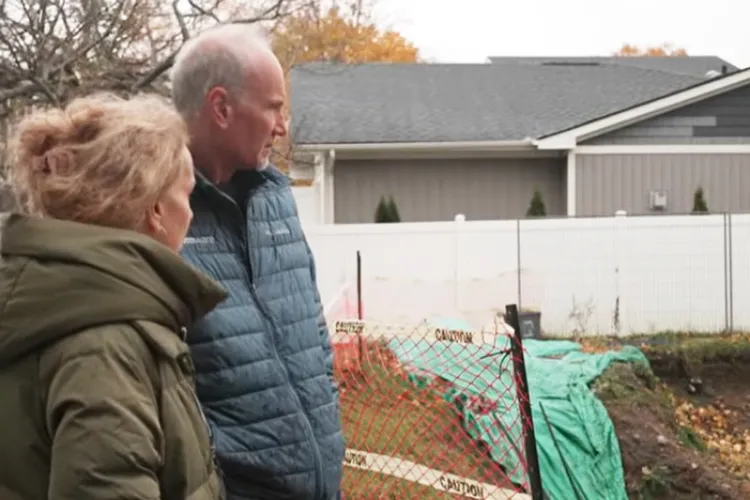
Christine and Dan Reio, who purchased a lakeside cottage in the Township of Wainfleet during the pandemic, were blindsided by a 2002 provincial law that places the financial burden of archaeological preservation solely on private landowners. The discovery has halted construction on their Lake Erie property and exposed a controversial “technicality” in Ontario’s burial regulations that critics say pits homeowners against historical preservation efforts.
A Discovery 1,000 Years in the Making
The situation began when the Reios received permits from the township to demolish their existing cottage and build a new structure. During the excavation phase, the project foreman notified the couple that human remains had been unearthed.
A subsequent investigation involving local police, provincial authorities, and archaeological experts confirmed the remains belonged to an Indigenous man, estimated to be in his 20s, who was buried approximately 1,000 years ago.
Under the Funeral, Burial and Cremation Services Act, Ontario’s Registrar of Burials ordered the Reios to commission a comprehensive burial site investigation. The mandate requires the landowners to hire a licensed archaeologist to determine the origin of the site and assess whether the property must be legally classified as a cemetery.
The “Undue Burden” of Provincial Mandates
The financial implications of the order are staggering. The Reios received an initial quote from an archaeological firm totaling $234,000. The proposal outlines a month-long operation involving a six-person crew to meticulously sift through the site.
“This is an insane amount of money,” Christine Reio told the CBC. “This is not within the scope of what’s reasonable.”
The couple expressed fears that if further remains are discovered, the costs could balloon to over $700,000. While a 2002 provision allows property owners to apply for financial assistance by proving “undue financial burden,” the Reios claim they applied for relief in October 2024 and have received no response from the Ministry of Public and Business Delivery.
A Conflict of Jurisdiction and Ethics
The case has drawn sharp criticism from Indigenous leaders and local officials, highlighting a systemic failure in how archaeological heritage is managed in Ontario.
Tanya Hill-Montour, archaeology supervisor with Six Nations of the Grand River, argued that the current framework creates an impossible situation for both homeowners and Indigenous communities.
“It’s a financial burden so costly that nobody [including the government] wants to take accountability for it,” Hill-Montour said. “I truly do not believe that homeowners should be completely responsible.”
Hill-Montour further questioned why the Township of Wainfleet approved the building permits in an area known for its rich archaeological history. In response, Township Chief Administrative Officer Mallory Luey stated that municipalities lack the data and authority to speculate on subsurface finds, noting that such determinations fall “exclusively within provincial jurisdiction.”
Looking Ahead: The Cost of Conservation
As the Reios remain in a state of financial and emotional limbo, their case may serve as a catalyst for legislative review. The central conflict remains: how does a modern government balance the essential duty of protecting ancestral remains with the property rights of individual citizens?
The Ministry of Public and Business Delivery has not yet issued a formal statement regarding the Reios’ pending application for assistance. Without government intervention, the couple faces a choice between total financial ruin or an indefinite halt to their retirement plans, while the remains of a thousand-year-old ancestor wait for a resolution that satisfies both the law and the land.