
WASHINGTON — Nobel Prize-winning economist Paul Krugman is sounding a severe alarm over the burgeoning conflict between the United States and Iran, warning that the Trump administration’s military escalation has placed the American economy at “potentially really terrible” risk.
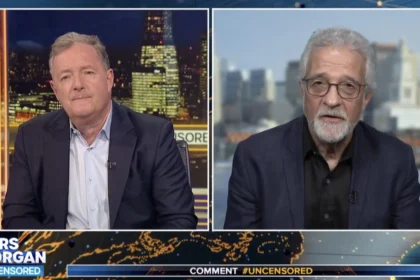
Appearing on MS NOW with Chris Hayes, Krugman warned that the effective closure of the Strait of Hormuz—a maritime chokepoint responsible for 20% of the world’s oil—represents a supply shock that could eclipse the historic energy crises of the 1970s.
“This is just a gigantic disruption to world energy supplies,” Krugman stated. He noted that while the U.S. has reduced its oil dependency over the last five decades, the sheer scale of the current blockade makes it “basically impossible” for the global market to absorb without significant trauma.
The $110 Barrel: A Cost-of-Living Crisis
The economic fallout of the conflict, which began on February 28, 2026, has been immediate and surgical. Since the onset of hostilities, crude oil prices have surged by more than 40%, with international benchmark Brent crude hovering near $120 per barrel.
Domestic consumers are already feeling the “nasty” reality at the pump. According to AAA, the national average for regular gasoline has climbed to $3.68, a spike that wiped out months of cooling inflation in mere days.
- Household Impact: Bloomberg Economics reports that with oil sustained at $110, the average American household will face an additional $1,960 in annual costs.
- The Refund Trap: Experts warn these rising costs are effectively nullifying tax refunds promised under the One Big Beautiful Bill (OBBB) Act, leaving middle-class families in a financial deadlock.
A Unilateral ‘Inflation Bomb’
Critics, including host Chris Hayes, argue that President Trump’s current strategy is a self-inflicted wound. The administration is simultaneously maintaining aggressive tariffs on foreign goods while pursuing a unilateral war that chokes off energy supplies.
“You kind of couldn’t come up with another way to unilaterally raise prices other than those two,” Hayes remarked during the segment.
While presidents historically have limited influence over global oil prices, Krugman noted that this instance is a rare exception where executive action is the primary driver. “Start a war that threatens to cut off the world’s supply of oil—that’ll do it,” Krugman said, criticizing the administration’s assumption that the conflict would be “over soon.”
Economic Indicators Flashing Red
The war’s timing is particularly precarious. Data released Friday shows the U.S. economy expanded by a meager 0.7% in the final quarter of last year. With the International Energy Agency (IEA) labeling this the “largest supply disruption in the history of the global oil market,” the risk of a recession—or a return to 1970s-style stagflation—is now a central concern for Wall Street.
| Metric | Pre-War Level | Current Level (March 2026) |
| WTI Crude Oil | $73 / barrel | $103+ / barrel |
| National Gas Avg | $2.98 / gallon | $3.68 / gallon |
| Strait of Hormuz Flow | 21M barrels / day | “A Trickle” |
As the conflict enters its third week, the White House continues to downplay the long-term risks, even as the first six days of the campaign reportedly cost taxpayers over $11 billion.