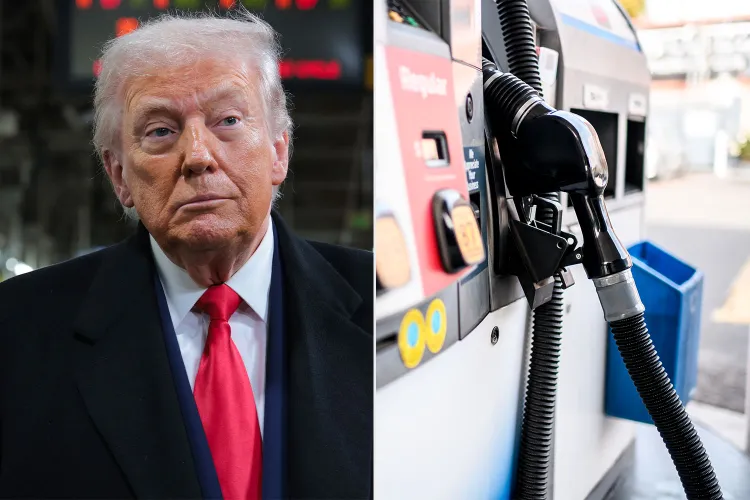

A sudden escalation in Middle East hostilities has triggered a global energy supply shock that could strip Republicans of their Senate majority and push the U.S. national debt into a new era of volatility, according to a searing analysis from Morgan Stanley’s Global Investment Office.
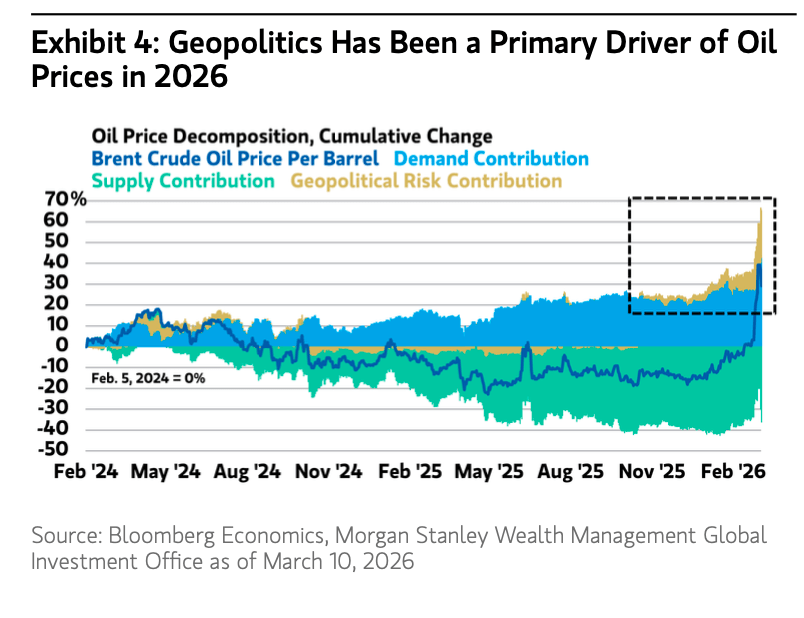
The report, authored by head of U.S. policy Monica Guerra, suggests that the Feb. 28 coordinated strikes on Iranian nuclear and military infrastructure have fundamentally altered the 2026 midterm landscape. With the Strait of Hormuz effectively closed—choking off 20% of the world’s oil supply—the resulting $100-per-barrel crude prices are creating an “affordability crisis” that historically punishes the party in power.
The $100 Barrel: A Political and Economic Volatility Trigger
The military engagement led by U.S. and Israeli forces has resulted in a 51% year-to-date surge in oil prices. For the American consumer, this is not a distant geopolitical abstraction but a direct hit to the household ledger.
- Energy Supply: Approximately 21 million barrels of oil per day are currently stalled due to the Strait’s closure.
- Inflation Impact: Morgan Stanley warns that shocks of this magnitude typically add 70 basis points to headline CPI within three months.
- The “Voter Tax”: The bottom 20% of U.S. earners spend four times more of their budget on energy than the top 20%, making gas prices the most visible metric of economic performance heading into the midterms.
The Senate Math: From Majority to Margin of Error
While the GOP currently holds a 53–47 Senate majority, historical precedents and current economic pressures are converging to create a “perfect storm.” Since 1922, the incumbent president’s party loses an average of 30 House seats and four Senate seats during midterms.
Morgan Stanley’s base case originally saw Republicans losing the House but maintaining the Senate. That forecast is now being “scrambled” by the duration of the energy shock. If $100 oil persists through the summer, the firm warns the Senate race will tighten significantly, potentially handing total Congressional control to Democrats.
A “Snickers Bar” Economy
The disconnect between “headline” inflation and “lived” inflation is widening. UBS chief economist Paul Donovan noted Thursday that while technical metrics like “owners’ equivalent rent” might show cooling, the prices of coffee, beef, and chocolate—specifically citing the price of a Snickers bar—are more accurate barometers for voter sentiment.
“The lived reality is somewhat different from the headlines,” Donovan stated, pointing out that grocery inflation is accelerating just as energy costs peak.
Defense Spending and the $34 Trillion Debt Ceiling
The conflict is also acting as a catalyst for a massive expansion of the national deficit. The U.S. reportedly burned through $5.6 billion in munitions during the first 48 hours of the war alone.
This spending has turbocharged President Trump’s $1.5 trillion defense request for fiscal year 2027. If approved, military outlays would reach 4.6% of GDP, the sharpest annual increase in six decades.
| Economic Indicator | Pre-Conflict | Current |
| Oil Price (per barrel) | ~$66.00 | $100.00+ |
| 10-Year Treasury Yield | +0 bps | +27 bps (increase) |
| 48-Hour Munition Cost | N/A | $5.6 Billion |
Market Resilience vs. Long-Term Duration
While U.S. equities have remained largely flat, buoyed by energy sector gains, international markets (MSCI World ex-U.S.) have tumbled 6%. Investors are currently demanding a higher “term premium”—the extra yield required to hold long-term government bonds—due to the uncertainty of Washington’s borrowing needs.
“Duration is the key variable,” the Morgan Stanley report concludes. While the S&P 500 has historically gained an average of 8.4% in the year following geopolitical events, those averages assume a return to stability. A prolonged closure of the Strait of Hormuz would render historical precedents obsolete, leaving both the U.S. economy and the Republican majority on precarious ground.