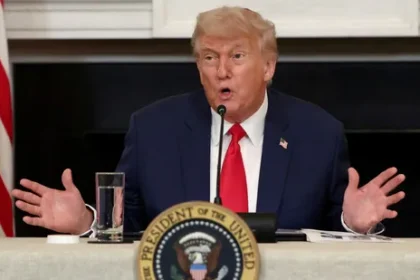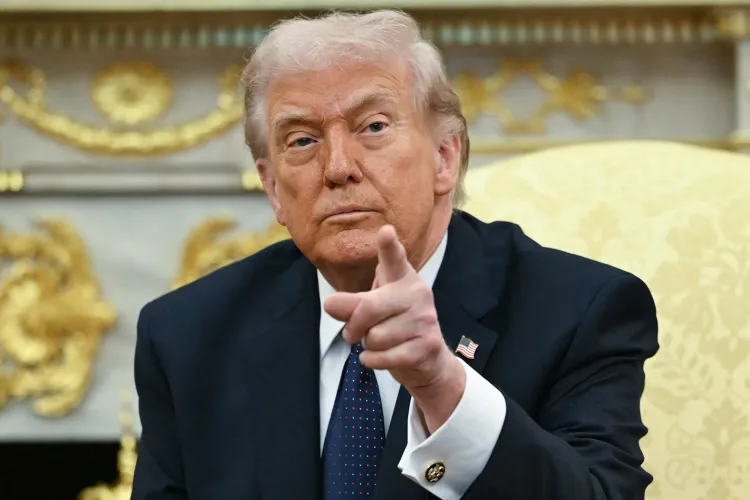

President Donald Trump asserted on Friday that the passage of nationwide strict voter identification laws would effectively sideline the Democratic Party for decades, claiming they “probably won’t win an election for 50 years” under such a system.
The remarks, delivered during a press briefing at his Florida estate, underscore a central pillar of the Republican legislative agenda heading into the 2026 midterm cycle. Trump argued that “election integrity” measures—specifically requiring government-issued photo identification at all polling stations—are the only way to ensure “fair and honest” outcomes.
The “50-Year” Prediction
Trump’s comments lean into a long-standing Republican narrative that current voting procedures are vulnerable to exploitation. By attaching a 50-year timeline to the potential shift in political power, the former President is framing voter ID not just as a security measure, but as a fundamental realignment of the American electorate.
“When you have a real ID, a real signature, and a real person, the radical left loses,” Trump told reporters. “They know it, and that’s why they fight it.”
Legislative Context: The Push for Federal Standards
The former President’s rhetoric coincides with renewed efforts by Congressional Republicans to pass the American Confidence in Elections (ACE) Act. If enacted, the bill would:
- Mandate Photo ID: Require voters to present valid photo identification for all federal elections.
- Restrict Mail-In Ballots: Limit the use of drop boxes and implement stricter signature verification for absentee voting.
- Audit Voter Rolls: Require states to conduct regular “purges” of deceased or relocated individuals from active registration lists.
Democratic Opposition and Legal Hurdles
Civil rights organizations and Democratic leadership have blasted the proposal, labeling it a “calculated voter suppression tactic.”
Critics argue that strict ID requirements disproportionately affect low-income, minority, and elderly voters who may lack the necessary documentation or the means to obtain it. Legal experts suggest that any federal mandate would likely face immediate challenges in the Supreme Court under the Voting Rights Act, specifically regarding the “disparate impact” on protected classes.
Fact Check: While 36 states currently have some form of voter ID requirement, only 21 require a photo. Multiple non-partisan studies, including those by the Brennan Center for Justice, have consistently found that instances of in-person voter impersonation—the specific type of fraud addressed by ID laws—are statistically “vanishingly rare.”
Impact on 2026 and Beyond
As the 2026 election cycle approaches, Trump’s endorsement of strict ID laws signals that the GOP will continue to make “election security” a primary campaign theme. For Democrats, the challenge remains mobilizing a base against these measures while navigating a shifting legal landscape in state legislatures across the Sun Belt and the Midwest.
Whether such laws would truly result in a 50-year drought for Democrats remains a matter of intense political speculation, but the rhetorical line has been drawn: the fight over how Americans vote remains as volatile as who they vote for.