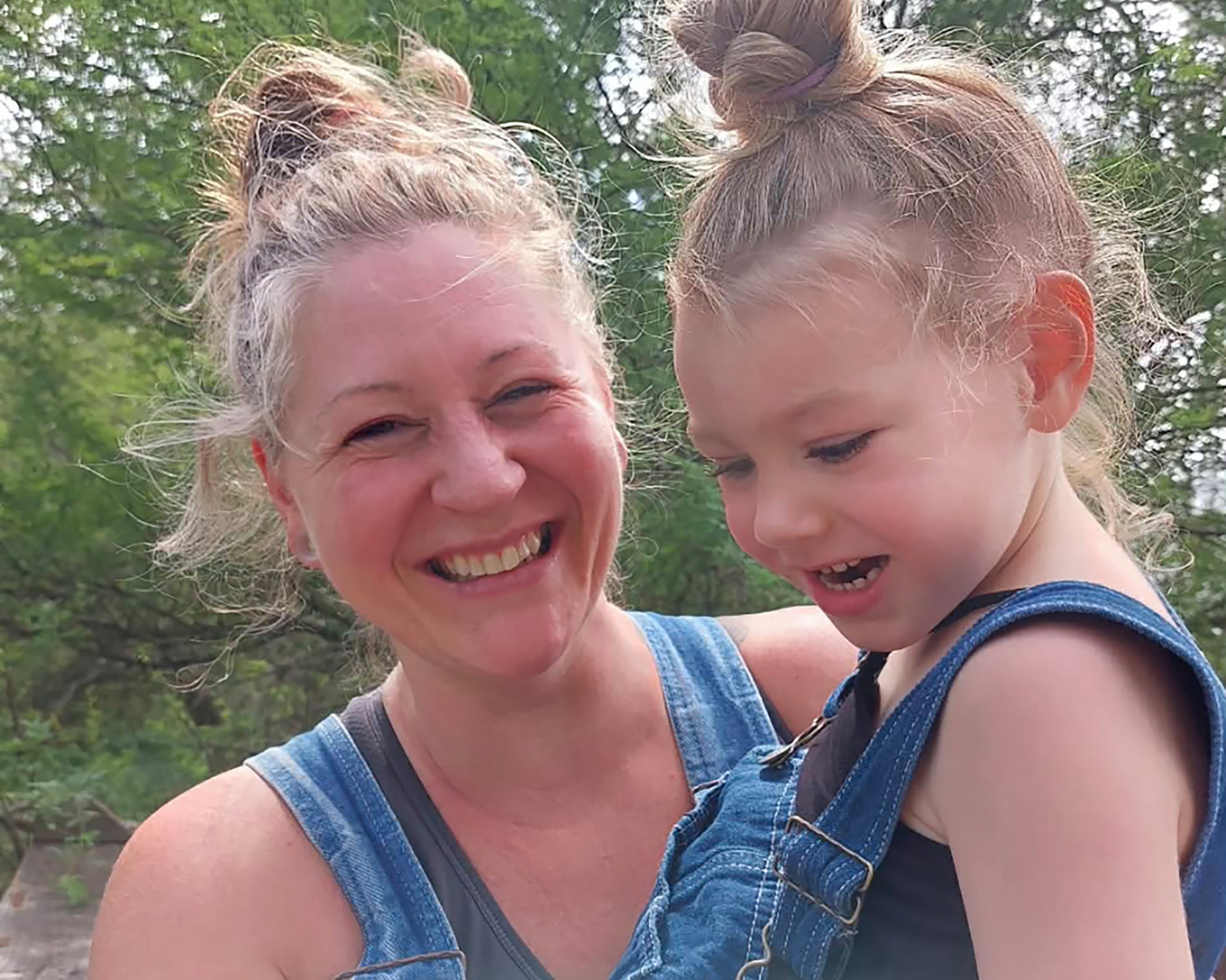

McALLEN, TEXAS — A 7-year-old Canadian girl with autism and her mother remain in federal custody at a notorious South Texas detention center today, nearly a week after being intercepted at an internal U.S. Border Patrol checkpoint. The family’s legal representatives and relatives allege the detention is unlawful, asserting that both individuals hold valid immigration documentation.
Tania Warner and her daughter, Ayla Lucas, were detained Saturday, March 14, at the Sarita checkpoint while returning to their home in Kingsville, Texas. Despite presenting a valid work visa and a Texas driver’s license, Warner and her child were processed into the Rio Grande Valley Central Processing Center in McAllen—a facility frequently criticized by human rights advocates for overcrowding and poor conditions.
The Checkpoint Encounter
The incident occurred as the family, including Warner’s husband, Edward Warner—a U.S. citizen—was driving home from a baby shower in Raymondville. According to Edward Warner, the encounter began as a routine documentation check roughly 120 miles north of the U.S.-Mexico border.
“I presented my ID; Tania presented her Texas driver’s license, her social security card, and her work visa,” Edward Warner stated in an interview with CTV News. “They took her in, saying they needed to fingerprint her for more information. She never came back out.”
Shortly after, agents reportedly took 7-year-old Ayla for fingerprinting as well. Neither has been released.
Documentation Dispute
The detention has sparked outrage among relatives who insist Warner’s legal status is current. Documents reviewed by investigative teams categorize Warner as a “Lawful Alien Allowed to Work,” with a visa reportedly valid through 2030.
“She has a functional visa. I don’t understand why they are detaining her,” said Amber Sinclair, Warner’s cousin and a dual Canadian-U.S. citizen. Sinclair noted that Warner had previously paid for professional processing assistance to ensure her paperwork met all federal requirements.
U.S. Immigration and Customs Enforcement (ICE) has not yet released a formal statement clarifying the specific grounds for the hold, though internal checkpoints in the Rio Grande Valley have seen increased activity in recent months.
Conditions Inside “The Icebox”
Reports from inside the McAllen facility suggest a dire environment for the young girl, whose autism makes her particularly vulnerable to sensory overload and trauma. Edward Warner, who has spoken briefly with his wife via phone, described the conditions as “inhumane.”
- Temperature: Detainees are reportedly using floor mats as blankets to stay warm.
- Sustenance: Food quality is described as substandard.
- Environment: The facility is characterized as overcrowded, loud, and high-stress.
Audrey Macklin, a professor of immigration and refugee law at the University of Toronto, warned that the detention of children—even for short durations—can result in “enduring psychological consequences.”
“This illustrates the volatility of the U.S. immigration system,” Macklin said. “People holding valid documentation are being caught in a net designed for enforcement, often ending up in abusive and unsafe conditions.”
Diplomatic and Legal Response
Global Affairs Canada confirmed it is aware of the case and is monitoring “multiple cases” of Canadians in U.S. immigration detention. However, a spokesperson noted that while consular officials can advocate for fair treatment, they cannot exempt citizens from local legal processes.
The family has launched a GoFundMe campaign to secure specialized legal counsel to file for an emergency release. As of Friday, Tania Warner and Ayla Lucas remain in custody, facing the threat of deportation and permanent separation from their U.S.-based family.