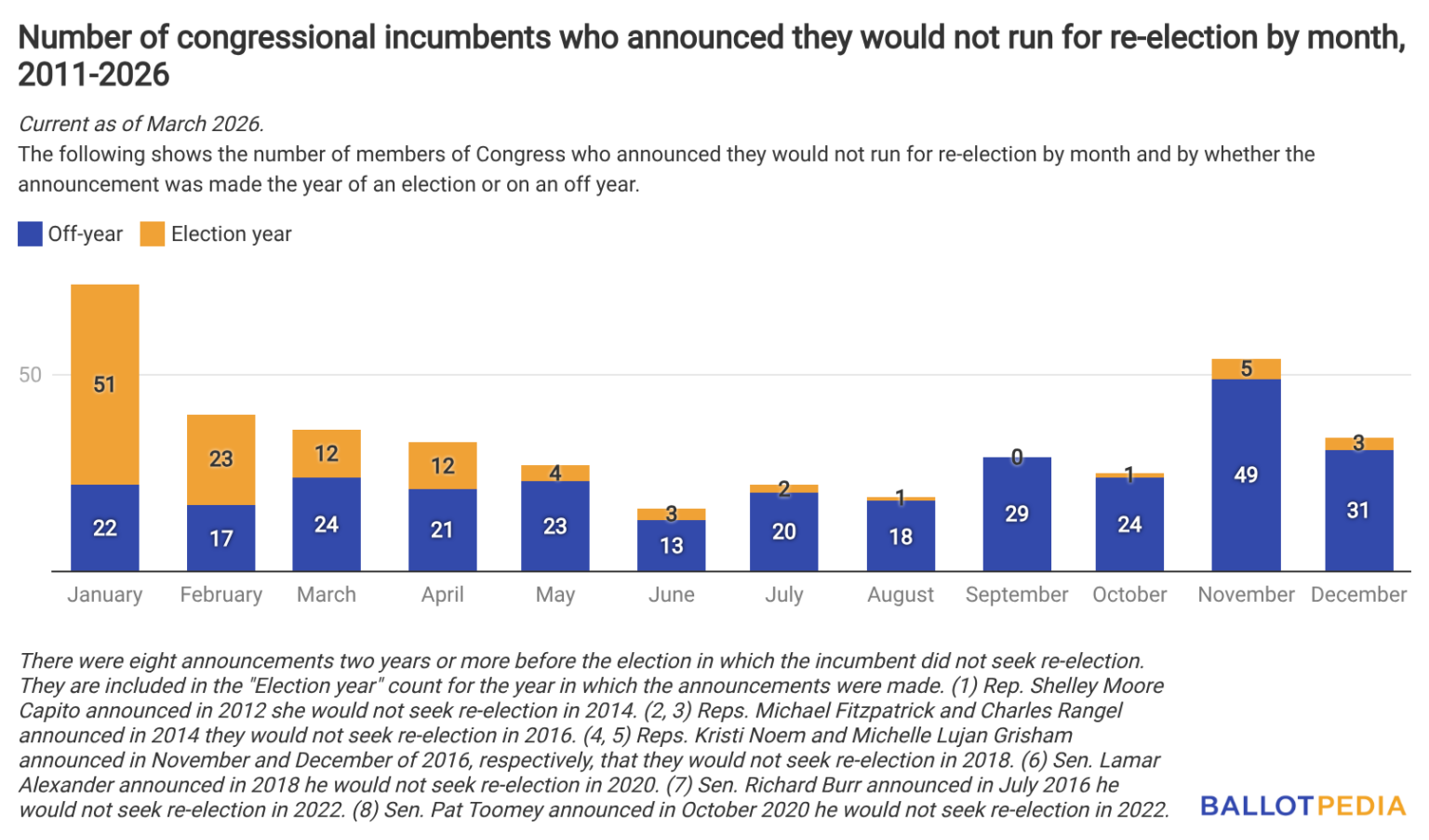

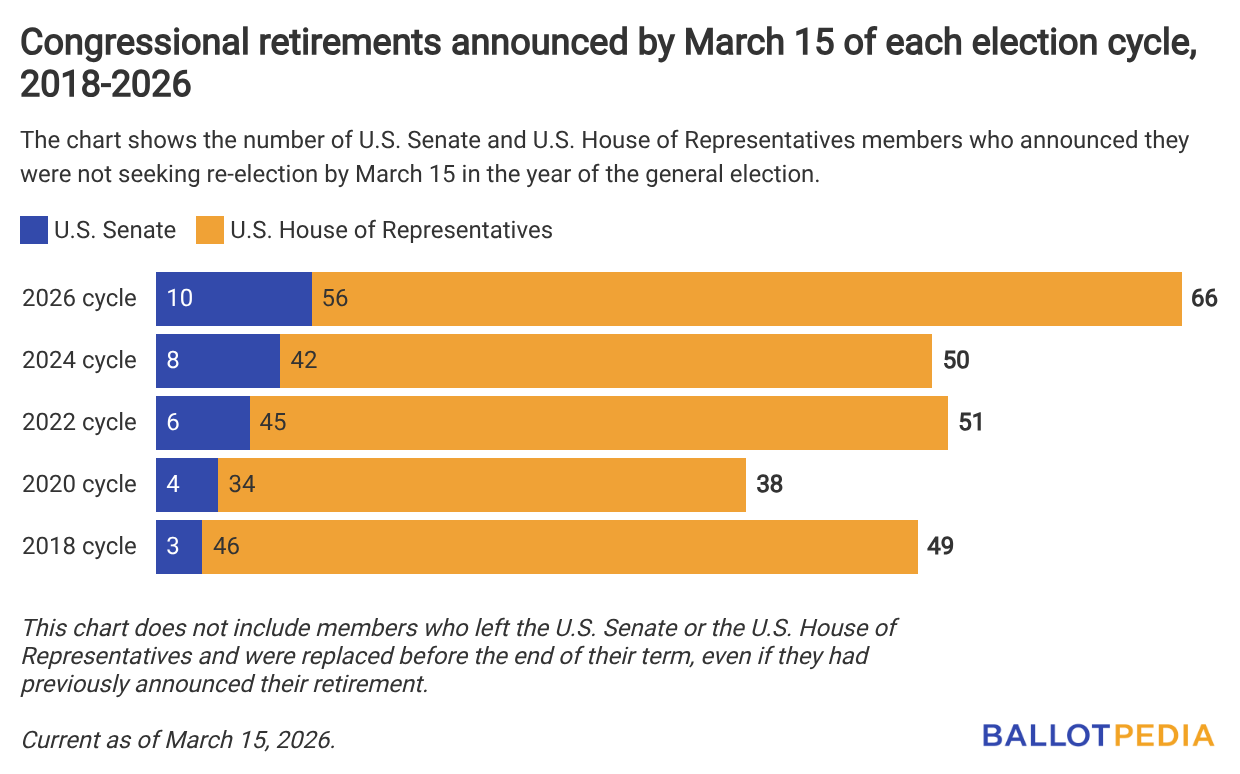
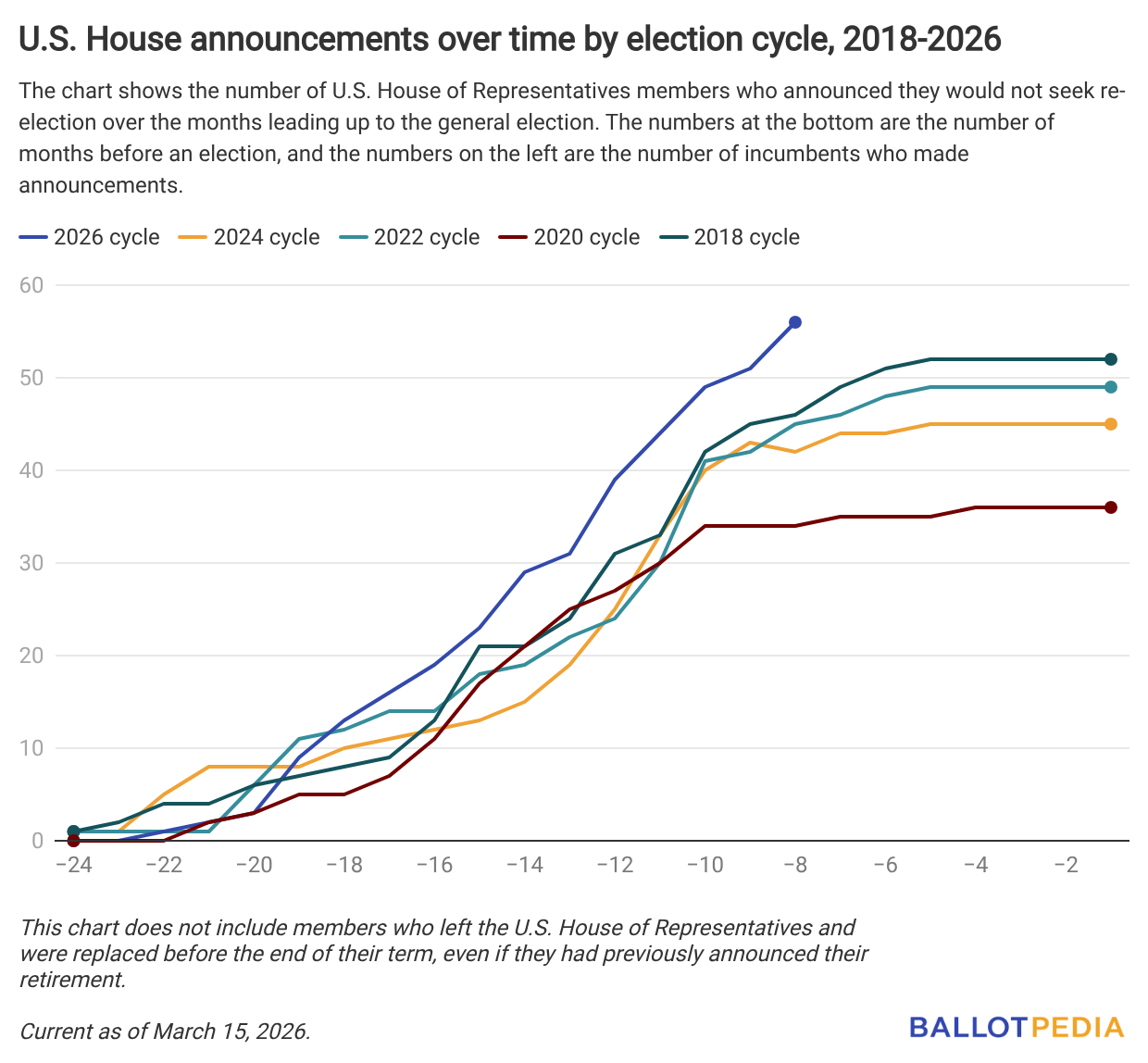
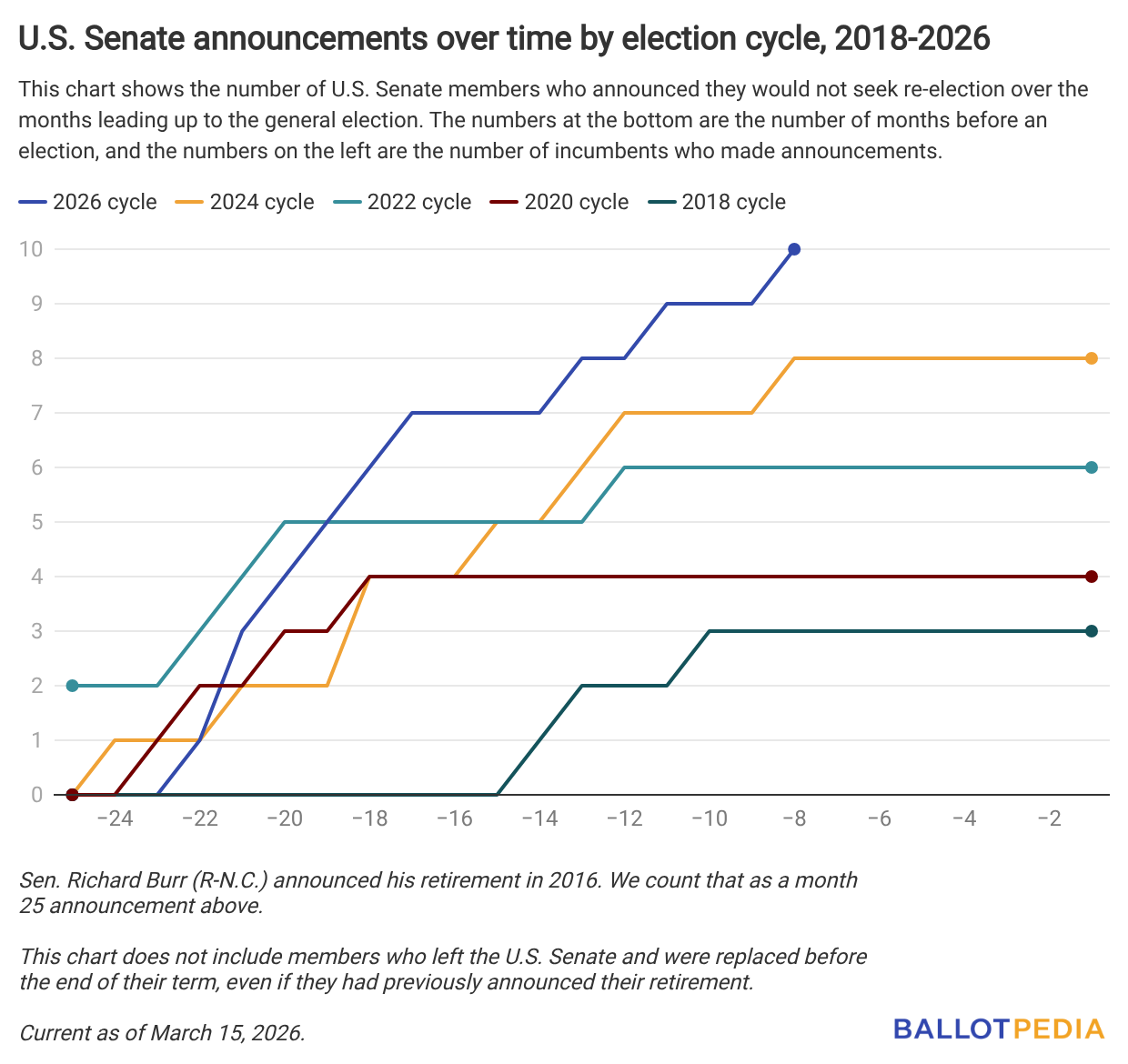
WASHINGTON — The landscape of the 119th Congress is facing a seismic shift as 66 incumbents have officially announced they will not seek re-election in 2026. This wave of departures, comprised of 56 U.S. Representatives and 10 U.S. Senators, represents a significant uptick in retirements compared to the same point in the last four election cycles.
The surge in exits is being fueled by a mix of outright retirements and ambitious bids for higher office. Of the 56 House members vacating their seats, 28 are retiring from public life, while 27 others are pivoting toward gubernatorial races or the U.S. Senate.
The “Montana Shakeup” and Recent Announcements
The first week of March saw a flurry of high-profile exit announcements from the Republican side of the aisle, notably in Montana. Rep. Ryan Zinke (R-Mont.) and Sen. Steve Daines (R-Mont.) both confirmed they will leave public office at the end of their terms. While their seats are currently rated as “Solid” or “Likely Republican,” the double vacancy in the Treasure State creates an unexpected opening in the GOP’s regional leadership.
Other recent announcements include:
- Rep. Burgess Owens (R-Utah): Retiring from a safe Republican seat.
- Rep. Tony Gonzales (R-Texas): Exiting a solid Republican district.
- Rep. Darrell Issa (R-Calif.): Departing a vulnerable district currently rated as a “Toss-up” or “Tilt Democratic,” providing a prime pickup opportunity for the Democratic party.
Historical Context and Vulnerable Seats
The current volume of 66 announcements outpaces the early-stage tallies of 2024 (42), 2022 (45), and 2018 (46). This trend suggests a growing desire for turnover within both parties, though the House remains the primary driver of the exodus with 35 Republicans and 21 Democrats opting out.
Strategists are closely watching “Purple” districts where incumbents won by razor-thin margins in 2024. Three retiring House members—Jared Golden (D-Maine), Don Bacon (R-Neb.), and David Schweikert (R-Ariz.)—secured their seats by fewer than five percentage points. Their departures leave these battlegrounds wide open, potentially deciding the House majority.
Senate Stakes
In the upper chamber, the 10 departures—four Democrats and six Republicans—mark the highest number of early Senate announcements in over a decade. High-ranking veterans like Mitch McConnell (R-Ky.) and Dick Durbin (D-Ill.) are among those retiring.
The competitive stakes are particularly high for seats previously held by Thom Tillis (R-N.C.) and Gary Peters (D-Mich.), both of whom won their 2020 races by less than five points.
As the 2026 primary season approaches, the high rate of “Open Seat” contests is expected to draw record-breaking campaign spending and a new generation of political contenders.