
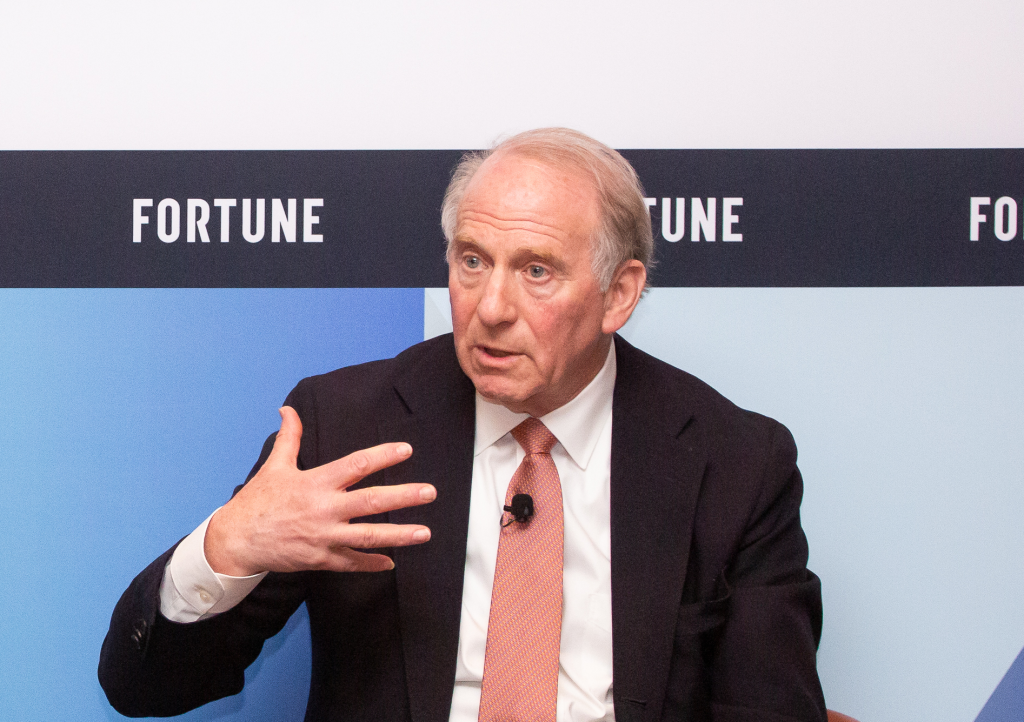

NEW YORK — The U.S. national debt surpassed $39 trillion this week, marking a grim fiscal milestone that experts warn has evolved from a budgetary headache into a direct threat to American global hegemony.
The achievement of this figure comes less than five months after the debt hit $38 trillion, signaling an atmospheric pace of accumulation that budget watchdogs now describe as “unsustainable.” At the Fortune CEO Initiative dinner in New York on Wednesday, Richard Haass, president emeritus of the Council on Foreign Relations, warned that the nation is currently “living on borrowed time.”
A Strategic Liability
For Haass, a veteran diplomat who served under multiple administrations, the primary concern isn’t just the balance sheet—it is the erosion of American power. He argues that the debt is undermining international confidence in U.S. competence and leadership.
“It’s fine until the day it’s not,” Haass told the assembly, comparing the situation to a “slow-motion crisis.” He warned of a looming “Paul Revere” moment where the Treasury may eventually struggle to find buyers at auctions, forcing the Federal Reserve to hike interest rates not to stabilize the economy, but to prevent a collapse in investor demand.
The Rising Cost of Interest
The sheer velocity of the debt’s growth is reflected in the cost of maintaining it. Net interest payments on the national debt exceeded $1 trillion in fiscal year 2026—nearly tripling the $345 billion paid in 2020.
Current data highlights the severity:
- Total Gross Debt: $39.1 trillion (and rising)
- Debt Held by the Public: $31.3 trillion
- Interest vs. Defense: Interest payments now exceed total defense spending for the first three months of the fiscal year.
- The GDP Gap: Debt held by the public is projected to hit 120% of GDP within a decade, shattering World War II-era records.
The ‘Hidden’ $100 Trillion Gap
While the $39 trillion figure is the official tally, some experts suggest the true fiscal gap is far wider. When factoring in unfunded entitlements like Social Security and Medicare, the liability approaches $100 trillion.
Kent Smetters, director of the Penn Wharton Budget Model, has previously estimated that without significant policy intervention, the U.S. could become unable to roll over its obligations within 20 years. Despite these projections, Haass noted a disconnect between public anxiety and political action. He observed that while voters claim to be “obsessed” with the debt, their electoral behavior rarely rewards fiscal discipline.
The Dysfunction Disease
Critics often point to Japan—which maintains a debt-to-GDP ratio over 200%—as evidence that the U.S. can sustain high debt indefinitely due to its status as the world’s reserve currency. However, Haass argues the U.S. lacks the institutional discipline currently seen in Tokyo.
Ultimately, the consensus among investigators and diplomats is that the debt is a symptom of a deeper malady: chronic political dysfunction. As interest becomes the fastest-growing “program” in the federal budget, the window for a managed solution is rapidly closing.


