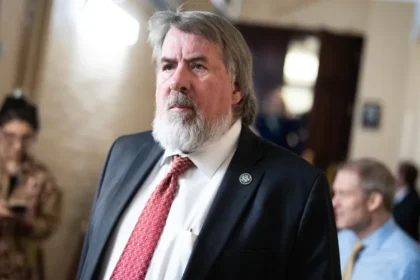

Darren Indyke, the long-time personal attorney for deceased offender Jeffrey Epstein, testified before the House Oversight Committee on Thursday, offering a new defense for the financier’s multi-million dollar cash habit: a lack of access to traditional credit.
Indyke told lawmakers that Epstein’s reliance on physical currency between 2013 and 2017 was a logistical necessity driven by major banks severing ties with him. The testimony marks a critical moment in the ongoing investigation into how Epstein’s financial network enabled his decades-long trafficking operation.
The “Credit Card” Defense
According to Indyke’s prepared remarks, Epstein struggled to secure credit lines after JPMorgan Chase terminated his accounts in 2013. “It is undisputed that during this time period, Mr. Epstein had difficulty accessing credit cards from major banks,” Indyke stated.
He further claimed the cash was earmarked for the “daily household needs” of Epstein’s global real estate portfolio, including properties in New York, Florida, New Mexico, Paris, and the U.S. Virgin Islands. Indyke listed maintenance, gifts, and fuel for private aircraft as primary expenses.
Evidence Contradicts Testimony
However, internal documents released by the Department of Justice appear to challenge Indyke’s narrative. Financial records and credit reports from the same period show:
- Epstein maintained a credit score above 750.
- Active credit card accounts remained open between 2011 and 2017.
- Documented credit charges were consistent throughout his supposed “unbanked” period.
Critics and victims’ advocates argue these cash withdrawals were specifically designed to bypass the financial “paper trail” required by anti-money laundering (AML) protocols.
Banking Oversight and Settlements
The House inquiry focuses on whether financial institutions ignored “red flags” regarding Epstein’s cash usage. Attorneys for Epstein’s victims have long maintained that the $365 million in total settlements paid by JPMorgan Chase ($290M) and Deutsche Bank ($75M) reflect a systemic failure to report suspicious activity.
During his 2008 conviction, Epstein famously used cash payments—often several hundred dollars at a time—to facilitate the abuse of minors under the guise of “massages.”
Claims of Ignorance
Despite his decade-long proximity to Epstein’s finances, Indyke testified he was unaware of any ongoing abuse until after Epstein’s 2019 death in a federal lockup. He maintained that the scale of Epstein’s “extravagant lifestyle” made the large withdrawals seem unremarkable at the time.
The Committee’s investigation continues, with lawmakers expected to subpoena further communication between Epstein’s inner circle and his remaining financial handlers.