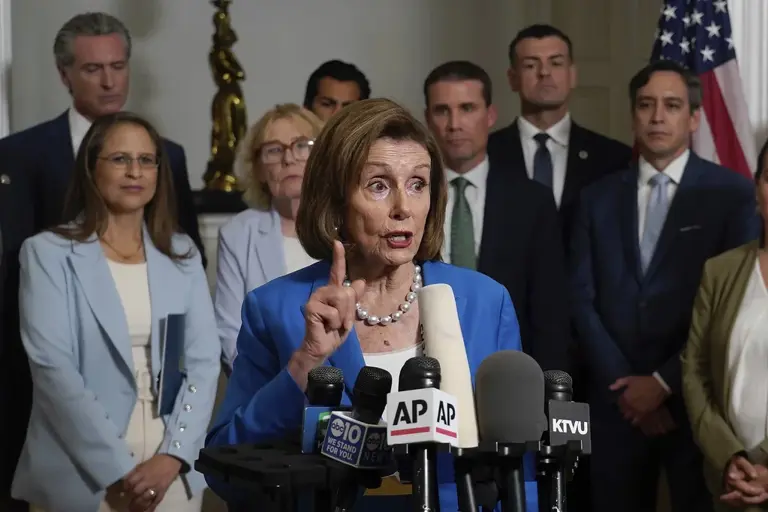

A decade-old debate over executive military authority has returned to the forefront of the Capitol Hill power struggle. Republicans are leveraging a resurfaced 2011 video of then-House Democratic Leader Nancy Pelosi to allege a partisan double standard regarding President Donald Trump’s escalating military campaign against Iran.
The controversy centers on Pelosi’s past defense of President Barack Obama’s unilateral intervention in Libya. In the footage, recently circulated by Rep. Lance Gooden (R-TX), Pelosi confirms her stance that Obama required no congressional authorization for the NATO-led mission.
The “Double Standard” Allegation
The timing of the clip’s circulation is a tactical strike by GOP lawmakers. As Democrats demand that President Trump seek formal approval for strikes in Iran, Republicans point to 2011 as evidence of shifting legal goalposts.
At the time, the Obama administration circumvented the War Powers Resolution by arguing that the Libya operation did not constitute “hostilities” due to its supportive nature. Pelosi backed this interpretation, citing the “limited nature” of the engagement.
Escalation vs. Precedent
Pelosi’s allies and constitutional scholars argue the comparison ignores critical operational differences:
- Libya (2011): Framed as a limited, multilateral NATO mission with a specific humanitarian mandate.
- Iran (2025): A broadening, unilateral campaign that Trump suggests could last weeks or longer.
Speaker Emerita Pelosi has remained a vocal critic of the current administration’s strategy, stating in June 2025 that Trump “ignored the Constitution” by engaging in military action without a vote from Congress.
Intelligence Discrepancies
The friction is intensified by conflicting reports regarding the “imminent threat” used to justify the Iran strikes. While the White House maintains the actions were preemptive, Pentagon officials reportedly informed lawmakers in classified briefings that no specific intelligence showed Iran was prepared to strike U.S. forces first.
This discrepancy has emboldened Democrats to push for a War Powers Resolution vote, while Republicans maintain that the President possesses the inherent authority to protect American interests abroad—an authority they claim Democrats only question when a Republican holds the Oval Office.