
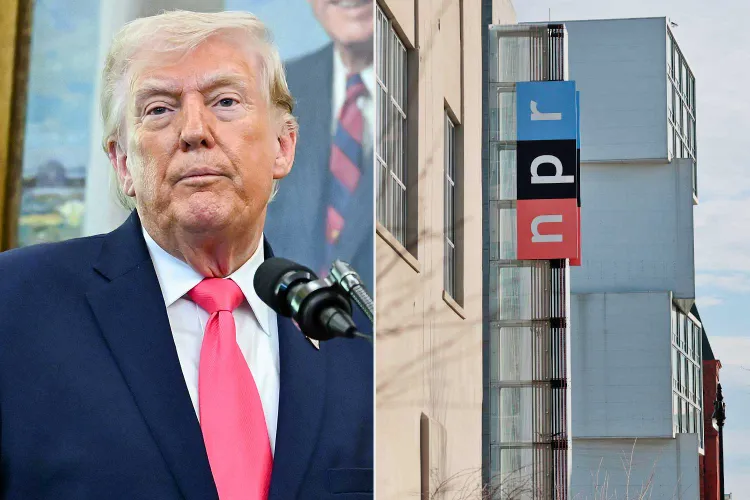

A federal judge has permanently blocked a pivotal component of President Donald Trump’s executive order intended to strip federal funding from National Public Radio (NPR) and the Public Broadcasting Service (PBS). The ruling, issued Tuesday, establishes that the administration’s attempt to defund the outlets constitutes unconstitutional retaliation against protected speech.
U.S. District Judge Randolph Moss ruled that the May 2025 executive order, titled “Ending Taxpayer Subsidization of Biased Media,” is both unlawful and unenforceable. Moss, an appointee of former President Barack Obama, stated that the First Amendment does not permit the government to weaponize federal funding to punish news organizations for their editorial content.
“It is difficult to conceive of clearer evidence that a government action is targeted at viewpoints that the President does not like and seeks to squelch,” Moss wrote in his decision. While acknowledging the president’s right to criticize the press, Moss clarified that governmental power cannot be used to exclude entities from federal grants simply “in retaliation for saying things that he does not like.”
The legal conflict began shortly after President Trump issued the directive on May 1, 2025. The White House justified the order by claiming NPR and PBS disseminated “radical, woke propaganda” and failed to provide “fair” or “unbiased” reporting.
In response, NPR and several local stations filed suit on May 27, followed by PBS on May 30. The cases were later consolidated. During the proceedings, the court reviewed evidence of the president’s long-standing hostility toward the broadcasters, including public statements where he expressed a desire to defund them specifically due to perceived bias.
The ruling provides a legal shield for the broadcasters’ future eligibility for federal funds, though it does not reverse previous legislative blows. In July 2025, Trump signed a $9 billion rescissions package passed by Congress that canceled existing funds for public broadcasting. Following that cut, the Corporation for Public Broadcasting (CPB) announced it would begin the process of closing its operations.
NPR President and CEO Katherine Maher praised the court’s decision, calling it a “decisive affirmation of the rights of a free and independent press.”
“Public media exists to serve the public interest—that of Americans—not that of any political agenda or elected official,” Maher said in a statement.
White House spokesperson Abigail Jackson slammed the decision, labeling Moss an “activist judge” and asserting that the administration expects an “ultimate victory” on appeal. Jackson maintained that the outlets have “no right to receive taxpayer funds.”


