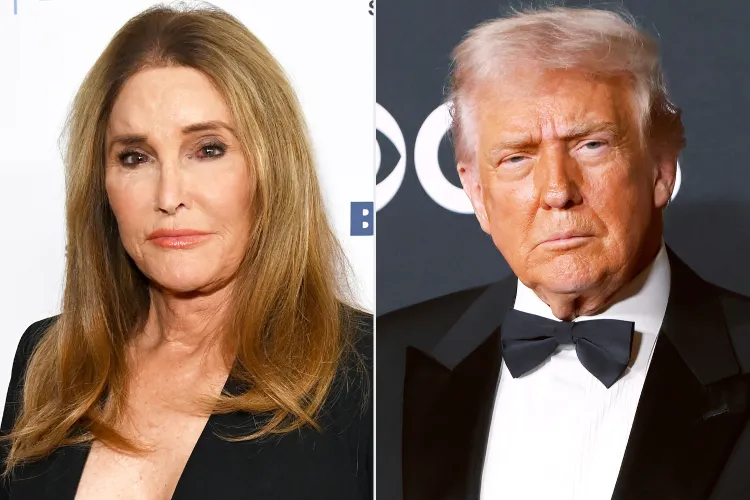

Caitlyn Jenner says she personally appealed to Donald Trump after her renewed U.S. passport listed her sex as male, despite years of documentation reflecting her gender identity as female.
Speaking on the Tomi Lahren Is Fearless podcast on April 7, Jenner described the issue as both bureaucratic and personal. The 76-year-old former Olympian said her previous documents—including her passport and Global Entry profile—had long been updated following her transition.
But after her passport expired, the replacement issued by the State Department reverted her gender marker to “M,” she said.
“Documentation is extremely important… every time you turn around, you’ve got to show ID,” Jenner told host Tomi Lahren. She added that she submitted an amended birth certificate and followed formal procedures, but the request was denied.
Jenner said she escalated the issue directly to Trump, delivering a letter during a visit to Mar-a-Lago. She has not received a response.
“I haven’t heard from him… he’s kind of busy right now,” she said, while expressing continued support for the president.
The dispute stems from an executive order signed by Trump at the start of his current term, mandating that federal identification documents reflect a person’s sex assigned at birth. The order frames sex as an “immutable” biological classification and directs agencies to halt changes based on gender identity.
Following the directive, the State Department suspended processing requests to update gender markers on passports, affecting thousands of transgender Americans.
The policy has already faced legal challenges. In November, the U.S. Supreme Court allowed the administration’s position to stand after lower courts had sided with plaintiffs arguing the rule was discriminatory.
Jenner’s case is not isolated. Hunter Schafer has also reported her passport being amended to reflect her sex at birth.
According to estimates from the Williams Institute, roughly 476,000 transgender adults in the United States lacked identity documents matching their gender identity as of 2021—a number advocates say could rise under the current policy.
Jenner framed the issue as a matter of safety, noting that mismatched identification can expose transgender individuals to scrutiny and risk during routine verification checks.
For now, her case underscores a growing tension between federal policy and the lived realities of transgender Americans navigating identification systems increasingly tied to strict biological definitions.