
Former Treasury Secretary Larry Summers slammed President Donald Trump’s sweeping new tax and spending legislation, claiming no unbiased economist believes it will benefit the U.S. economy.
“There is no economist anywhere, without a strong political agenda, who is saying that this bill is a positive for the economy,” Summers said Sunday on ABC’s This Week. “The overwhelming view is that it’s probably going to make the economy worse.”
Summers, who served in both the Clinton and Obama administrations, warned the legislation piles on unsustainable levels of national debt.
“Think about it this way,” he said. “How long can the world’s greatest debtor remain the world’s greatest power? This is adding more debt to the economy than any tax bill in U.S. history, in dollar terms.”
Trump Signs Expansive Policy Bill
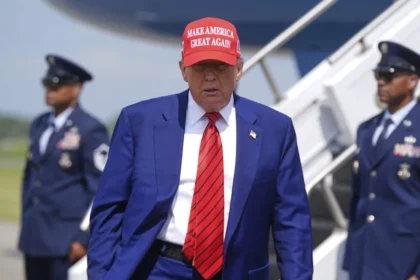
President Trump signed the massive legislation into law on Friday, enacting a wide-ranging package that fulfills multiple campaign promises. The bill includes military and immigration measures, deep cuts to national healthcare programs, and industrial subsidies. But at its core is an extension of the 2017 Trump-era tax cuts.
According to the Congressional Budget Office and the Joint Committee on Taxation, the legislation would reduce the federal deficit by $500 billion over 10 years if the tax cuts were excluded.
However, with the tax cuts factored in, the bill’s total price tag swells to $3.3 trillion — nearly 9.1% of the total U.S. national debt, which currently stands at $36 trillion. That figure does not include additional interest payments required to service the debt.
Tariffs vs. Debt: A Costly Trade-Off
The White House argues that rising revenues from Trump’s aggressive tariff policies — projected at $2.5 trillion — will offset a large portion of the bill’s cost. Still, that leaves a gap of hundreds of billions, not including the added costs of interest and reduced investment.
To justify the bill’s price, the White House Council of Economic Advisers released a report forecasting $11 trillion in long-term deficit reduction driven by economic growth, higher tax revenues, and lower borrowing costs.
Summers dismissed the report outright: “It is respectfully nonsense.”
Growth Projections Called ‘Fantasy Economics’
“None of us can forecast what’s going to happen to economic growth,” Summers said. “But we can forecast that when government borrowing crowds out private investment in factories, equipment, and innovation, productivity will suffer.”
He continued, “And we can forecast that cutting back on research, education, and infrastructure will only weaken long-term growth — not strengthen it.”
Summers’s criticism reflects growing concern among economists and lawmakers over the ballooning national debt and whether Trump’s fiscal policies are sustainable, even as the White House continues to insist the bill will fuel a long-term economic boom.