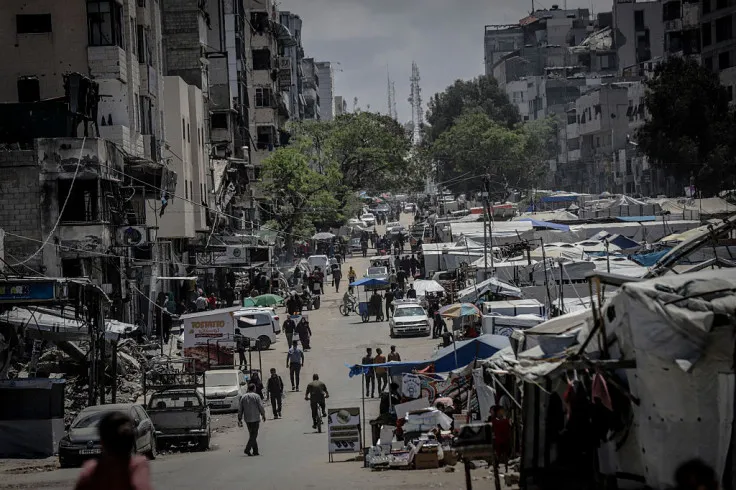

Israeli Defense Minister Israel Katz announced Monday that he has instructed the Israel Defense Forces (IDF) to begin implementing a controversial plan to establish a so-called “humanitarian city” in southern Gaza—an enclosed area where Palestinians would be relocated, screened, and restricted from leaving.
According to The Times of Israel, military correspondent Emanuel Fabian reported that the plan’s initial phase aims to relocate approximately 600,000 Palestinians to the zone while ensuring that no Hamas operatives are admitted. Katz added that the long-term goal is to eventually move Gaza’s entire population into this guarded area, which would be secured remotely by the IDF.
The initiative would also involve international organizations overseeing operations within the camp, including the establishment of new humanitarian aid distribution points. Katz reiterated his push for Palestinians to “voluntarily emigrate” from Gaza—a call that has drawn international concern in the past.
Plan Announced as Netanyahu Heads to Washington
The announcement comes as Israeli Prime Minister Benjamin Netanyahu travels to Washington for a high-stakes meeting with President Donald Trump at the White House. According to Axios, Trump is expected to push for a ceasefire agreement in Gaza, although it remains unclear whether he supports Katz’s “humanitarian city” concept.
Negotiations between Israel and Hamas are currently underway in Qatar, with both sides engaging in indirect talks aimed at finalizing a ceasefire deal. The proposed agreement includes a 60-day truce in exchange for the release of 10 living hostages and 18 deceased ones.
Before the Israeli negotiating team departed, Netanyahu said Hamas’ current demands were “unacceptable” but indicated he was still willing to pursue negotiations. He also suggested his upcoming conversation with Trump could be pivotal in moving a deal forward.
Ceasefire Terms and the Bigger Question: “What Comes Next?”
A central point of contention in the talks is Hamas’ insistence on receiving guarantees that Israel will permanently halt its military campaign after the ceasefire period. The U.S. reportedly wants to reach a broader understanding with Israel about post-conflict governance in Gaza—one that excludes Hamas and prevents its return.
“We want to get an agreement on what comes next—at least a framework for the day after,” a U.S. official told Axios.
The proposal for a “humanitarian city” is likely to intensify global scrutiny of Israel’s long-term intentions in Gaza, especially as the war enters a critical diplomatic phase and pressure mounts for a resolution.