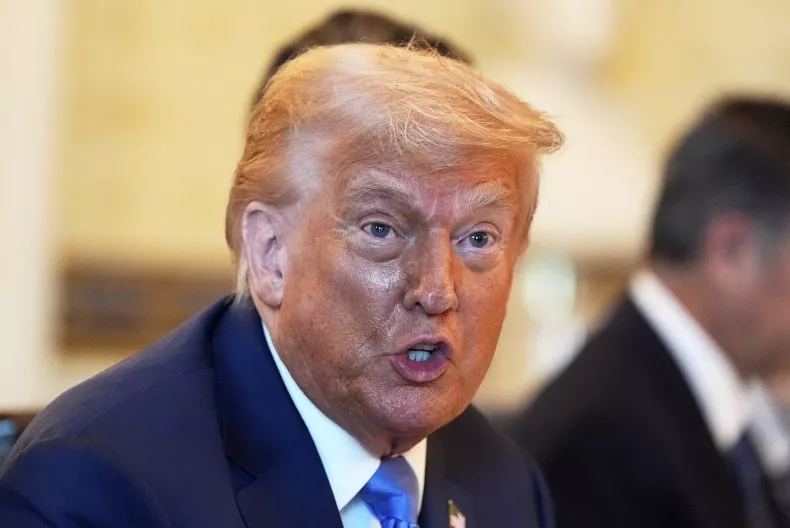

After making historic gains with Black voters in the 2024 presidential election, President Donald Trump is now facing a steep decline in support from the same group—just months into his second term.
In 2024, Trump captured 16% of the Black vote—the highest level of support for a Republican presidential candidate since Gerald Ford in 1976. That figure represented a noticeable jump from 12% in 2020 and just 8% in 2016. But new polling suggests those gains are rapidly eroding.
A series of YouGov/Economist polls from May through July show Trump’s approval among Black voters has fallen from 22% to just 15%. His disapproval rating now stands at a staggering 79%, giving him a net approval rating of -64 points—the lowest of his presidency among Black Americans.
The Economy: A Key Factor Behind the Drop
Polls show the sharp decline is being driven largely by economic dissatisfaction.
In May, 24% of Black voters approved of Trump’s handling of jobs and the economy. By July, that dropped to 18%. On inflation, approval fell from 19% to just 16%—while disapproval climbed to 75%.
Concerns about a looming recession also remain high. Nearly half of Black voters polled believe the U.S. is already in a recession, and fewer than one in four believe things will improve over the next year.
Trump’s recent move to raise tariffs on Canadian goods from 25% to 35% has only deepened those worries. Though key items like energy and fertilizer are exempt under the USMCA, the broader impact has alarmed business leaders and economists, who warn of higher consumer prices and strained supply chains.
The administration has also begun issuing “tariff warning letters” to over 20 countries, signaling that more trade battles may be on the horizon.
The “One Big Beautiful Bill” Backlash
Adding to Trump’s political headaches is growing opposition to his signature economic legislation—the One Big Beautiful Bill Act (OBBBA).
The bill, which Trump signed into law earlier this month, is projected by the Congressional Budget Office to add $3.4 trillion to the national deficit over the next decade. While it includes permanent extensions of key Trump-era tax cuts and a higher cap on state and local tax (SALT) deductions, critics argue it disproportionately benefits the wealthy while cutting deeply into social safety net programs.
Among Black voters, the opposition is overwhelming. In July’s YouGov/Economist poll, just 5% supported the bill while 75% opposed it. Broader national surveys from Quinnipiac, Fox News, and KFF also show majorities of Americans across party lines opposing the legislation.
Alvin Tillery, co-founder of the 2040 Strategy Group and director of the Alliance for Black Equality, told Newsweek that disapproval is directly tied to fears about the bill’s long-term impact.
“Concerns about cuts to health care and food assistance are front and center,” Tillery said. “We’re seeing erosion not just because of the bill itself, but because of what it signals about Trump’s priorities—and the impact those choices have on marginalized communities.”
A Broader Decline in Trust
Trump’s struggles with Black voters also reflect a broader mood of disillusionment.
In May, 72% of Black respondents said the country was on the “wrong track.” By July, that number climbed to 81%.
Tillery also cited Trump’s cultural rhetoric—such as his attacks on DEI programs, criticism of Juneteenth, and hardline immigration stances—as contributing to the decline.
“These aren’t isolated comments,” he said. “They reflect a pattern of hostility that many Black voters see as directly targeting their communities.”
Political Fallout Ahead?
The loss of support among Black voters comes at a critical moment for Trump. His administration is bracing for political consequences not only from historically Democratic-leaning groups, but also from independents and even segments of his own coalition.
And while Trump still retains majority support among white voters (56%) and significant backing among Hispanic voters (43%), the growing dissatisfaction across key demographics could pose challenges for his legislative agenda—and ultimately his legacy.
With economic unease mounting and discontent rising, Trump’s post-election honeymoon appears to be over. Whether he can reverse the downward trend among Black voters—or mitigate its political cost—remains to be seen.