
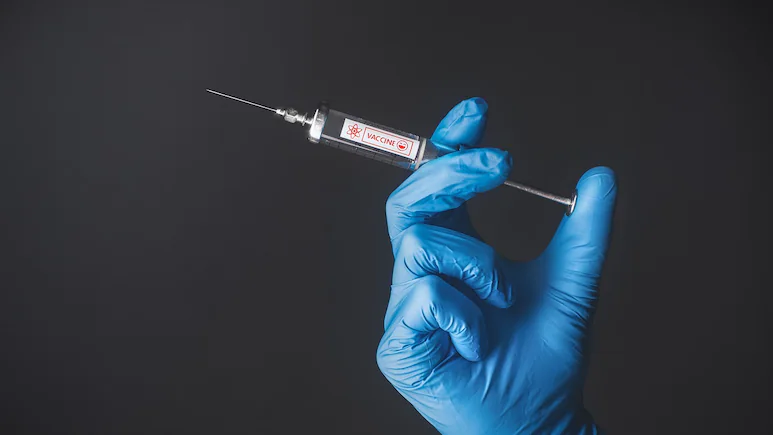

More than 14 million children around the world did not receive a single vaccine dose in 2024, according to a new report from the World Health Organization (WHO) and UNICEF—matching figures from the previous year. Nine countries were responsible for more than half of those unprotected children.
The report, released Tuesday, highlights growing concern among global health leaders that recent aid cuts and misinformation about vaccine safety are threatening decades of progress in immunization.
“Drastic cuts in aid, coupled with misinformation about the safety of vaccines, threaten to unwind decades of progress,” warned WHO Director-General Dr. Tedros Adhanom Ghebreyesus.
The data shows that 89% of infants received at least one dose of the diphtheria, tetanus, and whooping cough vaccine last year—the same as in 2023. Around 85% completed the full three-dose series, a slight increase from 84% the year before. But that improvement may stall, experts say, amid shifting global policy and funding priorities.
The U.S. played a major role in these shifts. In January, President Donald Trump withdrew from the WHO and froze most humanitarian aid, later moving to shut down the U.S. Agency for International Development (USAID). More recently, Health Secretary Robert F. Kennedy Jr. announced that the U.S. would halt billions of dollars in pledged support to Gavi, the global vaccine alliance, accusing the organization of “ignoring the science.”
Kennedy, a longtime critic of vaccines, has publicly questioned the safety of shots that WHO and numerous studies have repeatedly confirmed to be safe and effective. Vaccines are estimated to prevent 3.5 to 5 million deaths annually, according to the U.N.
Access to vaccines remains deeply unequal, the report adds. Conflict and humanitarian crises are quickly eroding immunization efforts, with Sudan reporting the lowest vaccination rate for diphtheria, tetanus, and pertussis. The countries with the highest number of completely unvaccinated children were Nigeria, India, Sudan, the Democratic Republic of Congo, Ethiopia, Indonesia, Yemen, Afghanistan, and Angola.
Coverage for measles vaccinations ticked up slightly, with 76% of children receiving both doses. However, health officials warn that a 95% coverage rate is needed to prevent widespread outbreaks. In 2024, over 60 countries reported major measles outbreaks, including the United States, which is experiencing its worst measles surge in more than 30 years.
Europe has also seen a spike in cases, with 125,000 infections recorded last year—double the number in 2023. In the U.K., only 84% of children are fully protected, and British health officials recently confirmed the death of a child from measles at a hospital in Liverpool.
“This is hugely concerning, but not at all surprising,” said Professor Helen Bradford, a pediatric health expert at University College London. “The only way to stop measles from spreading is through vaccination. It’s never too late to get vaccinated—even as an adult.”


