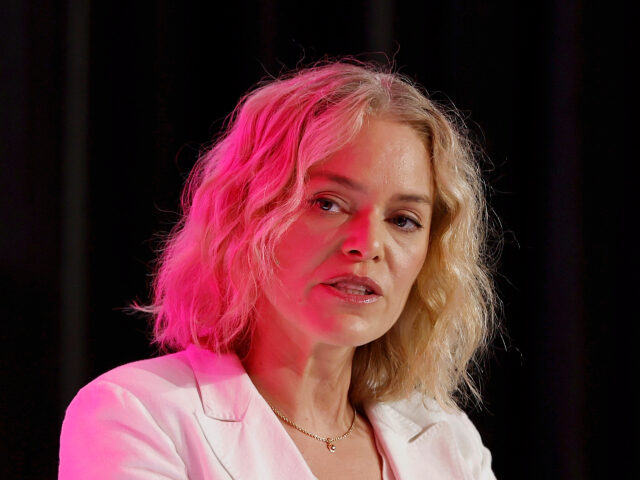

NPR CEO Katherine Maher is facing criticism after claiming that cuts to taxpayer funding for public media pose a “real risk to public safety.” The remark, made during a recent interview with CBS News, was intended to defend ongoing federal support for outlets like NPR and PBS — but it has ignited pushback from conservative critics who argue her comments are exaggerated and misleading.
“Public media, public radio, public television are a critical part of the emergency response plans of nearly half of the states in this nation,” Maher said. She warned that reducing federal support could mean “fewer outlets to be able to respond in real time” to natural disasters and public emergencies.
The comments come amid renewed calls from Republicans and conservative media to strip taxpayer funding from public broadcasters, arguing they’ve strayed from their original purpose and become politically biased. Earlier this week, Maher also drew attention for insisting there is no left-wing bias at NPR — a claim critics widely disputed.
Maher’s critics point to her own public statements, including past comments alleging that American institutions are steeped in white supremacy and her stance on gendered language, as evidence of her political leanings. They argue NPR and PBS increasingly reflect progressive ideologies rather than providing neutral, fact-based journalism.
Opponents of public funding argue that in today’s media-rich landscape — with widespread internet, cable, and mobile access — the original justification for taxpayer-backed media no longer holds. Some also question the need for such funding when emergency alerts and real-time updates are already disseminated through various private and public platforms.
“Once upon a time, public broadcasting filled a vital gap, especially in rural areas with limited access to news or entertainment,” one critic noted. “But now, with smartphones, streaming, and 24/7 coverage from countless outlets, public media’s unique role has largely disappeared.”
They also challenged the idea that ending NPR’s funding would endanger lives, calling it an attempt at emotional manipulation to maintain financial support.
The debate over public funding for media is not new, but Maher’s comments have added fuel to the fire — drawing attention not just to how public funds are used, but to the broader issue of bias and trust in journalism.
As calls to defund NPR and PBS continue to grow, Maher and her allies argue that public media remains a vital resource — particularly for underserved communities. But opponents insist that if NPR wants to remain relevant and trusted, it should do so without taxpayer dollars.