
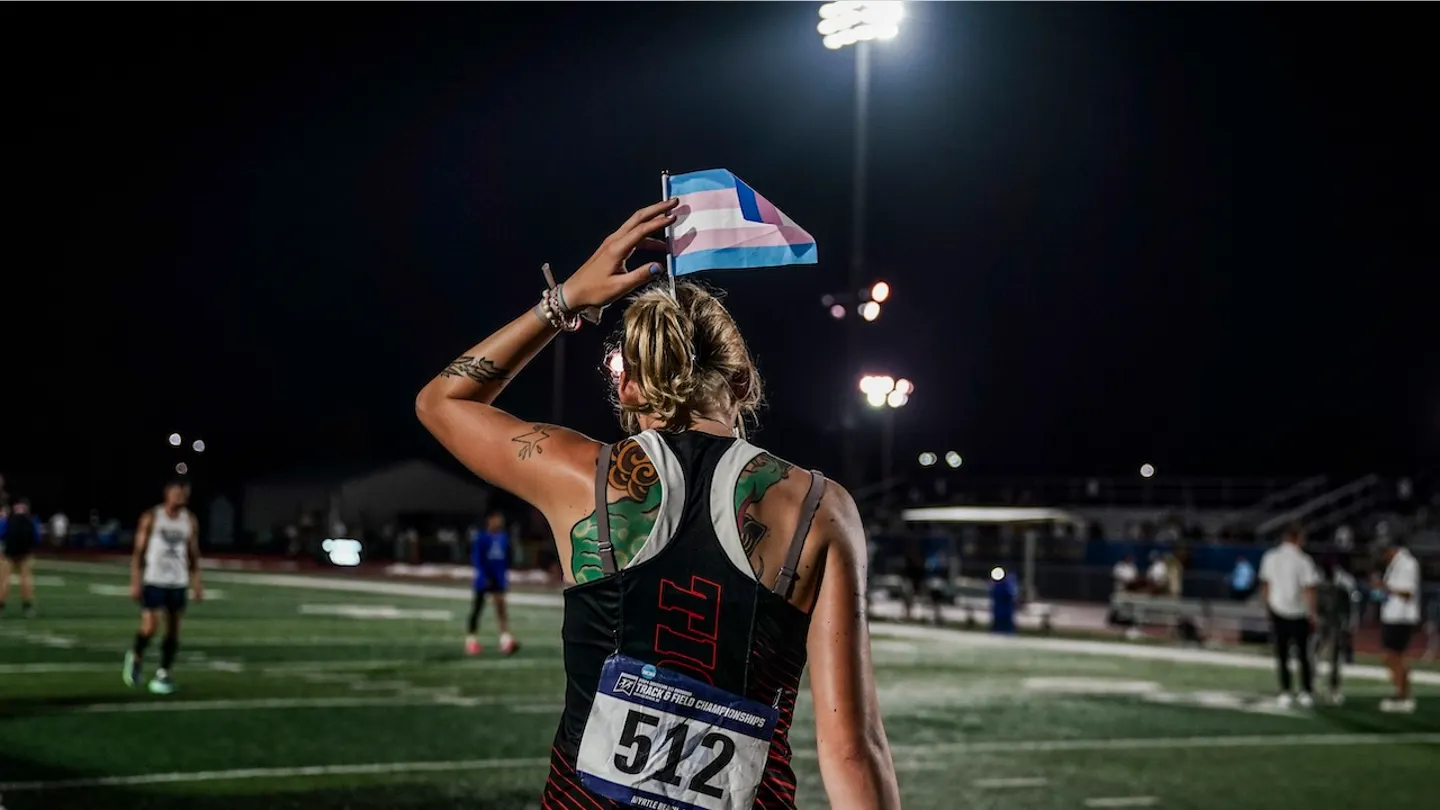

Transgender track athlete Sadie Schreiner has filed a lawsuit against Princeton University, alleging the school blocked her from competing in a women’s 200-meter race at a track meet in May — a move she says violated New Jersey’s anti-discrimination laws.
According to the suit, Schreiner was scheduled to race in the women’s 200-meter sprint at the Larry Ellis Invitational on May 3 as one of over 140 unattached athletes not affiliated with a university or team. However, just 15 minutes before the race, Schreiner claims Princeton officials informed her she could not compete.
“I don’t want to assume, but you are transgender,” one official allegedly said, according to the complaint.
The lawsuit argues that Princeton’s actions were in “blatant and willful disregard” of Schreiner’s rights under the New Jersey Law Against Discrimination, which protects individuals based on “gender identity or expression.” Schreiner is seeking damages for alleged emotional and physical harm.
Fox News Digital has reached out to Princeton University for comment but has not yet received a response.
Background and Controversy
Schreiner previously competed for the women’s track and field team at the Rochester Institute of Technology (RIT), where she drew national attention for dominating female competitors and posting about it on social media. However, after the NCAA updated its transgender athlete policy on February 6 — one day after President Donald Trump signed the “Keeping Men Out of Women’s Sports” executive order — Schreiner was ruled ineligible to compete for RIT.
RIT confirmed her disqualification in a February 12 statement, saying it was adhering to updated NCAA rules in line with the executive order.
Despite that, Schreiner continued competing as an unattached athlete. On March 1, she participated in the USA Track & Field Open Masters Championships, winning the women’s 400-meter and 200-meter races. In the 200-meter, she finished ahead of several teenage athletes. In the 400-meter event, she won by default, as other runners did not start the race.
Later, Schreiner claimed that meet may have been her final competition in the U.S. due to changing eligibility rules. In an Instagram video, she stated, “I very likely just ran what will be my last meet in the United States,” adding that USA Track & Field (USATF) had shifted its policy to align with World Athletics — which bars athletes who underwent male puberty from competing in women’s events.
USATF’s website now reflects this policy change, replacing previous references to the more permissive International Olympic Committee standards.
A Divisive Figure in Women’s Sports
Schreiner has become a lightning rod in the ongoing national debate over transgender participation in women’s athletics. During the 2024 NCAA Division III Outdoor Championships, she finished third in the 200-meter finals. Earlier that month, she won both the 200- and 400-meter events at the Liberty League Championships, breaking a women’s record — though her time would have placed her last in the men’s division by over two seconds.
Throughout early 2024, Schreiner collected a series of first-place finishes at indoor track meets, regularly outperforming female competitors and securing automatic qualifications for regional championships. Her social media posts often included boasts and commentary, along with symbols of transgender pride.
Facing Barriers Off the Track
Schreiner has also spoken out about the challenges of being a transgender athlete in the U.S. In December 2024, she said her efforts to transfer schools were blocked by state-level laws and school policies.
“Half the country banned me from participating,” she said, referring to the growing number of states with laws restricting transgender athletes from competing in women’s sports. “Even when coaches wanted me on their teams, college administrations would often say no.”
As legal and athletic institutions continue to wrestle with how to handle transgender eligibility, Schreiner’s lawsuit against Princeton could set a new precedent in the courtroom — one that may influence the future of trans participation in collegiate athletics nationwide.


