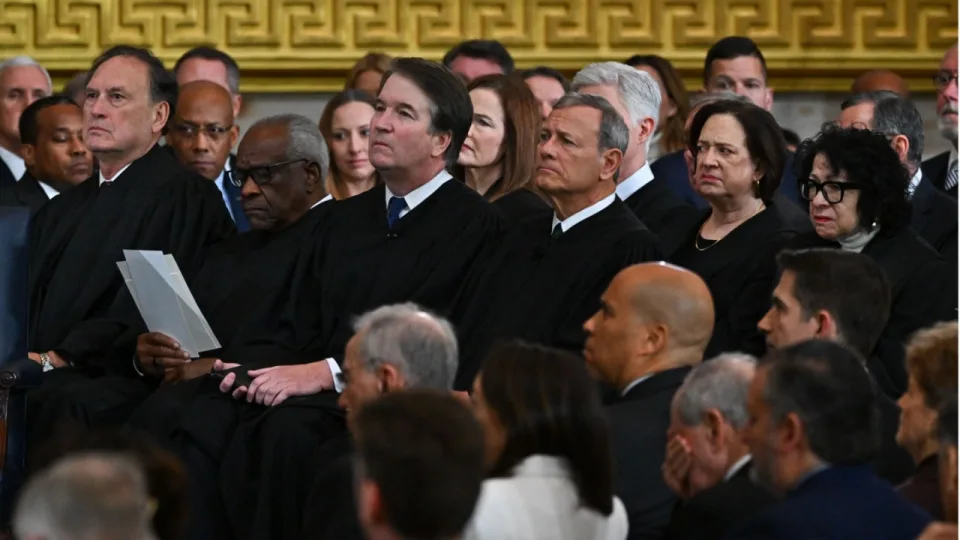

The Supreme Court ruled Wednesday that President Donald Trump has the authority to remove three Democratic members of the U.S. Consumer Product Safety Commission (CPSC), overturning a lower court order that had temporarily reinstated them. The 6–3 decision, issued as part of an emergency order, caps a high-profile legal battle over presidential control of independent federal agencies.
Justices Sonia Sotomayor, Elena Kagan, and Ketanji Brown Jackson dissented.
The dispute arose after U.S. District Judge Matthew Maddox, a Biden appointee in Maryland, found the firings of Mary Boyle, Alexander Hoehn-Saric, and Richard Trumka Jr. to be unlawful, and ordered their reinstatement. Trump’s legal team quickly appealed, and after the Fourth Circuit Court of Appeals declined to pause Maddox’s ruling, the administration turned to the Supreme Court.
In its emergency petition, U.S. Solicitor General D. John Sauer cited a similar ruling earlier this year in which the Supreme Court temporarily blocked the reinstatement of members of the National Labor Relations Board and the Merit Systems Protection Board. Sauer argued that precedent should apply in this case as well, stating that the decision “squarely controls this case.”
The CPSC members countered that their abrupt removal threatened the continuity of an agency tasked with ensuring product safety for American consumers. They also pointed out that the Trump administration waited four months before taking action, undercutting claims of urgent or irreparable harm.
Judge Maddox previously ruled that the CPSC’s staggered, five-member board structure — designed to promote independence — does not violate Article II of the Constitution, which defines presidential powers. He argued that reinstating the board members while litigation was still ongoing could create unnecessary instability.
However, the Supreme Court’s decision suggests a broader shift toward expanding presidential authority over independent agencies — a recurring theme in several recent Trump-era legal battles. Central to the debate is the 1935 precedent Humphrey’s Executor, which limits a president’s ability to fire independent regulators without cause. Legal observers say the current Court’s conservative majority appears increasingly open to revisiting that long-standing doctrine.
The ruling closes out the Supreme Court’s current term and delivers another legal win to Trump as he continues reshaping the federal bureaucracy through executive power.