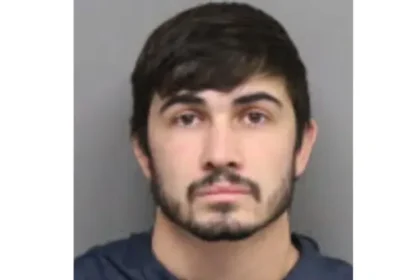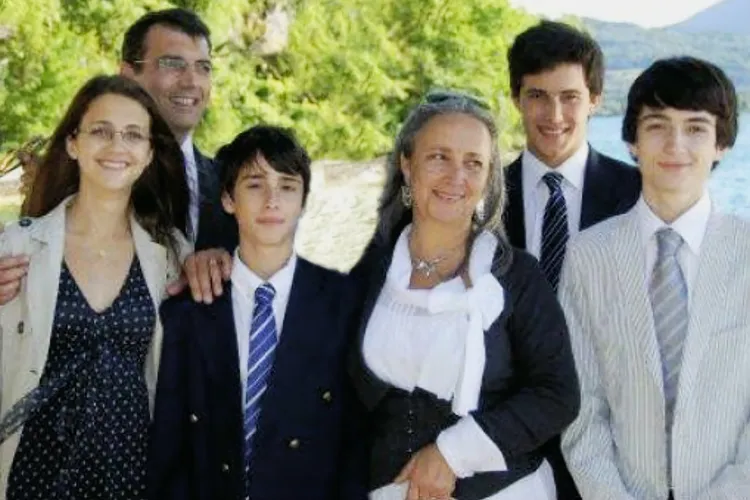

He was a cash-strapped aristocrat whose world was falling apart — and when his family turned up buried beneath their own patio, he disappeared without a trace.
In April 2011, police in Nantes, France, uncovered a chilling scene: five bodies wrapped in sheets, sprinkled with lime and hidden under the garden of a suburban home, according to France24. The victims — a mother, her four children and the family’s two dogs — had been drugged and then shot execution-style.
The father, 50-year-old Xavier Dupont de Ligonnès, was missing.
Investigators later identified the dead as 48-year-old Agnès Dupont de Ligonnès and her children — Arthur, 21; Thomas, 18; Anne, 16; and Benoît, 13. Authorities believe the killings took place between April 3 and 5, before the bodies were carefully buried beneath the back patio in what police described as a “methodical execution.”
Despite his aristocratic background and self-styled title of “Comte,” or Count, Xavier’s finances were in ruins. His business ventures were collapsing, and he was drowning in debt — yet he kept up appearances, paying for private schooling and maintaining a comfortable lifestyle, according to The Guardian.
In the weeks leading up to the murders, he reportedly began quietly giving away personal possessions, per Society.
:max_bytes(150000):strip_icc():focal(622x0:624x2):format(webp)/Xavier-Dupont-de-Ligonnes-120425-06ee24bfe36547b0978b9565b6ec1995.jpg)
Investigators later discovered that Xavier had sent multiple letters hinting that he was involved in a secret life working with U.S. drug-enforcement authorities, according to The Guardian.
Separately, they uncovered a 2010 message in which he floated the idea of a “collective” suicide. Around the same time, he claimed that he and his family would soon be placed in witness protection — a narrative investigators now believe was crafted to explain their sudden disappearance.
When police searched the house, they found notes and letters reinforcing the supposed move into witness protection, along with a sign on the mailbox asking for all mail to be returned to sender.
According to Reuters, investigators believe Xavier had been planning for weeks. Shortly before the killings, he inherited a .22 rifle from his father and joined a local shooting club. Surveillance footage later captured him alone, withdrawing cash from ATMs across southern France.
The last confirmed sighting of Xavier dates to April 15, 2011, at a budget hotel in Roquebrune-sur-Argens. He paid in cash, checked out the following morning and then vanished.
In the years since, authorities have pursued more than 900 reported sightings across several countries, The Guardian reports. In 2015, human bones were discovered in Fréjus near his last known location, but DNA tests confirmed they did not belong to Xavier.
That same year, an AFP journalist received a handwritten letter and a photograph of the two eldest sons, with a message scribbled on the back: “I’m still alive.” The letter has never been definitively authenticated.
:max_bytes(150000):strip_icc():focal(749x0:751x2):format(webp)/Xavier-Dupont-de-Ligonnes-family-home-police-120425-a82631a335214452aefd3dbe97f21a53.jpg)
At one point, investigators even searched a monastery after a tip suggested Xavier had taken on a new identity in a religious order. In 2019, a traveler arriving in Glasgow from Paris was arrested amid speculation that he was the fugitive count — but fingerprints and DNA later confirmed it was a case of mistaken identity, according to The Guardian and France24.
More than a decade later, Xavier Dupont de Ligonnès remains the subject of an international arrest warrant. No confirmed proof has surfaced to show whether he is living in hiding or died long ago — leaving one of France’s most infamous family murder cases still shrouded in mystery.