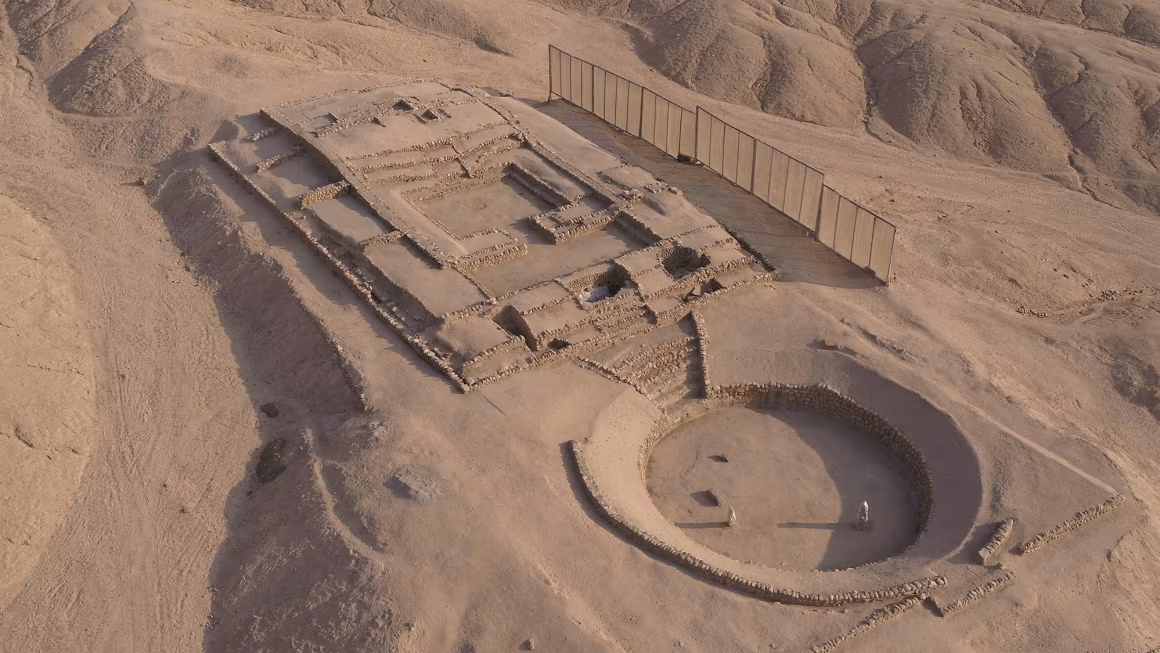

Archaeologists have officially unveiled Peñico, a once-thriving ancient city in Peru that served as a key trade hub more than 3,000 years ago.
Located in Huaura province, north of Lima, Peñico was introduced to the public last week following eight years of excavation and preservation work, according to Peru’s Ministry of Culture.
Believed to have been founded around 1800 BCE, Peñico occupied a strategic location 600 meters above sea level and is thought to have connected the coastal communities of the Supe Valley with settlements in the Andes and Amazon regions.
“This urban center followed the cultural tradition of Caral,” said Ruth Shady, lead researcher and director of the Caral Archaeological Zone (ZAC), a division of the Ministry of Culture. “Its location allowed it to link mountain and coastal towns in Supe and Huaura with Andean and Amazonian communities.”
Archaeologists have uncovered 18 structures at the site so far, including ceremonial and residential buildings. Among the most prominent is a massive public complex known as B1-B3, where researchers discovered ceremonial tools, clay sculptures, and “pututus” — conch-shell trumpets once used in sacred rituals and gatherings.
Experts believe Peñico rose in prominence after the decline of Caral, one of the oldest civilizations in the Americas. Its influence may have been tied to its role in the trade of hematite, a red mineral highly valued in Andean spiritual traditions.
Now open to tourists, the site features walking paths, reception areas, and a modern interpretation center to help visitors engage with the ancient city’s history.
The unveiling comes just ahead of the inaugural Peñico Raymi, a new cultural festival celebrating the site’s legacy. The event, scheduled for Saturday, will feature traditional Andean music, ceremonies honoring the earth goddess Pachamama, and various artistic displays inspired by ancient rituals.