
A crucial detail has emerged nearly a year after the mid-air collision near Ronald Reagan Washington National Airport that killed 67 people.
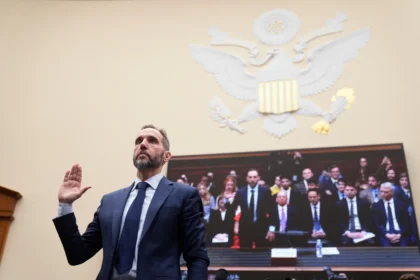
During a National Transportation Safety Board (NTSB) hearing on Tuesday, Jan. 27, investigators said the crew of an Army Black Hawk helicopter that collided with American Airlines Flight 5342 on Jan. 29, 2025, likely mistook the passenger jet for another aircraft — despite evidence the jet should have been visible to the helicopter crew well before impact.
Visibility study: jet should have been in view
Brice Banning, the investigator in charge, presented findings from a visibility study examining what both crews could have seen in the minutes leading up to the crash.
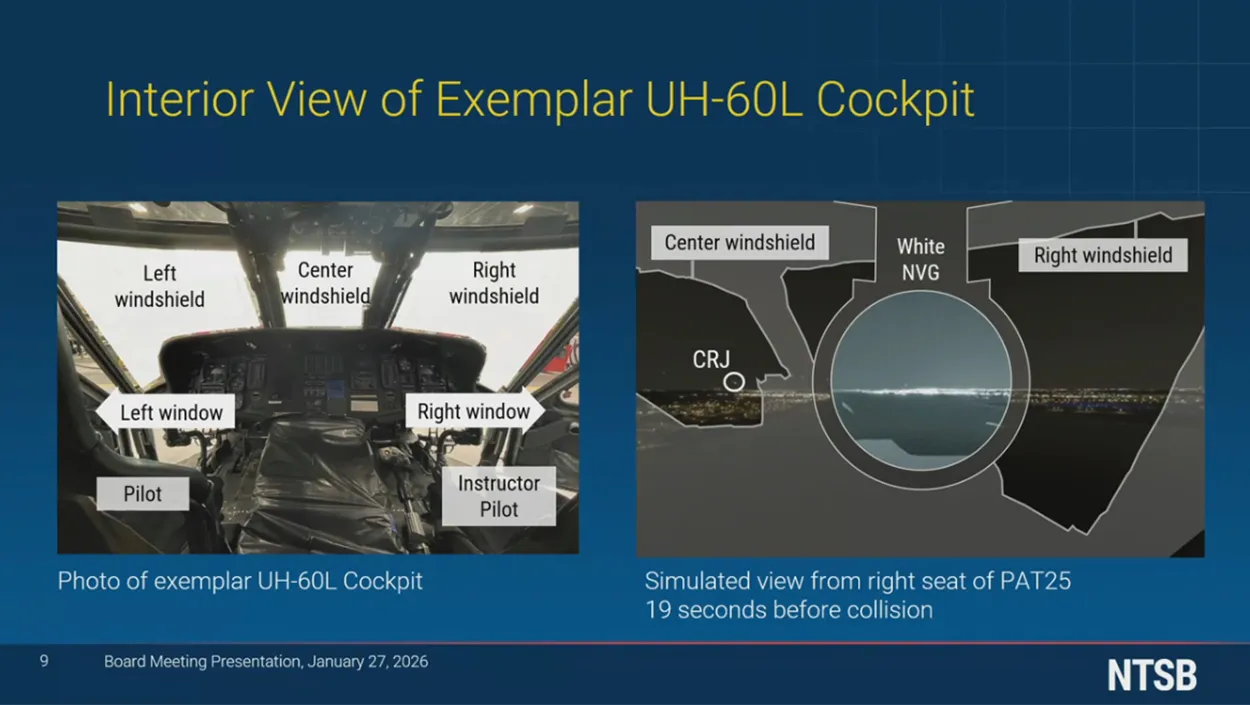
The study indicated the helicopter crew should have been able to clearly see Flight 5342 for nearly two minutes as it crossed the Potomac River on approach to land at Reagan. Investigators said the jet was still visible through the front windshield as late as 19 seconds before the collision.
Even so, investigators said the helicopter crew is believed to have been focused on a different plane — one preparing to land on a different runway.
:max_bytes(150000):strip_icc():focal(624x0:626x2):format(webp)/NTSB-plane-crash-hearing-012726-a7bb00da0abe46b194be3fad23968039.jpg)
Air traffic control: guidance to helicopter, no warning to the jet
Investigators said the air traffic control tower did not warn the American Airlines jet about the helicopter, though controllers did provide guidance to the Black Hawk. That guidance, however, did not include the jet’s direction or its distance from the helicopter.
The study also found the crew of Flight 5342 may have been able to see the helicopter at certain moments, but the helicopter could have blended into surrounding city lights due to its position and altitude.
Banning emphasized limitations to the study, noting it was not a perfect recreation of the conditions on Jan. 29, 2025, including environmental lighting and how the helicopter’s night vision goggles may have affected what the crew could perceive.
Flight details and who was aboard
According to an NTSB presentation last year, Flight 5342 last communicated with air traffic controllers when they were instructed to switch runways about five minutes before landing — a change the crew acknowledged.
The jet, piloted by Capt. Jonathan Campos and first officer/co-pilot Sam Lilley, was traveling from Wichita, Kansas, to Washington, D.C. Several young figure skaters were on board after attending an elite training camp.
The Black Hawk carried a small crew: Capt. Rebecca Lobach, Chief Warrant Officer 2 Andrew Eaves (her instructor for the night-flight training evaluation), and Staff Sgt. Ryan O’Hara.
Altitude limits and instrument issues
Investigators said the helicopter’s route near the airport had a maximum acceptable altitude of 200 feet. But the NTSB said the helicopter was flying higher — fluctuating from the mid-200-foot range to more than 300 feet as it approached Reagan.
According to investigators, the helicopter’s instruments were not measuring altitude correctly, contributing to the aircraft staying above the intended profile. The crew did not realize the readings were off, investigators said, though Army officials were aware of altimeter-related issues and have since taken steps to better educate pilots about such problems.
At various points before the collision, the crew reported being about 100 feet lower than their actual altitude.
Roughly two and a half minutes before impact, Eaves told Lobach to “come down for me” and fly at 200 feet, noting they were at 300 feet, according to the NTSB.
Warnings, “visual separation,” and a missed instruction
The helicopter received two warnings from air traffic control about the approaching jet — one about two minutes before the collision and another roughly 90 seconds later.
Both times, the helicopter crew said it could see the aircraft and requested “visual separation,” which a controller approved. Investigators now believe the crew may have been referring to the wrong plane.
About 20 seconds before the crash, air traffic control instructed the helicopter to “pass behind” the jet. Investigators said that instruction was not heard inside the Black Hawk due to a brief audio interruption from the crew’s microphone, according to the cockpit transcript.
Five seconds after the second warning, Eaves told Lobach, “Alright, kinda come left for me ma’am, I think that’s why he’s asking,” and she responded, “Sure.”
Eaves then said, “We’re kinda out towards the middle,” and Lobach replied, “Oh-kay fine,” according to the transcript.
What happens next
Tuesday’s NTSB hearing was set to continue into the afternoon, including work toward determining a probable cause. Investigators also spent significant time discussing broader system issues, including staffing pressures and workplace culture affecting air traffic controllers at Reagan, along with issues involving the Federal Aviation Administration.