
At least 11 people have died after allegedly consuming a toxic mixture of adulterated alcohol.
The “cochoco” — containing ethyl alcohol, methanol, and other substances — was reportedly sold to homeless individuals and street vendors in Barranquilla, Colombia, according to the Agence France-Presse and local news outlet Vanguardia Liberal.
Police believe the liquor was produced in unsanitary, “deplorable” conditions, AFP reported. Authorities are investigating claims that the alcohol was distributed by a man on a motorcycle, according to El Tiempo.
Brigadier General Edwin Urrego, commander of the Metropolitan Police, initially told local media that seven people had been found dead from consuming the tainted liquor. He said three were discovered in public areas, while four died in medical centers.
“At the scene, we found two jerry cans and bottle remains in extremely poor sanitary conditions. Three of the deceased didn’t even make it to a hospital, as they died in the street,” Urrego said, per Vanguardia Liberal.
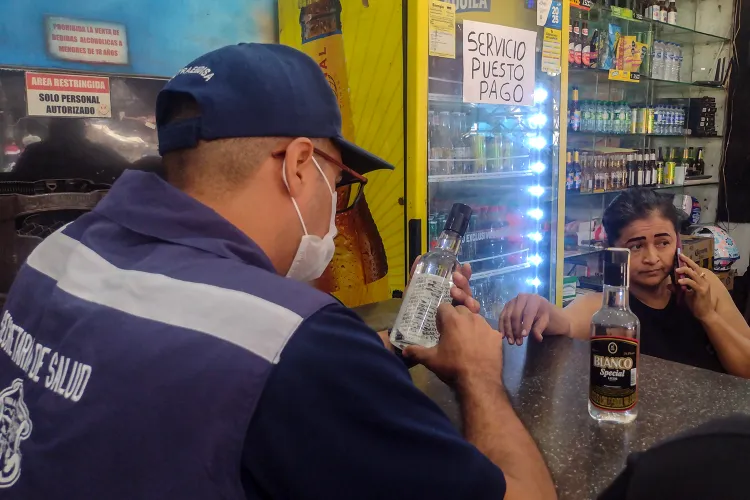
:max_bytes(150000):strip_icc():focal(749x0:751x2):format(webp)/A-man-holds-a-bottle-with-cococho-at-the-Boliche-area-in-Barranquilla-Colombia-092625-879631a37c094023ac192773944aff71.jpg)
The death toll has since risen to 11, according to El Tiempo’s Sept. 25 report from the District Health Secretariat. In total, 25 people — including the deceased — have been affected so far, the outlet added.
Ever Carabello, the nephew of one of the victims, told AFP that his uncle consumed cochoco “every day” and added, “honestly, we never thought this would happen to him.”
At least 20 people have been treated at local hospitals, according to El Tiempo. Ten remain in ICUs, three are under observation, and one patient has reportedly been discharged.
Samples taken from a deceased victim and one ICU patient tested positive for methanol, a highly toxic industrial solvent that can be fatal, per El Tiempo.
Several health agencies worldwide warn against consuming adulterated alcohol, as toxic levels of methanol can be “deliberately added to alcoholic beverages” as “a cheaper alternative to producing ethanol,” according to the Methanol Institute.
Colombian authorities continue to investigate the incident.
“We will continue working on prevention, educational, and inspection, surveillance, and control actions for regular and irregular establishments,” Colombia Health Secretary Stephanie Araújo said in a translated statement on El Tiempo.