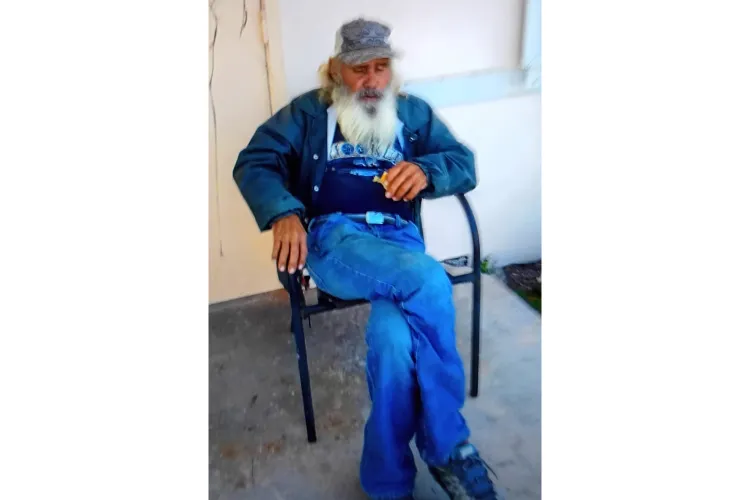

Santos Reyes Banegas, a Honduran native, died last September—within a day of being detained by federal agents on Long Island while heading to his construction job.
Immigration and Customs Enforcement said the 42-year-old had been held at the Nassau County Correctional Center for fewer than 18 hours before he was found unresponsive in his cell. The agency said a preliminary cause of death appeared to be liver failure “complicated by alcoholism,” a claim his sister disputes.
Banegas is among at least 32 people who died in ICE custody in 2025 amid President Donald Trump’s aggressive immigration crackdown, making it the agency’s deadliest year in two decades. Those deaths, which largely unfolded outside public view, have taken on new resonance after federal agents fatally shot two people within weeks in Minneapolis, triggering national outrage.
On Jan. 7, 2026, an agent fatally shot 37-year-old Renee Good during an enforcement action. Weeks later, on Jan. 24, 2026, agents shot and killed another Minneapolis resident, 37-year-old ICU nurse Alex Pretti.
Months after Banegas’ death, his loved ones say they are still waiting for ICE to provide a full investigative report. Under a congressional mandate, the agency is required to produce that report within 90 days—an expectation Banegas’ family says has not been met.
“We don’t really know what happened until we get the full reporting,” says attorney Oscar Michelen, who represents Banegas’ two daughters. “And even if what they say is true—that he was a drinker who was in the end stage of liver failure—they had obligations to make sure he was fit for confinement.”
Banegas was detained on Sept. 17, 2025, outside a grocery store in Hempstead. He had been living there with his sister and working as a day laborer. ICE said in a news release that he had “admitted to a history of alcohol abuse.” But his sister—who asked not to be named out of fear of repercussions—says he was not a heavy drinker and showed no signs of liver failure.
“We don’t believe he was ever checked medically prior to being locked in the cell,” Michelen says. “We’re not saying that they physically assaulted him and beat him to death. We’re saying that they neglected him and he died in their custody.”
According to ICE, Banegas entered the U.S. illegally at least four times. The agency said that in August 2004, agents in New York City “encountered” him and began deportation proceedings. An immigration judge granted him voluntary departure in September 2004, and ICE said he left the following month from New York’s Kennedy Airport to Honduras.
:max_bytes(150000):strip_icc():focal(498x0:500x2):format(webp)/Santos-Banegas-Reyes-012226-c9ea56218ddb423b8dc90229501a336f.jpg)
On Aug. 12, 2005, U.S. Border Patrol arrested him for illegally reentering the country in Casa Grande, Arizona, and turned him over to ICE, which deported him to Honduras 10 days later, the agency said. ICE said he was deported a third time on Oct. 24, 2019. Michelen said Banegas had been in the U.S. for the last two years and kept returning to support his children.
“It was the only place that he found the opportunity to make enough money to support his two children,” Michelen said. “And live a safe, decent life.”
At minimum, Michelen says, Banegas’ death raises basic questions about whether detainees are screened appropriately for fitness for confinement—and how quickly potential medical emergencies are identified and treated.
Across the country, ICE facilities have faced allegations from human rights groups, immigration lawyers, and lawmakers over overcrowding and poor conditions, including reports of spoiled food.
ICE has said detainees are never denied emergency care, that people in its custody receive medical, dental, and mental health screening, and that round-the-clock emergency care is available at each detention facility.
“ICE remains committed to ensuring that all those in its custody reside in safe, secure, and humane environments,” the agency said in its release about Banegas’ death. “Comprehensive medical care is provided from the moment individuals arrive and throughout the entirety of their stay.”
Another 2025 death cited by family members is that of Isidro Pérez, 75, who died in ICE custody in Florida last June. His family says he had complained about conditions at Krome North Service Processing Center in Miami, where he was taken on June 6, 2025—one day after he was arrested while sitting at the Murray Nelson Government Center in Key Largo.
“He said it felt like a cold freezer,” his stepdaughter, Alba Gomez, says, adding that communication became difficult after he was detained.
Pérez came to the U.S. from Cuba in 1966. Gomez says he had been living on a houseboat off the coast of Key Largo before his death and could barely walk in his final months. She says he also had heart problems. He regularly met with her mother, Maria Alaniz, 82, at the government center to exchange dirty laundry for clean clothes and to receive water and other supplies. Pérez and Alaniz dated for several years in the 1980s and remained close friends after separating, Gomez says. She adds that Pérez continued helping raise her and her five siblings even after the relationship ended.
“Growing up, we learned fishing from him, swimming, and we had nothing but seafood in the home,” she says. “That’s how we were fed. That’s how he did his living.”
ICE said Pérez underwent an intake screening the day after his arrest and was documented as having hypertension and coronary artery disease, among other health issues. On June 16, 2025, ICE said he was evaluated after reporting flu-like symptoms and was diagnosed with acute bronchitis. The next day, the agency said he was admitted to Larkin Community Hospital for acute coronary syndrome. From June 20 to June 23, 2025, ICE said he was treated for “myocardial infarction”—a heart attack. On June 27, 2025, after reporting chest pains, he died at Florida Kendall Hospital just before 8:45 p.m.
“My mom would pray every day to get news about him,” Gomez says. “She even had a dream about him calling. He was calling out to her and saying, ‘I can’t … I can’t breathe. My heart hurts.’ And she woke up devastated. And then that’s when she receives the call, the final call, that he’s no longer with us.”
ICE said Pérez was twice convicted of possession of a controlled substance—in February 1981 and January 1984—and served time in jail. Gomez says he studied to become a mechanic while incarcerated and worked in that field after his release.
“He was the type of person that wouldn’t fully charge you for what the work was worth,” she says. “He would settle for like, 40 bucks or 60 bucks, if that’s all you had.”
She describes him as tender and generous, with a faith and kindness she says never wavered.
“Nothing about his final days erases the beauty of the life that he lived,” Gomez says. “The system failed him, but he did not fail his process. So his compassion, his faith, his love—those are all the truths that remain.”