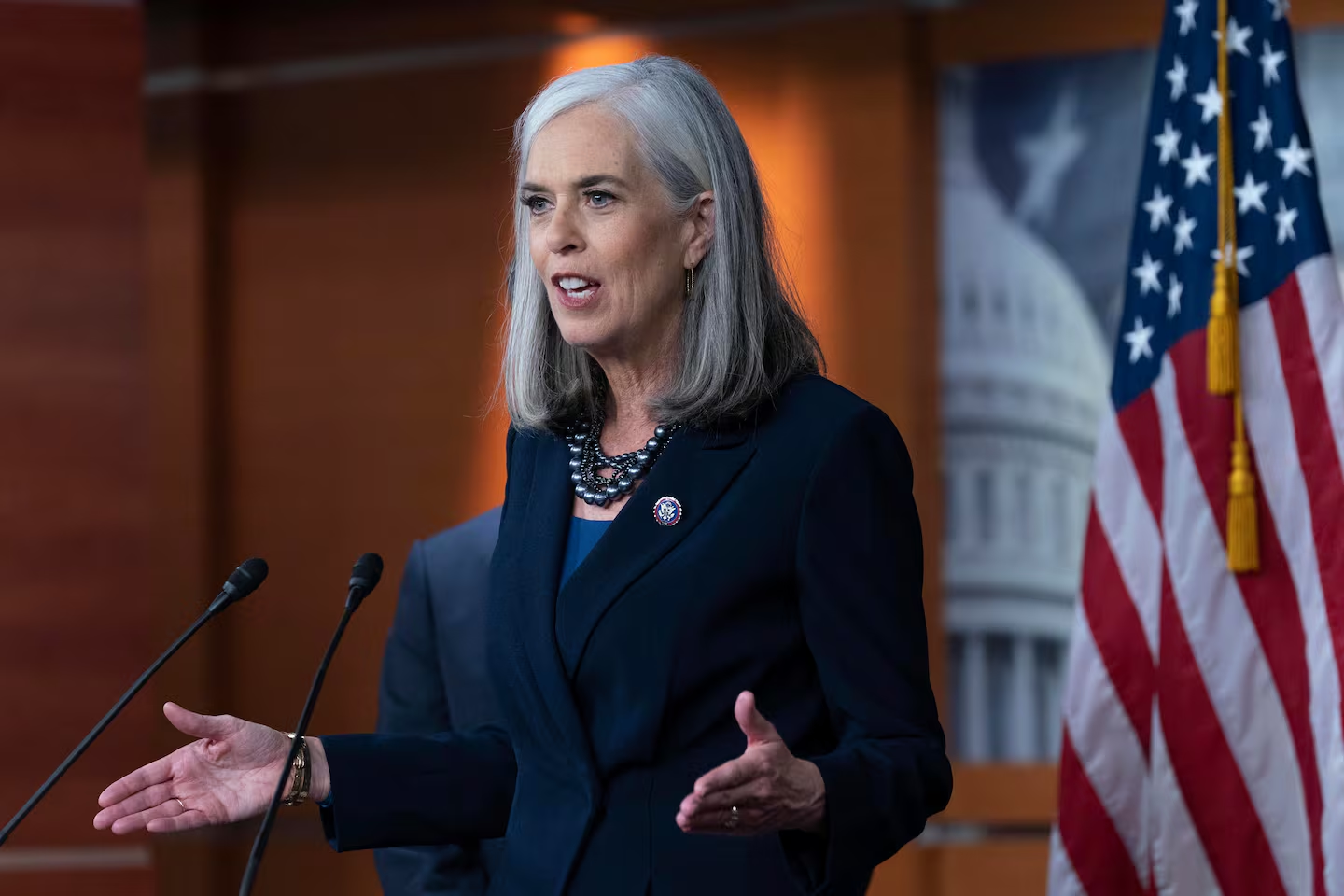

Rep. Katherine Clark questioned Republican-backed voter identification legislation during a House debate, arguing it could create new obstacles for women and working families—especially those who changed their names after marriage.
“This is being framed as a voter ID bill, but that’s not what’s happening,” Clark said on the House floor. She pointed to the daily realities of working mothers balancing jobs, childcare, and household responsibilities, and said the proposal would add burdensome steps for women whose legal names no longer match older citizenship documents.
“And now you’re going to tell those women that because they got married and changed their names, they have to go down to a clerk and prove they’re citizens—sign affidavits and do this in person?” she said. Clark described the requirements as “a minefield of red tape” that could deter or delay eligible voters from casting ballots.
The bill, called the Safeguard American Voter Eligibility (SAVE) Act, would require people to provide documentary proof of U.S. citizenship when registering to vote—typically a U.S. passport or birth certificate—and also to present a valid photo ID before voting. It passed the House largely along party lines, 218–213.
Clark also criticized the measure online, arguing Republicans should focus on lowering costs rather than changing election rules.
Not everyone agreed with her concerns. Some critics responded that the legislation’s impact was being exaggerated, arguing that obtaining identification is a normal expectation and that voter ID requirements are widely supported.
Republicans backing the bill said it is necessary to prevent voter fraud and strengthen enforcement of election laws. Rep. Bryan Steil of Wisconsin, who introduced the measure, rejected claims it would suppress votes and said current law does not do enough to prevent noncitizens from voting.
Democrats countered that the proposal could make it harder for eligible Americans to vote. While federal law already requires U.S. citizenship to vote in federal elections, it does not generally require documentary proof. Election experts have noted that voter fraud is rare and that very few noncitizens are registered to vote.