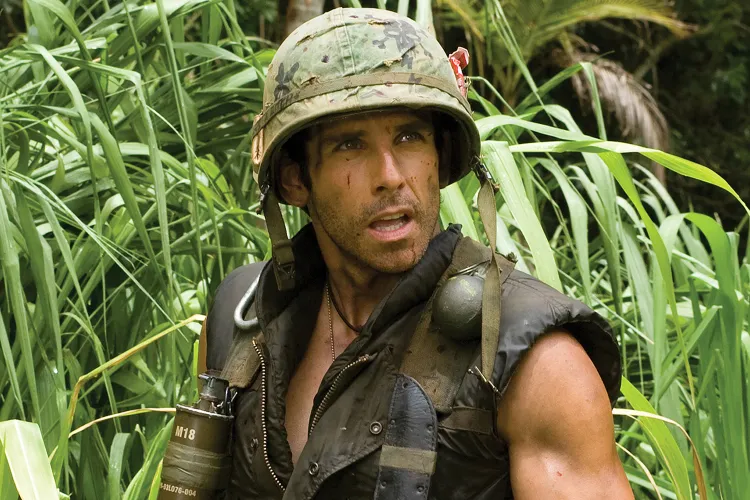

Actor and director Ben Stiller has publicly demanded that the Trump administration remove a clip of his 2008 comedy Tropic Thunder from an official White House social media video. Stiller condemned the administration’s unauthorized use of the footage, which was interspersed with clips of U.S. military operations, labeling the post a piece of a “propaganda machine.”
White House published a montage featuring scenes from popular entertainment franchises—including Top Gun, Superman, Transformers, Breaking Bad, and Iron Man—spliced alongside footage of American military forces. The post was captioned, “Justice the American way.”
Stiller, 60, quickly took to X (formerly Twitter) to voice his strong opposition.
“Hey White House, please remove the Tropic Thunder clip,” Stiller wrote on Friday. “We never gave you permission and have no interest in being a part of your propaganda machine. War is not a movie.”
A Growing Pattern of Unauthorized Celebrity Content
Stiller’s rebuke marks the latest in an ongoing clash between the entertainment industry and the Trump White House’s digital strategy team. A growing list of high-profile artists, including Céline Dion, Bruce Springsteen, Linkin Park, Neil Young, Olivia Rodrigo, and Radiohead, have previously objected to the administration’s use of their intellectual property on government channels.
The conflict has escalated noticeably in recent weeks. On March 2, pop star Kesha, 39, issued a scathing statement on Instagram regarding a February 10 White House TikTok video. The clip set her upbeat track “Blow” to footage of a fighter jet firing a missile, followed by an explosion.
:max_bytes(150000):strip_icc():focal(703x492:705x494):format(webp)/Tropic-Thunder-030626-01-98db5ee61a274b20b3e3afd140cbc182.jpg)
“It’s come to my attention that The White House has used one of my songs on TikTok to incite violence and threaten war,” Kesha wrote. Emphasizing that she “absolutely” does not approve of her music promoting violence, she added, “Trying to make light of war is disgusting and inhumane.”
The Administration’s Calculated Strategy
The White House has openly acknowledged that the controversy surrounding these unauthorized uses is an intentional tactic designed to drive digital engagement. Following Kesha’s public objection, White House Director of Communications Steven Cheung reposted her statement on X with a blunt dismissal of the artist’s concerns.
“All these ‘singers’ keep falling for this,” Cheung wrote. “This just gives us more attention and more view counts to our videos because people want to see what they’re bitching about. Thank you for your attention to this matter.”
This strategy of provocation was also deployed in December, when the administration utilized Sabrina Carpenter’s hit song “Juno” to score a video highlighting Immigration and Customs Enforcement (ICE) arrests. The footage of officers detaining individuals played alongside Carpenter’s repeating lyric, “Have you ever tried this one?” The White House captioned the post, “Have you ever tried this one? Bye-bye.”
Carpenter immediately condemned the post on X on December 2, calling the video “evil and disgusting.”
“Do not ever involve me or my music to benefit your inhumane agenda,” Carpenter demanded. While the White House deleted the video from X on December 5 after Carpenter’s response garnered over a million likes, the administration pointedly preserved the clip on its official TikTok channel.
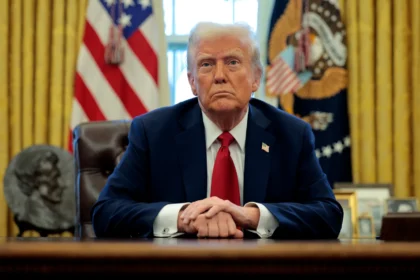
:max_bytes(150000):strip_icc():focal(963x394:965x396):format(webp)/Donald-J-Trump-sits-at-a-table-monitoring-military-operations-030525-1-bdd9c04205aa49c394387ecf87076293.jpg)
As the Trump administration continues to utilize viral, entertainment-driven content to amplify its policy messaging, the friction between the White House and Hollywood is poised to intensify. With communications officials openly embracing public backlash as a metric of social media success, artists face an evolving battle in shielding their work from political usage.