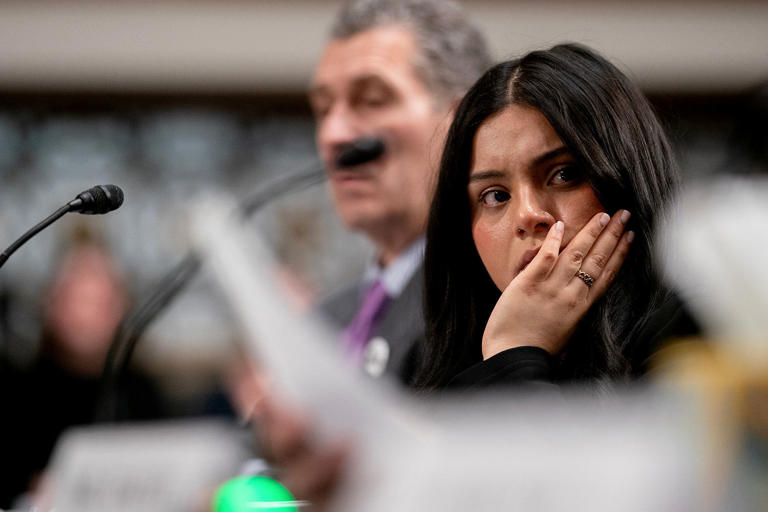

Text messages a Border Patrol agent sent to colleagues and family after shooting a Chicago woman five times can be released to the public, a federal judge ruled Friday. In previously released texts, the agent had boasted about his marksmanship.
U.S. District Judge Georgia Alexakis said in court that the messages bear on both the agent’s credibility and the credibility of the Department of Homeland Security. She added that the texts could also help the public understand how DHS leadership viewed the shooting.
The agent, Charles Exum, shot Marimar Martinez five times on Oct. 4 after authorities alleged she rammed her car into agents’ vehicles. Martinez denies ramming them and says the agents were the aggressors. Exum did not have his body camera turned on during the incident.
One message already made public captured the agent’s tone after the shooting: “I fired 5 rounds and she had 7 holes. Put that in your book boys.”
Government lawyers argued that releasing the remaining texts would further damage Exum and his family. The judge pushed back, questioning why the government appeared unconcerned about harm to Martinez’s reputation. “I don’t know why the United States government has expressed zero concern for the sullying of Ms. Martinez’s reputation,” Alexakis said.
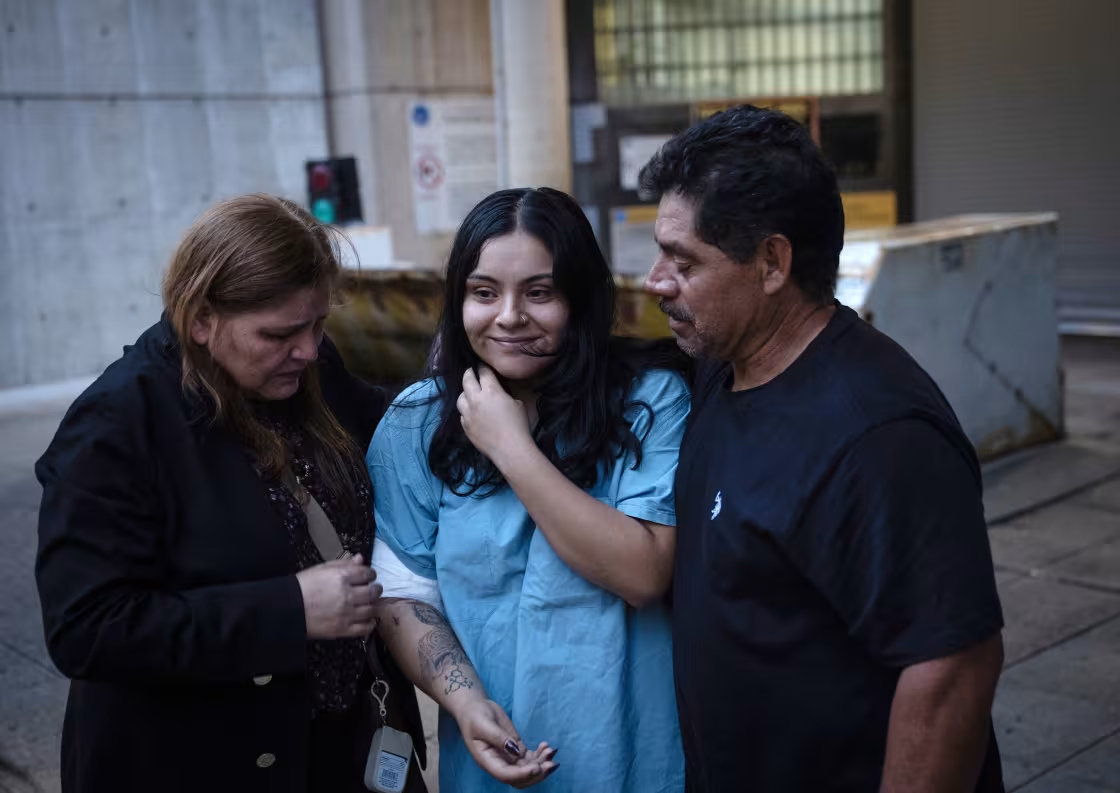
Martinez’s attorney, Chris Parente, said his team would work with government lawyers on redactions over the weekend. Martinez’s legal team said it would not release the evidence any earlier than Monday.
Although the government has dropped its case against Martinez, her attorneys say officials have refused to correct the record after publicly branding her a “domestic terrorist.” Martinez had pleaded not guilty in October to Justice Department charges alleging she used her vehicle “to assault, impede, and interfere with the work of federal agents in Chicago.”
On Friday, Alexakis also ruled that additional evidence could be made public, including emails, text messages, investigative reports, and statements by higher-ranking DHS officials—materials Parente argues will reveal how officials were thinking and what guidance they were giving officers. The ruling also allows the release of body camera footage from an agent who was near the shooting, along with photos and reports from after the crash and audio from Martinez’s 911 call.
Alexakis noted that DHS has not publicly addressed that it dropped the case with prejudice—meaning it cannot bring the same charges again in the future.
In court filings, Parente argued that recent fatal shootings in Minnesota underscore the public interest in releasing evidence in Martinez’s case:
“Based on recent events in Minneapolis, Minnesota, involving the execution of two U.S. citizens who were engaged in similar peaceful protests as Ms. Martinez at the time of their killings, Ms. Martinez believes certain information disclosed in her case, and currently subject to the Protective Order, would be useful for both the public and elected officials to know regarding how DHS responds in cases where their agents use deadly force against U.S. citizens.”
Parente also pointed to what he described as misstatements by high-ranking officials in the Trump administration, including an Oct. 6 post on X shared by FBI Director Kash Patel. The post, originally from another account, included a video and said: “This is the video where Marimar Martinez, aka La Maggie, rammed a white DHS vehicle who had their emergency lights on. Another DHS black SUV then attempts to ram Marimar’s SUV from behind. One DHS agent is on the passenger side firing shots. Democrats are insane.”
As of early Friday, Parente said Patel had not taken down that post.
Martinez’s attorneys also sought release of Flock surveillance camera footage from the 30 days before the shooting, arguing it would show her engaged in everyday life and counter DHS claims that she had doxxed agents and ambushed them. The judge ruled in favor of releasing the video but declined to release license plate reader camera data, saying it would have “little value” in helping Martinez clear her name.
During the hearing, Parente suggested none of the footage would need to be released if the U.S. government publicly stated Martinez is not a domestic terrorist. The judge said the court was not there to broker that kind of negotiation.
After the hearing, Martinez’s lawyers said they would keep fighting to restore her reputation.
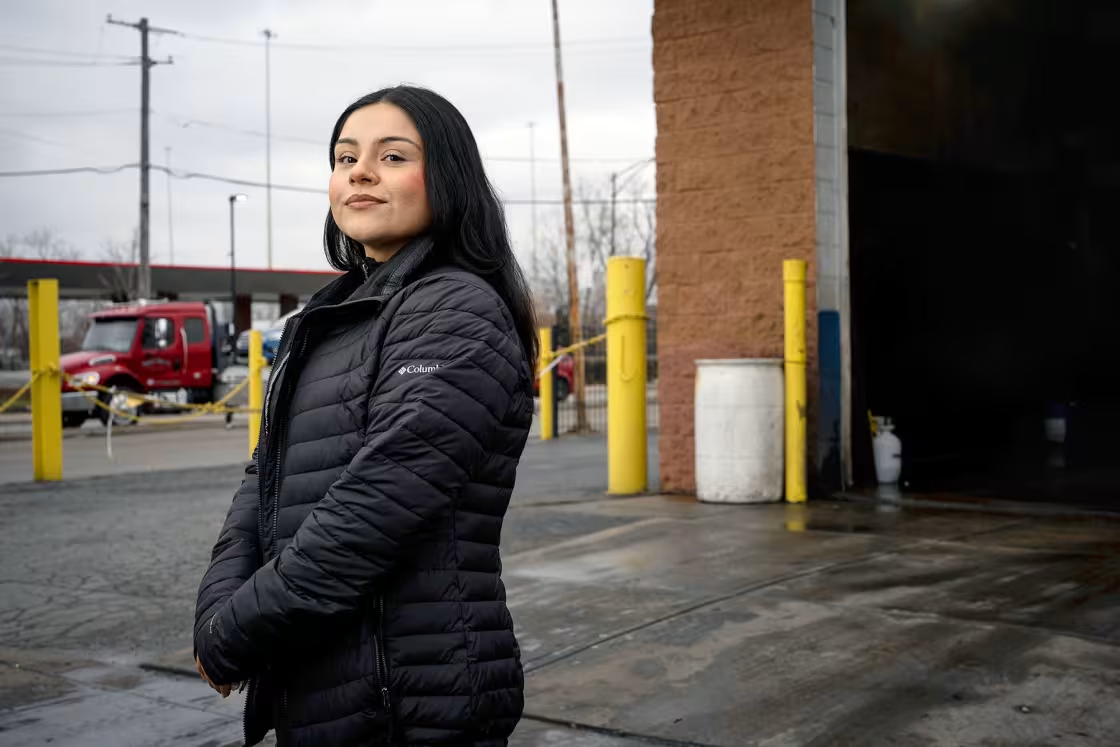
“You can’t call a U.S. citizen with no criminal history who’s a Montessori school teacher a domestic terrorist, which is such a loaded word in this country, and repeat it over and over as late as yesterday,” Parente said.