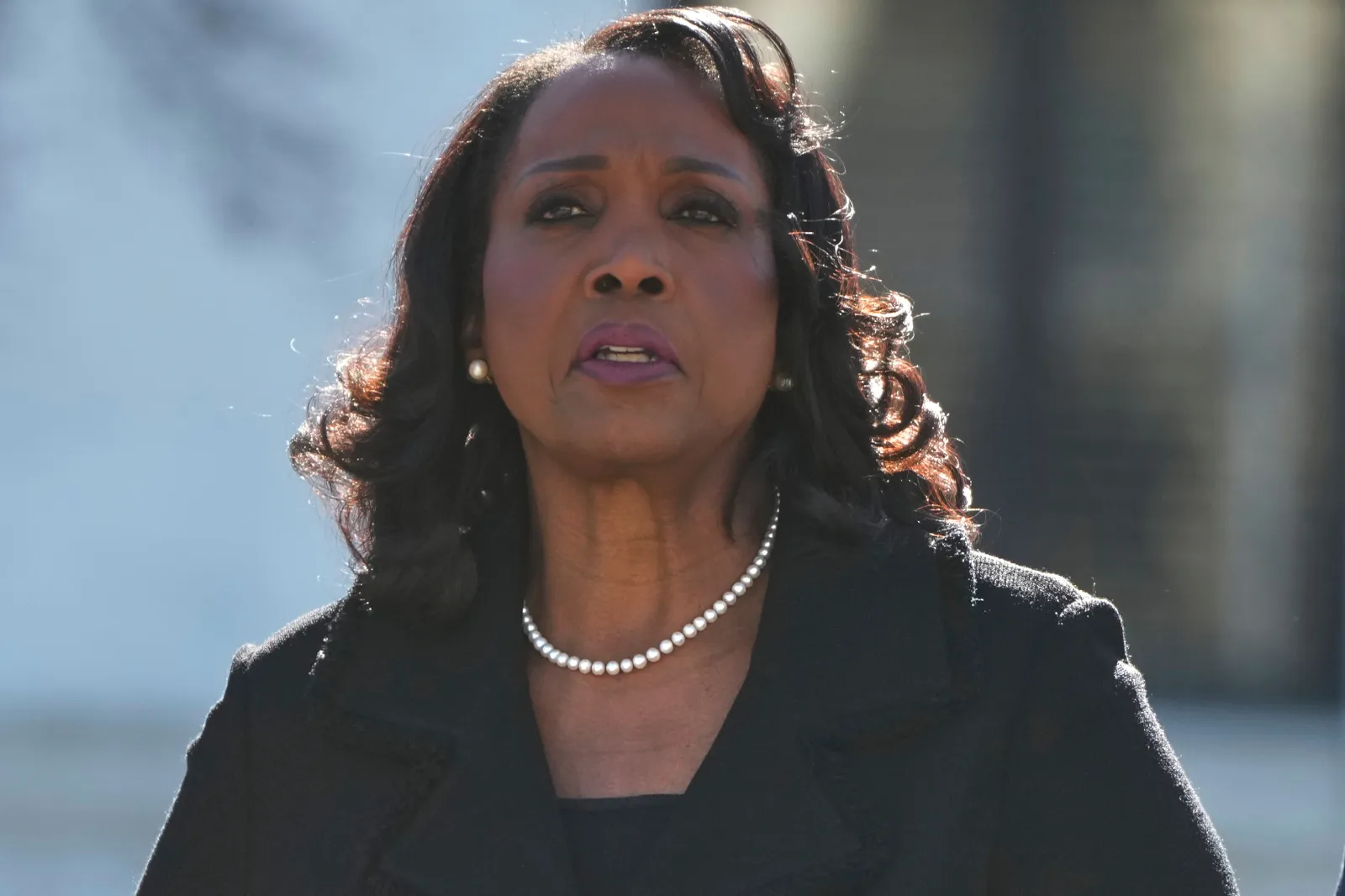

Justice Brett Kavanaugh pressed a lawyer for Federal Reserve Board Governor Lisa Cook on whether impeachment is a realistic safeguard for removing independent officials, as the Supreme Court on Wednesday heard arguments over how far a president’s firing power extends.
The case centers on what qualifies as “for cause” removal—an issue the justices explored through a series of hypotheticals and sharp exchanges. Representing Cook, former U.S. Solicitor General Paul Clement argued that impeachment remains the “ultimate backup” in extreme scenarios raised from the bench.
Several justices questioned whether President Donald Trump can fire a sitting Fed governor based on allegations of mortgage fraud—claims Cook denies. Kavanaugh warned that allowing Cook’s removal on those grounds could “weaken, if not shatter, the independence of the Federal Reserve.”
What to know
During the argument, Justice Samuel Alito offered a hypothetical: what if, after an official takes office, videos surface showing the person expressing admiration for Hitler or the Ku Klux Klan? Clement answered that such an official “would be impeached in a heartbeat.”
Clement repeatedly returned to impeachment as his “backup to the backup,” prompting Kavanaugh to challenge the theory.
Kavanaugh noted that the Court has previously heard arguments suggesting impeachment doesn’t reach private conduct. “You obviously disagree with that then?” he asked.
Clement replied that the issue underscores a broader point about how impeachment functions as a remedy and how far judicial review can reach. He referenced the Walter Nixon case, arguing that impeachment determinations are not subject to judicial review—meaning the House and Senate ultimately decide what conduct qualifies, including whether private conduct is in bounds or out.
Clement also raised the concept of “INM”—inefficiency, neglect of duty, or malfeasance—language associated with statutory protections for independent officials. He said he addressed difficult hypotheticals because those are the answers the Court would need to accept under an INM-style framework.
Kavanaugh pressed him: under Clement’s approach, are those hard cases effectively “funneled to the impeachment process?” Clement answered yes, arguing the framework “has worked for 150 years” and has not proven unmanageable in practice.
Why Trump moved to remove Lisa Cook
Trump sought to remove Cook from the Federal Reserve Board citing allegations that she committed mortgage fraud in 2021, before joining the central bank. The administration contends Cook improperly claimed two properties as primary residences, potentially securing more favorable loan terms.
Cook has not been charged with a crime. Critics argue the effort may reflect a wider push to increase White House influence over the independent central bank and, by extension, monetary policy and interest rates.
Who is Lisa Cook?
Cook is a Federal Reserve governor and the first Black woman to serve on the Fed’s Board of Governors. An economist, she was confirmed in 2022 after serving as a professor at Michigan State University and working in roles tied to economic research and policy.
Her work has focused on labor markets, inequality, and innovation. As one of seven governors, she helps shape U.S. monetary policy, including interest-rate decisions—an area traditionally insulated from direct political pressure.
What people are saying
In a separate case last year, the justices wrote: “The Federal Reserve is a uniquely structured, quasi-private entity that follows in the distinct historical tradition of the First and Second Banks of the United States.”
Justice Sonia Sotomayor said Wednesday: “This whole case is irregular, starting with the Truth Social notice…But that’s where we are.”
White House spokesman Kush Desai previously told The Associated Press: “President Trump lawfully removed Lisa Cook for cause from the Federal Reserve Board of Governors. We look forward to ultimate victory after presenting our oral arguments before the Supreme Court in January.”
What happens next
Oral arguments concluded Wednesday. The Court is expected to issue a ruling at a later date.