
The Supreme Court on Thursday allowed Mississippi to enforce a social media age-verification law for now, turning down an emergency request from tech industry group NetChoice to block the law.
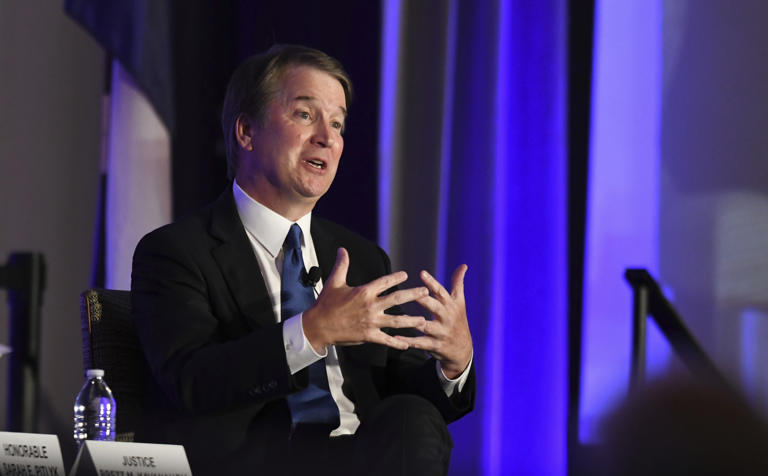
The short, unsigned order did not list any dissents, but Justice Brett Kavanaugh wrote separately, saying the law will probably be found unconstitutional in the long run.
Kavanaugh wrote, “In short, under this Court’s case law as it currently stands, the Mississippi law is likely unconstitutional. Nonetheless, because NetChoice has not shown that the balance of harms and equities favors it at this time, I agree with the Court’s denial of the request for temporary relief.”
Why It Matters
The decision is a setback for companies like Facebook, X, and YouTube, which argue the law violates privacy and free speech rights. Paul Taske, co-director of the NetChoice Litigation Center, called it “an unfortunate procedural delay.”
“Although we’re disappointed with the Court’s decision, Justice Kavanaugh’s note makes clear that NetChoice will ultimately succeed in defending the First Amendment — not just in this case but across all NetChoice’s ID-for-Speech lawsuits,” Taske said.
Similar legal fights are happening across the U.S. as states try to regulate children’s access to social media. Researchers say social media use is linked to higher rates of depression and anxiety among young people.
What To Know
NetChoice represents several major tech companies, including Google, which owns YouTube; Snap Inc., which owns Snapchat; and Meta, which owns Facebook and Instagram.
The group is challenging Mississippi Attorney General Lynn Fitch over the Walker Montgomery Protecting Children Online Act, which requires social media users to confirm their age before using the platforms.
Fitch and her lawyers said in a brief that the law protects against “sexual abuse, trafficking, physical violence, sextortion, and more,” which they argued are not covered by the First Amendment.
In 2024, U.S. District Judge Sul Ozerden issued a preliminary injunction to block the law. But the 5th Circuit Court of Appeals ruled in July that the law could be enforced while the lawsuit continues.
What People Are Saying
Justice Kavanaugh, in an opinion: “To be clear, NetChoice has, in my view, shown that it is likely to succeed on the merits—namely, that enforcement of the Mississippi law would likely violate its members’ First Amendment rights under this Court’s precedents.”
NetChoice attorneys, in their emergency request: “This law would stifle the internet’s promise of ‘relatively unlimited, low-cost capacity for communication of all kinds,’ by making users face major barriers to accessing speech that this Court—and other courts nationwide—have called unconstitutional in different cases.”
Mississippi Attorney General Lynn Fitch and her lawyers said: “The Act requires what any responsible platform would already do: make ‘commercially reasonable’ efforts to protect minors—not perfect or too expensive, but reasonable steps based on what the platform can afford.”
What Happens Next
The law will stay in effect as the lawsuit continues.