
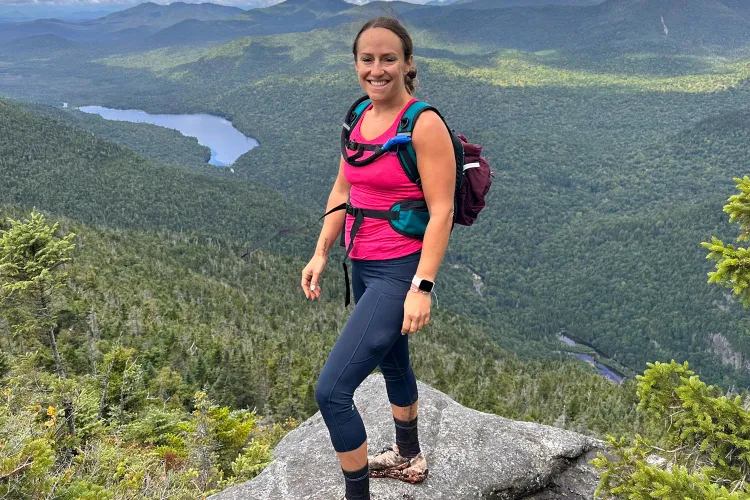

Cynthia Donovan was determined to look her best for her wedding. But years of intense dieting and exercise to achieve that goal ultimately left her infertile.
Donovan, a registered dietitian and fitness enthusiast, began pushing her body harder after getting engaged in 2010. As her wedding day approached, her focus on strict calorie control and intense workouts intensified.
“I just wanted to be thinner,” Donovan, now a mom of two, tells PEOPLE. “I thought if I looked perfect, I’d feel perfect. But I wasn’t happy at all.”
What started as a quest for health and confidence led to a dangerous health spiral. Cynthia’s period disappeared, which she initially attributed to years of birth control use. But even after she stopped taking it, her cycle didn’t return.
Doctors initially brushed it off, since she wasn’t trying to conceive at the time. One even misdiagnosed her with polycystic ovary syndrome. But when Donovan saw a fertility specialist years later, concerned about her future ability to have children, she finally got clarity: she had hypothalamic amenorrhea — a condition where the brain stops sending signals to trigger ovulation, often due to stress, under-eating, or over-exercising.
“I didn’t fit the stereotype. I wasn’t severely underweight. I wasn’t anorexic,” she recalls. “But I had been ignoring the signs my body was giving me.”
:max_bytes(150000):strip_icc():focal(499x0:501x2):format(webp)/Cynthia-Donovan-1-071525-de931ea6caa242caa373f5653a49e26f.jpg)
Despite being a trained nutrition professional, Donovan says she resisted the advice at first — which was to eat more and exercise less.
“I had always equated health with discipline and restriction,” she says. “Letting go of that felt like failure.”
Eventually, she committed to healing. She began nourishing her body, resting more, and starting fertility treatments. The journey was grueling — emotionally and physically — but in 2016, Donovan gave birth to her first son, Brian, after a healthy pregnancy. Her second son, Brayden, followed in 2018, conceived naturally.
“I never thought I’d get to hold my own baby,” Donovan says. “But when I finally did, it made every sacrifice worth it.”
Now, Cynthia helps other women through similar struggles. She hosts The Period Recovery Podcast and encourages women to view their menstrual cycles as critical signs of health.
Her advice? “Don’t wait. Your period is a vital sign. If it’s missing, your body is trying to tell you something. Listen to it — and advocate for yourself.”


