
Chicago Mayor Brandon Johnson sharply criticized President Donald Trump after the president suggested sending the National Guard to the city as part of his broader crime crackdown.
The pushback came just hours after President Trump said Chicago could be the next target for federal intervention following his administration’s operation in Washington, D.C.
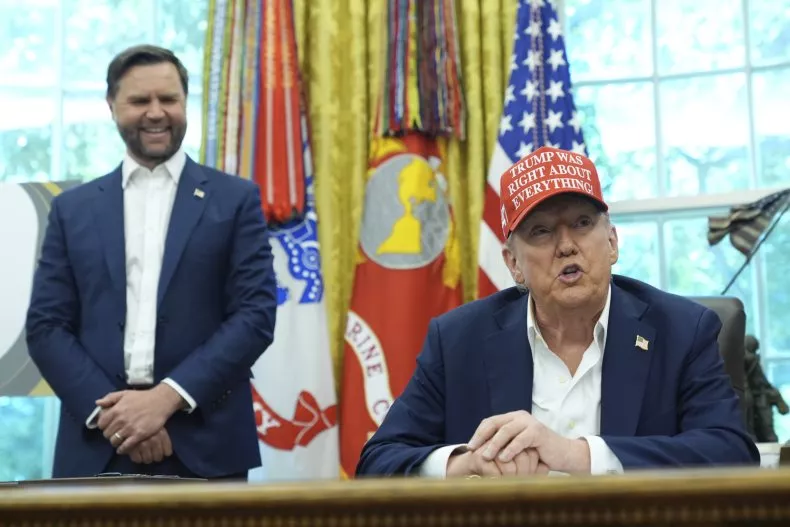
“After we do this, we’ll go to another location, and we’ll make it safe, also,” Trump said Friday from the Oval Office. “We’re going to make our country very safe. … Chicago’s a mess.”
In response, Johnson released a statement emphasizing that the city had received no official notice of any planned deployment of federal officers or military personnel. He voiced “grave concerns” about the consequences of what he described as any “unlawful deployment.”
Johnson condemned the approach as “uncoordinated, uncalled-for and unsound.” His remarks followed Trump’s earlier jab in which he called the mayor “grossly incompetent.”
Highlighting Chicago’s recent progress, Johnson noted that the city had seen a 30% drop in homicides, a 35% decline in robberies, and nearly 40% fewer shootings in the past year. He argued that outside intervention could set back that progress by undermining community trust.
“Unlawfully deploying the National Guard to Chicago has the potential to inflame tensions between residents and law enforcement when we know that trust between police and residents is foundational to building safer communities,” Johnson said. “An unlawful deployment would be unsustainable and would threaten to undermine the historic progress we have made.”
Johnson also pointed out that Chicago’s challenges go beyond law enforcement, stressing that the National Guard would not address systemic issues.
“The National Guard will not alleviate the housing crisis,” he wrote. “It will not put food in the stomachs of the 1 in 4 children that go to bed hungry every night in Chicago. The National Guard will not fully fund our public schools or provide mental healthcare or substance abuse treatment to Chicagoans in need.”
He added that meaningful solutions come from “dedicated local law enforcement and community violence interrupters who know and serve our communities every day” — not military intervention.
Trump recently moved to federalize D.C.’s Metropolitan Police Department under the District of Columbia Home Rule Act, which grants the president emergency control of the city’s police force for 30 days.
Following that move, six Republican-led states pledged to send 2,000 National Guard members to Washington, D.C., to assist federal agencies including the FBI, DEA, and ATF. Defense Secretary Pete Hegseth also authorized soldiers and airmen to be armed if their mission requires it.