
China urged the United States to move quickly with Russia toward a framework to manage their nuclear arsenals after the New START arms control treaty expired.
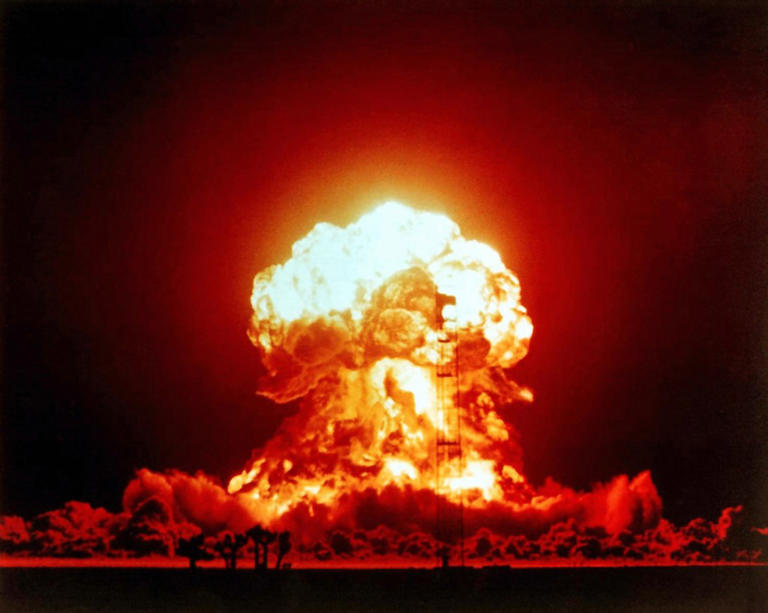
New START was the last remaining nuclear arms agreement between Washington and Moscow. It expired on Thursday, lifting the final caps on the world’s two largest nuclear stockpiles for the first time in more than half a century. Many analysts worry the end of the treaty could open the door to an unchecked nuclear arms race.
China’s Foreign Ministry described the treaty’s expiration as a major setback. “From China’s view, the expiration of New START is truly regrettable,” spokesperson Lin Jian said Thursday in a statement shared on social media. He added that the agreement was “vital to global strategic stability,” and warned there is widespread concern about what its end means for the broader nuclear arms control system and global nuclear order.
Russia has proposed a one-year extension of the treaty’s limits, though the United States has not publicly responded. Lin said China hopes Washington “will actively respond to Russia’s proposal, work out a responsible solution to the treaty’s expiration, and resume strategic stability dialogue with Russia at an early date,” calling that outcome “also what the world hopes to see.”
While China is a nuclear power, it has rejected calls to join an arms-control pact, arguing its arsenal is significantly smaller than those of the U.S. and Russia. Still, Beijing has expanded its nuclear stockpile rapidly in recent years, and the Pentagon estimates China now has more than 600 operational warheads.
Analysts generally view that buildup as part of President Xi Jinping’s push to narrow the strategic gap with Washington and to deter U.S. involvement in a regional conflict, including a potential crisis over Taiwan, which Beijing claims.
China has not signed a nuclear arms treaty, but it is one of only two nuclear-armed states—alongside India—to maintain a declared no-first-use policy. Beijing has repeatedly urged other nuclear powers to adopt a similar commitment, proposals that the United States and Russia have dismissed.
The U.S. and Russia together hold roughly 90 percent of the world’s nuclear weapons, with each estimated to possess more than 5,000 warheads, according to the Stockholm International Peace Research Institute (SIPRI).
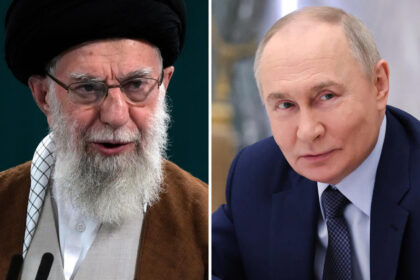
In Moscow, officials expressed frustration and regret over the treaty’s expiration. Kremlin adviser Yuri Ushakov said Russian President Vladimir Putin discussed the issue with Xi Jinping on Wednesday and noted that Washington has not answered Russia’s extension proposal. Kremlin spokesman Dmitry Peskov said Thursday that Russia views the expiration “negatively” and regrets it, while insisting Moscow will continue what he called a responsible approach to nuclear stability guided by national interests.
Russia’s Foreign Ministry said late Wednesday that, under current conditions, the parties “are no longer bound by any obligations or symmetrical declarations” within the treaty framework—including its core provisions—and are free to decide what comes next.
Signed in 2010 by then-President Barack Obama and then-Russian President Dmitry Medvedev, New START limited each side to 1,550 deployed nuclear warheads and no more than 700 deployed missiles and bombers. The treaty was originally set to expire in 2021, but was extended for five additional years.
The agreement also relied on on-site inspections to verify compliance. Those inspections stopped in 2020 due to the COVID-19 pandemic and never resumed. In February 2023, Putin suspended Russia’s participation, arguing the country could not permit U.S. inspections while Washington and NATO supported Ukraine in a war Russia viewed as existential. Even then, Moscow said it was not fully withdrawing and would continue to respect the treaty’s limits.
When Putin offered in September to abide by New START’s caps for one year—framing it as time to negotiate a replacement—he warned that the treaty’s expiration would be destabilizing and could encourage nuclear proliferation. New START was the latest in a long line of U.S.-Russian arms reduction deals, many of which have since been terminated.
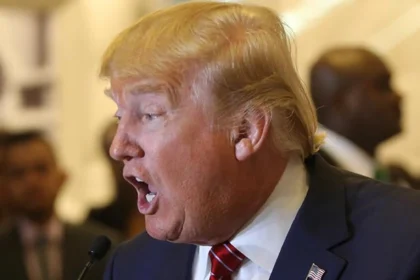
President Donald Trump has said he wants limits to continue but has also argued China should be included in any future arrangement. “I actually feel strongly that if we’re going to do it, I think China should be a member of the extension,” Trump told The New York Times last month. “China should be a part of the agreement.”
On Thursday, Lin reiterated that China does not plan to join disarmament talks for now. He said Beijing “always exercises utmost prudence and responsibility” on nuclear issues, follows a defensive nuclear strategy, and maintains a no-first-use policy. Lin also said China has “pledged unconditionally not to use or threaten to use nuclear weapons against non-nuclear-weapon states and nuclear-weapon-free zones.”
“China keeps its nuclear capabilities at the minimum level required by national security, and has no intention to engage in [an] arms race with any country,” Lin said. He added that nuclear disarmament must preserve global strategic stability and provide “undiminished security for all,” arguing China’s nuclear strength is not on the same level as that of the U.S. and Russia.
“Thus, China will not take part in nuclear disarmament negotiations for the time being.”