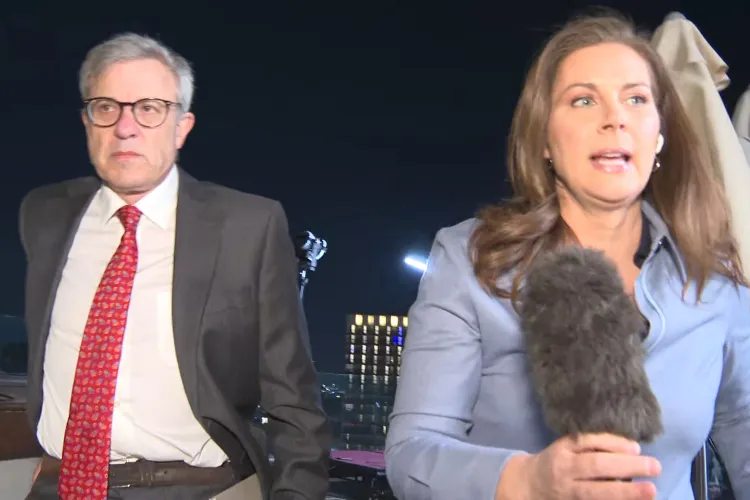

TEL AVIV — High-intensity aerial bombardments and ballistic missile strikes targeted Tel Aviv this week, forcing international news crews and civilians into fortified shelters as the conflict between Israel and Iran enters a volatile new phase. The escalations, which follows a joint U.S.-Israeli operation against Iranian targets, have turned Israel’s commercial hub into a primary front in the widening Middle East war.
Emergency Sirens Interrupt Live Broadcasts
The reality of the current security environment was captured in real-time on Tuesday, March 3, when CNN anchor Erin Burnett was forced to abandon a live broadcast. While interviewing Dan Diker of the Jerusalem Center for Security & Foreign Affairs, Burnett observed Israeli interceptors launching into the sky, signaling an imminent threat.
As sirens echoed across the city, Burnett executed a practiced evacuation plan, leading her guest and crew to a concrete-fortified stairwell.
“I think it’s important for everyone to understand this is what’s become the cadence of normal life [in Israel],” Burnett stated during the descent. “We’ll hear the booms when they start hitting.”
Patterns of Escalation: From Tehran to Tel Aviv
The recent barrage follows a Saturday, Feb. 28, incident where Fox News correspondent Trey Yingst and his crew were caught in what was described as the heaviest explosion to hit Tel Aviv since the commencement of hostilities. Captured on camera, the Iron Dome defense system attempted to track a massive influx of Iranian ballistic missiles as multiple impacts rocked the city’s skyline.
These retaliatory strikes are widely viewed by military analysts as a direct response to a coordinated U.S.-Israeli mission launched against Iranian infrastructure days prior. The cycle of strikes and counterstrikes has now expanded to include several major cities across the region, significantly raising the risk of a total theater war.
U.S. Casualties and White House Response
As of Wednesday, March 4, the human cost of the mission has reached a somber milestone for the United States. Six U.S. service members have been confirmed killed in the ongoing conflict.
In a statement released by the White House on Sunday, March 1, President Donald Trump warned that the fighting could persist for weeks and cautioned that further casualties are likely.
“As one nation, we grieve for the true American patriots who have made the ultimate sacrifice for our nation, even as we continue the righteous mission for which they gave their lives,” the President stated.
The Inverted Pyramid: Key Facts
| Category | Details |
| Primary Targets | Tel Aviv and major Middle Eastern urban centers. |
| Key Entities | U.S. Military, Israeli Defense Forces (IDF), Iranian Military. |
| U.S. Fatalities | 6 Service Members (as of March 4, 2026). |
| Defense Systems | Iron Dome and Arrow interceptors active over central Israel. |
Looking Ahead
International diplomats continue to call for de-escalation, yet the military posture on both sides suggests a protracted engagement. With the death toll in the broader conflict reportedly surpassing 800, the focus remains on whether regional air defenses can continue to withstand the increasing volume of ballistic technology being deployed.
The Pentagon is expected to provide an updated briefing on the status of U.S. assets in the region later this week.