
Recently disclosed handwritten notes from former FBI Director James Comey belong in the category of documents that alter how history is understood. They read like a late-arriving “smoking gun,” and they invite an uncomfortable comparison to the materials that helped unravel Richard Nixon’s presidency.
Comey has long presented himself as the straight-arrow guardian of federal law enforcement. But the parallels to Nixon are hard to miss: a consuming need for control, a talent for self-justification, and a willingness to bend institutions toward personal and political ends. Nixon gave the country Watergate; Comey helped midwife the Russia Hoax. Both men claimed devotion to truth while treating it as a tool. Both left their jobs under a cloud of disgrace.
There is an even darker similarity. Nixon tried to bury his Oval Office tapes. Comey’s notes, too, appear to have been headed for oblivion. They were found in “burn bags” stored in a secure FBI room—materials seemingly meant for destruction. For reasons still unknown, they escaped the incinerator.
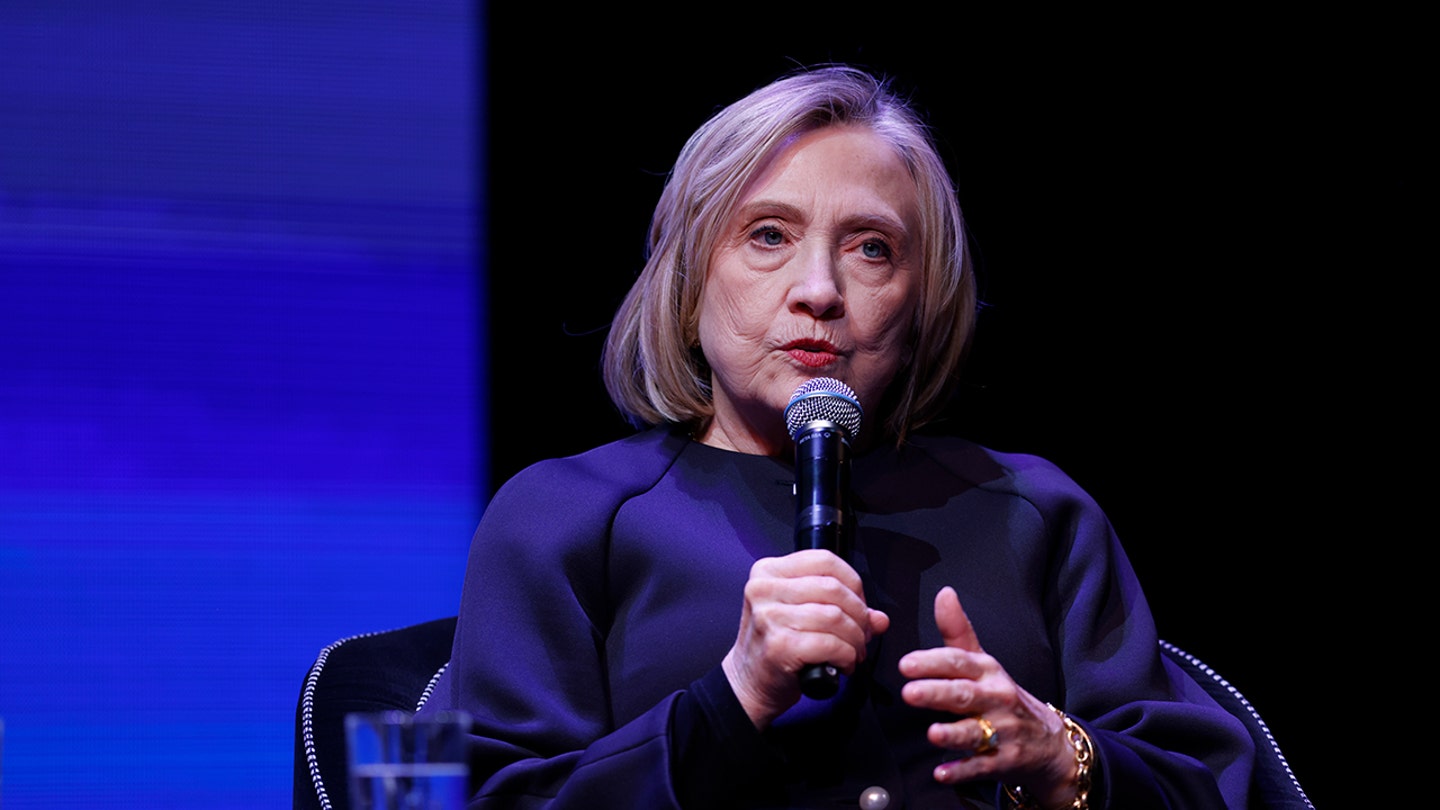
One entry is especially damaging. In it, Comey records that he knew early on that the Russia-collusion storyline was not a spontaneous intelligence discovery but a political invention—one tied to Hillary Clinton’s campaign and reportedly approved by her on July 26, 2016. Special Counsel John Durham’s 2023 report described the objective plainly: to vilify Donald Trump by fueling a scandal about Russian interference and thereby tilt the election.
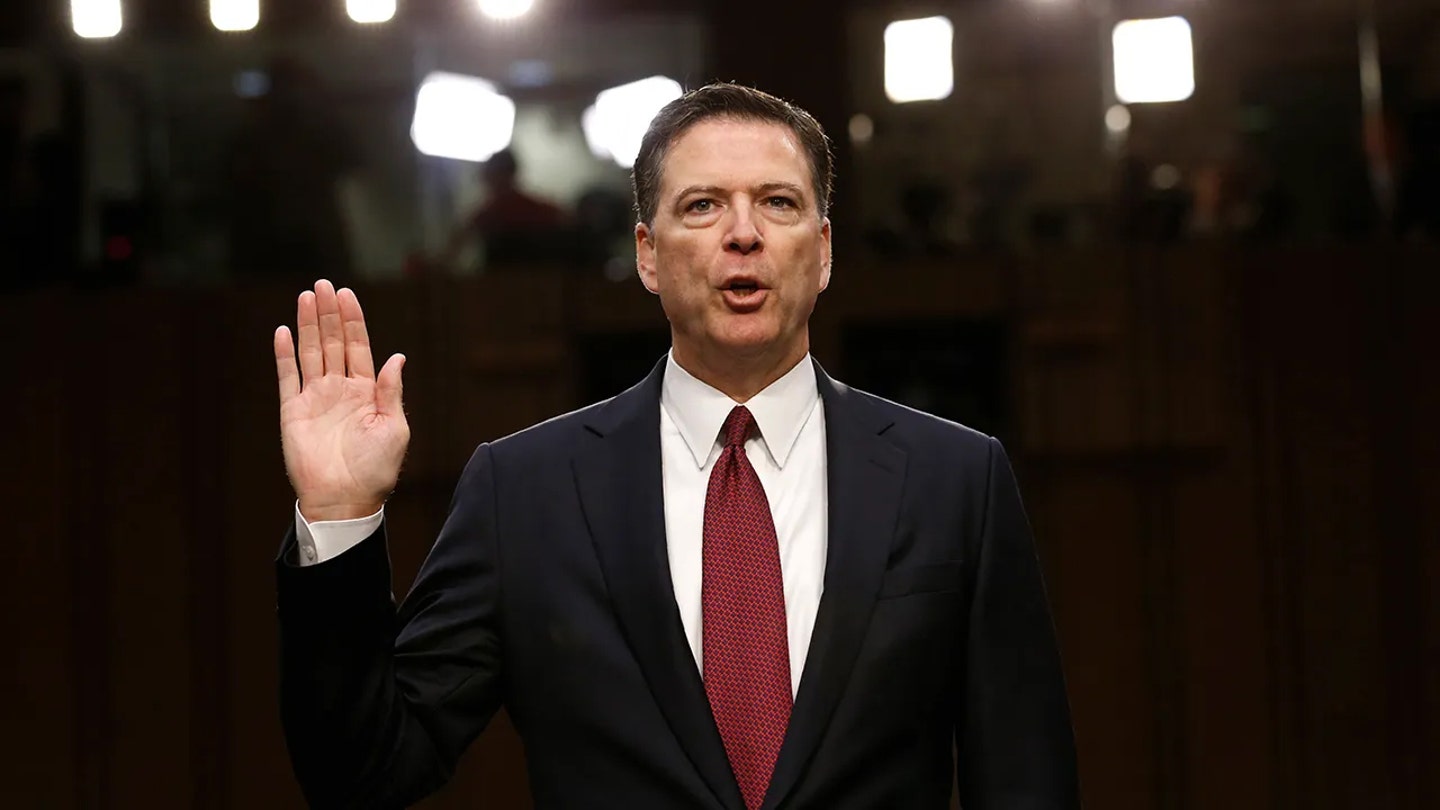
Yet when Congress later asked Comey what he knew about this scheme, he professed ignorance. He claimed he could not recall any awareness of a Clinton effort to smear Trump. His notes tell a different story. A short line—“HRC plan to tie Trump”—directly contradicts his testimony. That is not the kind of detail a person simply forgets.
The notation appears to trace back to intelligence from “JB,” widely understood to be then-CIA Director John Brennan. That matches Brennan’s own declassified notes indicating that U.S. intelligence knew of the Clinton Plan. Brennan reportedly briefed President Barack Obama, Vice President Joe Biden, and Comey at a White House meeting. Instead of informing the public, officials stayed silent while the narrative metastasized into a full-scale political crisis that dogged Trump’s presidency.
Comey’s scribbles are on an FBI notepad labeled “Director” and dated Sept. 26, 2016. The timing aligns with high-level national-security meetings that included Brennan and then-DNI James Clapper. Intelligence officials had urged the FBI to investigate Clinton’s actions as a possible scheme to defraud the government during a presidential election, memorialized in a “Referral Memo” dated Sept. 7, 2016. Comey did the opposite. He banked the allegation, hid the Clinton Plan’s exculpatory value, and used the manufactured narrative to target Trump.
If Congress or the public had learned of the Plan, it would have punctured the collusion tale and exposed Clinton’s role. Comey was not going to allow that. He had already opened an investigation into Trump without a legitimate predicate, while simultaneously sheltering Clinton.
This fits a pattern. On July 5, 2016, Comey staged an unprecedented televised announcement to clear Clinton in her email scandal, despite evidence of deliberate mishandling of classified material. Around the same time, he also stifled probes into the Clinton Foundation and foreign money flowing into it. Prosecutorial work developed by U.S. attorneys was, by Durham’s account, effectively buried.
July 5 was pivotal for another reason. While Comey was publicly exonerating Clinton, his FBI was privately meeting with Christopher Steele, author of the anti-Trump dossier funded by Democrats and Clinton allies. The Bureau rapidly discredited Steele’s claims, but Comey pressed ahead anyway, using the dossier as a lever to pursue Trump.
Why? Comey’s recently unearthed emails suggest he expected Clinton to win. He even suggested he would soon be working for a president-elect who would be “very grateful.” That assumption colored every choice that followed. When Trump unexpectedly won, Comey didn’t retreat from the narrative—he reinforced it, feeding a prolonged effort to delegitimize and remove the new president.
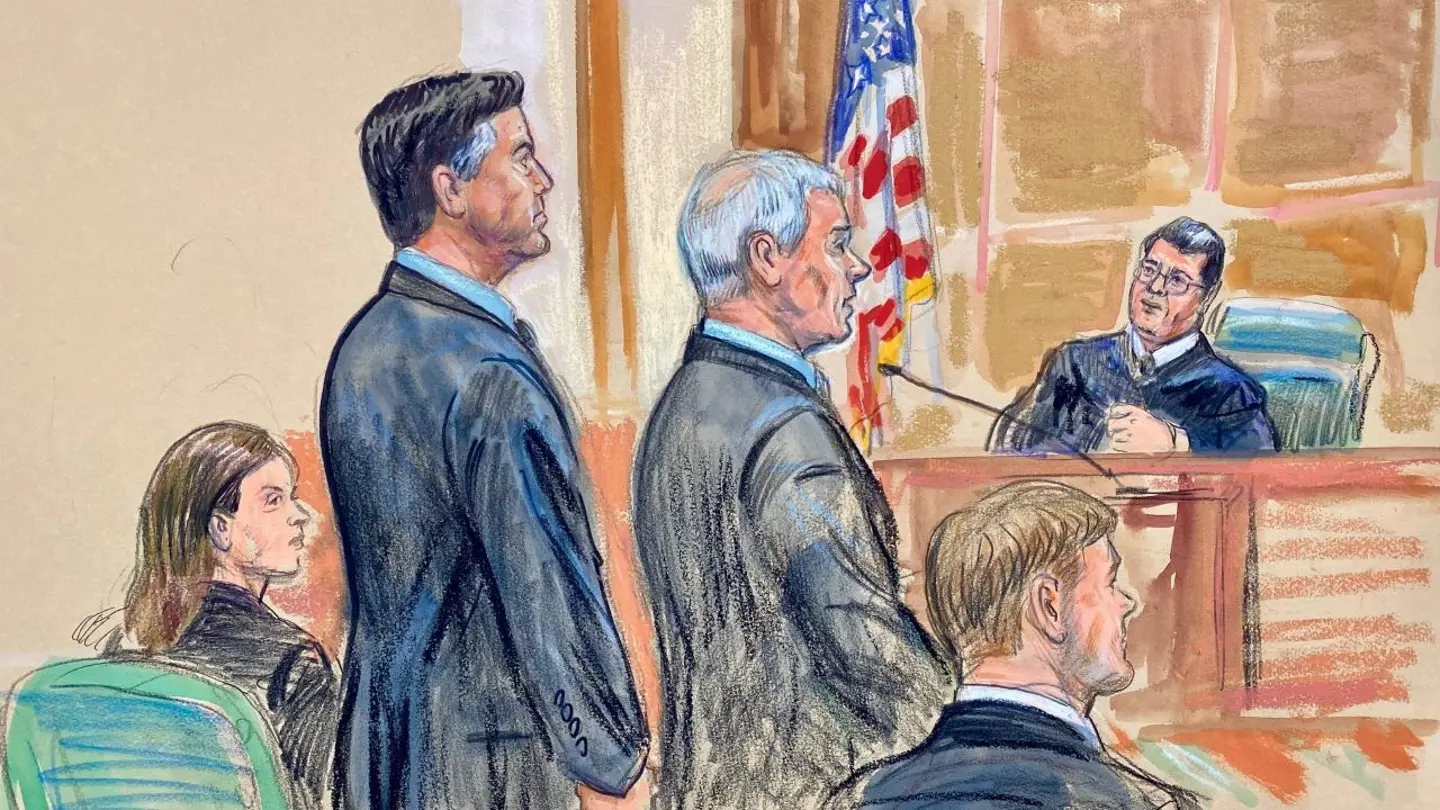
The newly found burn-bag material surfaced only because Comey filed motions to dismiss his federal indictment in Virginia, where he faces charges tied to false statements and obstruction of Congress. Prosecutors responded by turning over documents recovered from the five burn bags.
Those bags were reportedly slated for destruction in the days just before Trump took office again on Jan. 20, 2025. If that timeline holds, it raises the specter of willful destruction of records under 18 U.S.C. 2071. Who ordered it, and why, remains unclear.
Beyond Comey’s notes, other contents strengthen the case that he misled Congress about authorizing anonymous media leaks in violation of FBI rules. Messages show him celebrating the leaks and calling them “fun,” while using a Gmail alias—“Reinhold Niebuhr”—to conceal his role. There was nothing ethical about this conduct. It was manipulation, plain and simple.
The burn-bag cache also appears to illuminate a broader lawfare campaign that began under the Obama administration and continued under Biden, aimed at Trump and those around him. Some documents touch on the January 6 breach, the 2020 election dispute, and the Mar-a-Lago raid. These strands were later used by Special Counsel Jack Smith to bring two Trump indictments that were eventually thrown out. The evidence, the author argues, points toward political motivation to prevent Trump’s return to power.
Central to that later arc was a secret FBI investigation code-named “Arctic Frost,” approved by Attorney General Merrick Garland and then-FBI Director Christopher Wray in April 2022. Jack Smith went on to issue nearly 200 subpoenas and to sweep up communications tied to more than 400 Republicans—ranging from people in Trump’s orbit to sitting U.S. senators and media organizations.
Now, a newly impaneled grand jury in South Florida is reportedly examining the full continuum—from “Crossfire Hurricane” through “Arctic Frost.” Subpoenas are said to be flying. Investigators may weigh potential violations under 18 U.S.C. 241 and 242, statutes targeting abuses of power that deprive citizens of rights under color of law.
Additional declassified materials released by current DNI Tulsi Gabbard and CIA Director John Ratcliffe are described as adding to the picture of manufactured intelligence and wrongdoing that the grand jury will evaluate.
For nearly a decade, the author contends, federal power was bent against political enemies, warping elections and eroding the rule of law. Comey’s notes are not a footnote to that story; they are a window into its origin.
Nixon escaped accountability through a pardon. The question now is whether Comey, too, will avoid a reckoning—or whether these notes finally force one.