
There’s a moment in Werner Herzog’s 2005 documentary Grizzly Man that still leaves viewers uneasy: Herzog listens to a few seconds of the audio recording from the fatal grizzly bear attack that killed Timothy Treadwell, then abruptly pulls off his headphones, visibly shaken.
“You must never listen to this,” the filmmaker tells Treadwell’s longtime confidant and former girlfriend, Jewel Palovak, urging her to destroy the tape.
Palovak says she never had the courage to hear it. Instead, she locked it away in a safety deposit box — until, a couple of years ago, she decided she couldn’t keep carrying it. She says she smashed it with a hammer, cut it up with a knife, and threw it out.
“It felt very good to do that,” Palovak says. “It felt freeing, very freeing.”
:max_bytes(150000):strip_icc():focal(734x172:736x174):format(webp)/timothy-treadwelll-5-112525-4ebe4c4dd0014837a604b0be22899d7d.jpg)
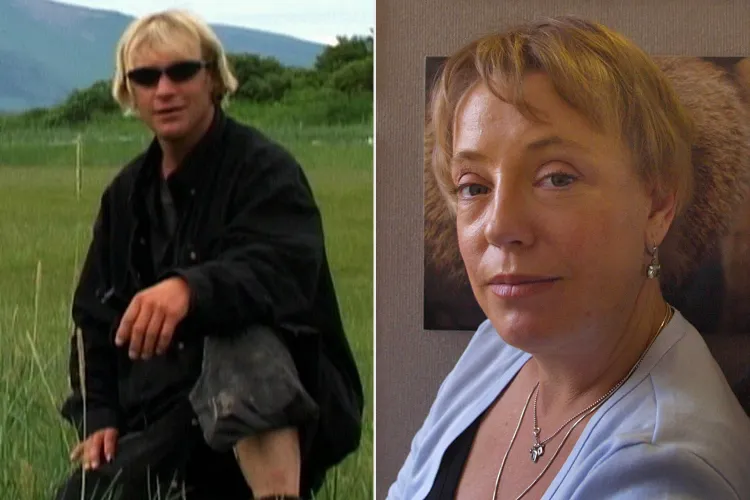
Even with the recording gone, Palovak says Treadwell’s presence — and the debate around his choices — hasn’t faded. She ran his advocacy group, Grizzly People, and also knew his girlfriend Amie Huguenard, who was killed alongside him in the October 2003 attack.
Treadwell was a self-taught bear expert who inspired admiration for his conservation message and drew criticism for the risks he took. He spent 13 summers living in Alaska’s remote Katmai National Park, filming one of the densest grizzly bear populations in the world and trying to pull others into what he saw as an overlooked wilderness reality.
A former drug addict who credited grizzlies with helping him stay sober, he also took his message to classrooms — often speaking to more than 10,000 schoolchildren a year — warning about hunters, poachers, and the steady loss of habitat.
“His goal,” Palovak says, “was to show people the secret life of grizzly bears, to open up people to a completely other world, to inspire them, especially the children, to be good stewards of the planet and to fight for things they think are right, no matter how big the challenge seems.”
:max_bytes(150000):strip_icc():focal(730x137:732x139):format(webp)/timothy-treadwelll-amie-huguenard-112525-2c917ef6713447db8797695b4ce233f2.jpg)
More than two decades later, the deaths of Treadwell and Huguenard remain among the most infamous bear attacks on record — and have been revisited again in the documentary Diary Of The Grizzly Man.
According to Alaskan state trooper reports, Treadwell and Huguenard — a 37-year-old physician assistant — were killed and partially eaten by a male grizzly at their campsite in 2003.
Palovak believes Treadwell was inside his tent reviewing video footage he’d shot earlier in the day, stepped out to use the bathroom, and encountered the bear.
“He probably spoke to it the way he always did and this time it didn’t work out for him on that night,” she says. She adds that the couple were camping in an unfamiliar area with scarce food for grizzlies, surrounded by bears that weren’t accustomed to Treadwell’s presence.
A pilot arriving the next day to pick them up spotted what appeared to be a bear standing over a body. When three park rangers reached the foggy, rain-soaked site, the animal — described as a 28-year-old male estimated at 1,000 pounds — charged and was killed.
Authorities later found human remains in the bear’s gut, as well as body parts from the couple. Treadwell’s video camera was also recovered — and with it, a six-minute audio-only recording of the attack.
“You can hear him screaming,” state trooper Chris Hill said in 2003. “She’s screaming, ‘Is the bear still there? Play dead.’ He tells her to hit the bear with a pan or can. He said something to the effect that he was dying or he was being killed. We really didn’t hear the bear at all.”’
:max_bytes(150000):strip_icc():focal(999x0:1001x2):format(webp)/grizzly-man-13673d2978a046ed9a370ca413a19662.jpg)
Palovak says Treadwell understood the danger — and would have been devastated not only by what happened to him, but by what happened next.
“He knew the dangers and he knew he was [camping] in a compromising spot … I’m sure that in the last moments of his life, he couldn’t believe that this was happening to him and that the bear would probably end up being killed [after attacking him],” she says. “He would have seen that as the biggest tragedy.”
In the years since, Palovak says the organization Treadwell helped create to advocate for bear and wilderness protection has largely faded.
“The star of the show was gone and our board members and donors have gone on to other things,” she says.
Still, she argues that Treadwell’s story refuses to disappear — helped along by Herzog’s film, which The New York Times recently placed on its “100 Best Movies of the 21st Century” list.
And every so often, she says, strangers recognize her — not immediately, but with a dawning familiarity — until she asks whether they’ve seen Grizzly Man.
“About a year ago, an older lady tapped me on the shoulder and said, ‘He should have never been there. He didn’t know what he was doing,’ ” Palovak recalls. “People either thought he was some kind of saint-like animal whisperer or that he was a complete idiot. He was obviously neither. … But he didn’t have a death wish. He wasn’t stupid.”
Palovak believes Treadwell would have loved Herzog’s documentary — built in large part from the footage Treadwell filmed himself during those summers in Alaska.
“He always told me, ‘If I die, make a kick-ass movie.’ I was like, ‘Oh sure, I’ll do that,’ ” Palovak says, laughing. “But that’s actually what ended up happening … I think it would have been the kick-ass movie that he wanted.”