
President Donald Trump escalated his rhetoric against the Cuban government on Monday, asserting he anticipates the “honor” of “taking Cuba” as the island nation grapples with a total collapse of its electrical grid.
Speaking to reporters at the White House, Trump characterized Cuba as a “failed nation” and suggested that the United States is poised to intervene. His comments follow a string of aggressive foreign policy moves, including the January ouster of Venezuelan leader Nicolás Maduro and ongoing military operations against Iran.
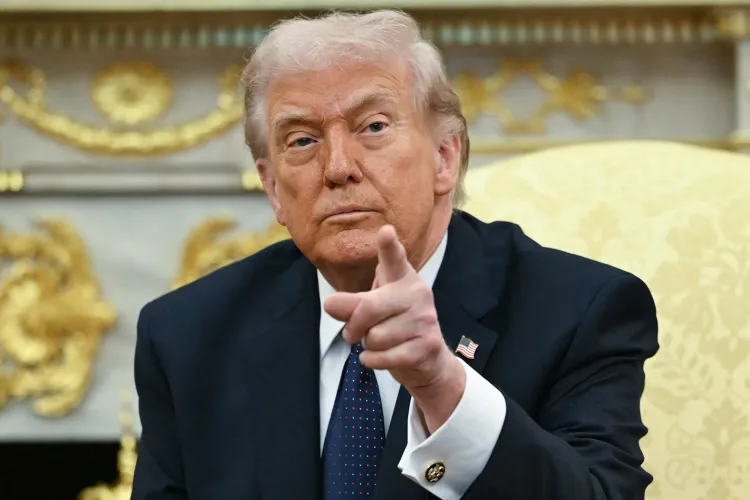
“I think Cuba’s seeing the end,” Trump said during an Oval Office event. “All my life I’ve been hearing about the United States and Cuba. When will the United States do it? I do believe I’ll have the honor of taking Cuba… that’s a big honor.”
When pressed on whether “taking” the island implied a military annexation or a diplomatic “friendly takeover,” Trump declined to provide specifics, though he asserted broad executive authority. “Whether I free it, take it, I think I can do anything I want with it,” he said.
A Nation in Darkness
The President’s remarks coincide with a humanitarian crisis on the island. On Monday, Cuba’s Ministry of Energy and Mines reported a “total disconnection” of the national electric system, plunging the population of 11 million into darkness.
The energy failure is the direct result of a U.S.-led oil blockade. Since Operation Absolute Resolve resulted in the capture of Venezuelan President Nicolás Maduro on January 3, the Trump administration has:
- Halted all discounted oil shipments from Venezuela to Havana.
- Imposed secondary tariffs on any third-party nation attempting to export fuel to the island.
- Leveraged diplomatic pressure to ensure regional neighbors, including Mexico, cease energy aid.
Cuban President Miguel Díaz-Canel confirmed last Friday that no fuel has entered the country for three months, leading to a 60% energy deficit and the suspension of non-essential state services.
‘The Next Target’
The administration’s “Maximum Pressure” campaign has moved with remarkable speed in 2026. Following the collapse of the Maduro government, Secretary of State Marco Rubio—a longtime advocate for regime change in Havana—has been reportedly overseeing secret negotiations.
While Díaz-Canel expressed a willingness to engage in “dialogue based on equality and respect,” U.S. officials have signaled that his resignation is a non-negotiable prerequisite for lifting the blockade. Trump’s recent successes in Venezuela and the February 28 launch of Operation Epic Fury against Iran have fueled speculation that a Caribbean intervention is imminent.
“We’re talking to Cuba, but we’re going to do Iran before Cuba,” Trump told reporters on Air Force One over the weekend, suggesting a sequential “clearing” of U.S. adversaries.
Geopolitical Fallout
Critics and international legal scholars have questioned the legal basis for “taking” a sovereign nation, citing the 1962 agreement following the Cuban Missile Crisis in which the U.S. pledged not to invade the island. However, the White House has consistently pointed to the “failed state” status of the current administration in Havana as justification for intervention.
For now, the Trump administration appears content to let the energy blockade do the heavy lifting. “They have no money and no oil,” Trump noted Monday. “They just have a nice land.”